Do dwarf galaxies have a large black hole in the center?
Duane Morse
Phoenix, Arizona
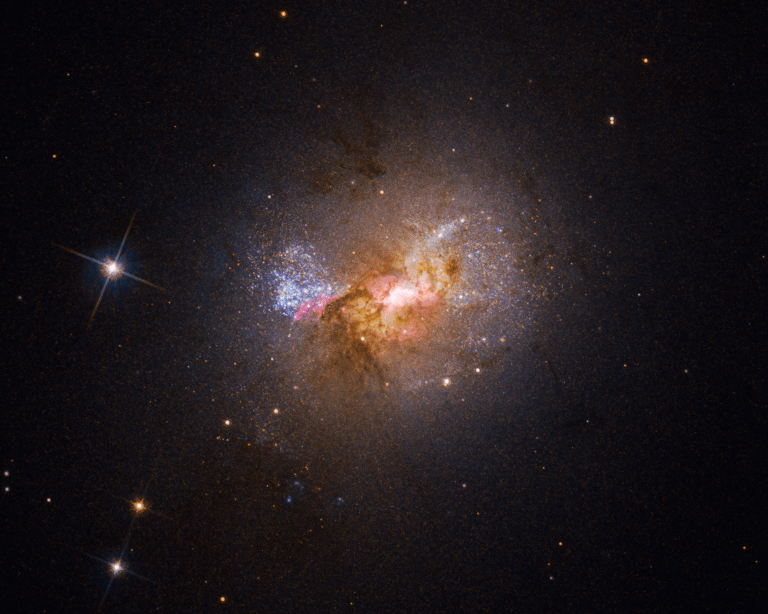
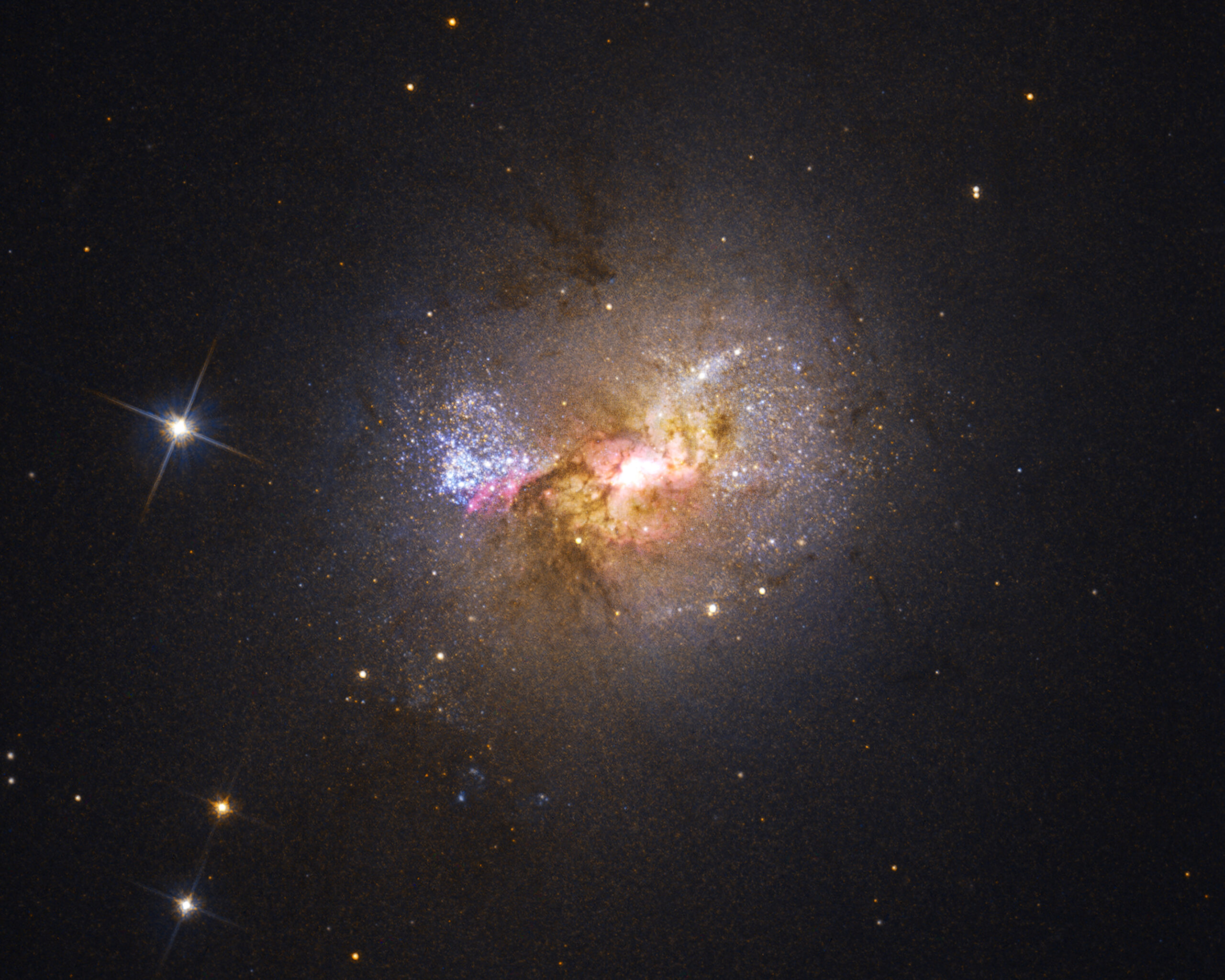
Nearly all massive galaxies are known to host central black holes. And dwarf galaxies can indeed also host central black holes, but whether all or only a fraction of them do remains an open question in astronomy.
Until recently, astronomers had identified active central black holes in only 0.5 percent of dwarf galaxies. However, a new study published in February revealed black holes in nearly 2 percent of the 115,000 dwarf galaxies observed. This fourfold jump suggests that a substantial number of black holes remain undetected in the low-mass galaxy regime. It further raises the possibility that even more black holes might be concealed within these galaxies, awaiting detection with improved observational techniques.
Identifying black holes in dwarf galaxies is far more challenging due to their faint nature and the difficulty in resolving them. This explains why astronomers have only recently begun to uncover them, and why we still do not know what fraction of dwarf galaxies actually host central black holes. With improved technology, we are steadily piecing together the answers to this question.
Dwarf galaxies harbor what are called intermediate-mass black holes (IMBHs), whose masses range from a hundred to a million times the mass of the Sun. These IMBHs are the missing link between stellar-mass black holes (less than 100 solar masses) that are formed from dying stars and the supermassive black holes (greater than a million solar masses) that dominate the centers of massive galaxies. So, the central black holes found in dwarf galaxies may hold the key to one of the biggest mysteries in astrophysics: how supermassive black holes, like the one at the center of our Milky Way, came to exist. Finding more of these elusive black holes and mapping their masses will help us uncover the origins of the very first black holes formed in the universe. Moreover, it will reveal how these objects interact with their host galaxies, and whether they can influence the galaxy’s growth and evolution over cosmic time.
Excitingly, astronomers have now detected IMBH candidates both in nearby dwarf galaxies using ground-based telescopes and in dwarf galaxies from the early universe, thanks to the James Webb Space Telescope.
Ragadeepika Pucha
Postdoctoral Researcher, Department of Physics & Astronomy, University of Utah, Salt Lake City