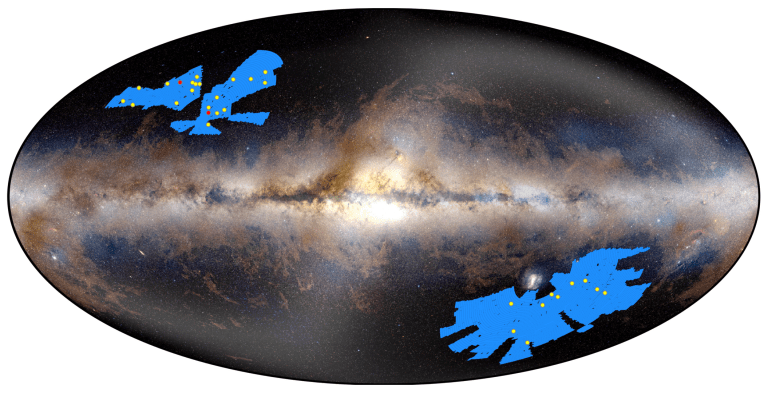
Understanding the nature of our cosmos requires an accurate map of how galaxies are spread throughout it. For decades, astronomers suspected that something vast lurked behind the Milky Way’s dense, dusty disk in our sky. There were indirect, subtle distortions present in galaxy motions that we could see, showing unexplained gravitational pulls. But the structure itself and its extent remained hidden in a difficult part of the sky to observe.
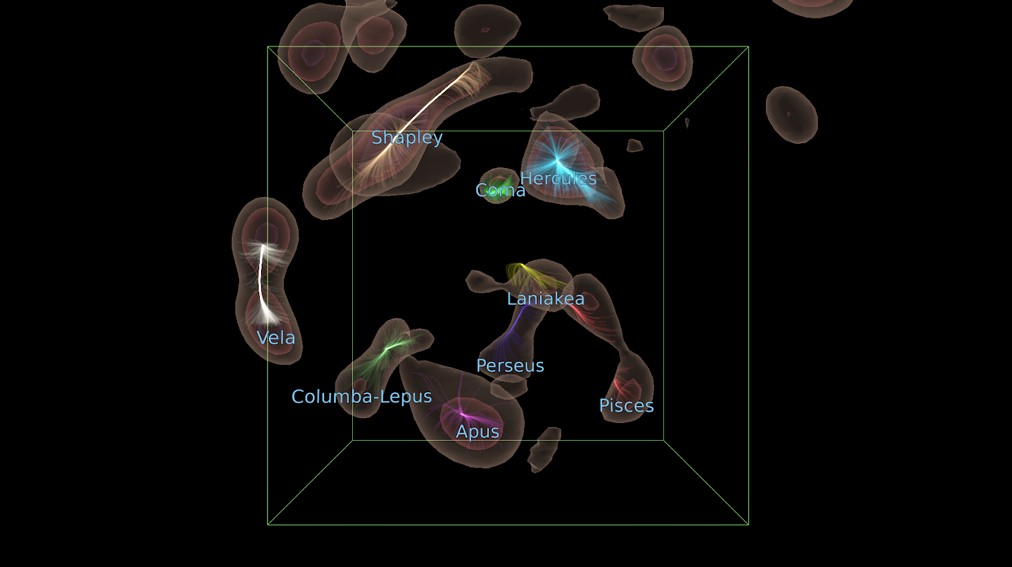
Now, using South Africa’s MeerKAT radio telescope, astronomers have brought that hidden mass into focus. The result, available as a preprint on arXiv and which has been submitted to Astronomy & Astrophysics, is the most detailed view yet of the Vela supercluster. Discovered only recently in 2016, this colossal assembly of galaxies is roughly 800 million light-years away and stretches about 300 million light-years across.
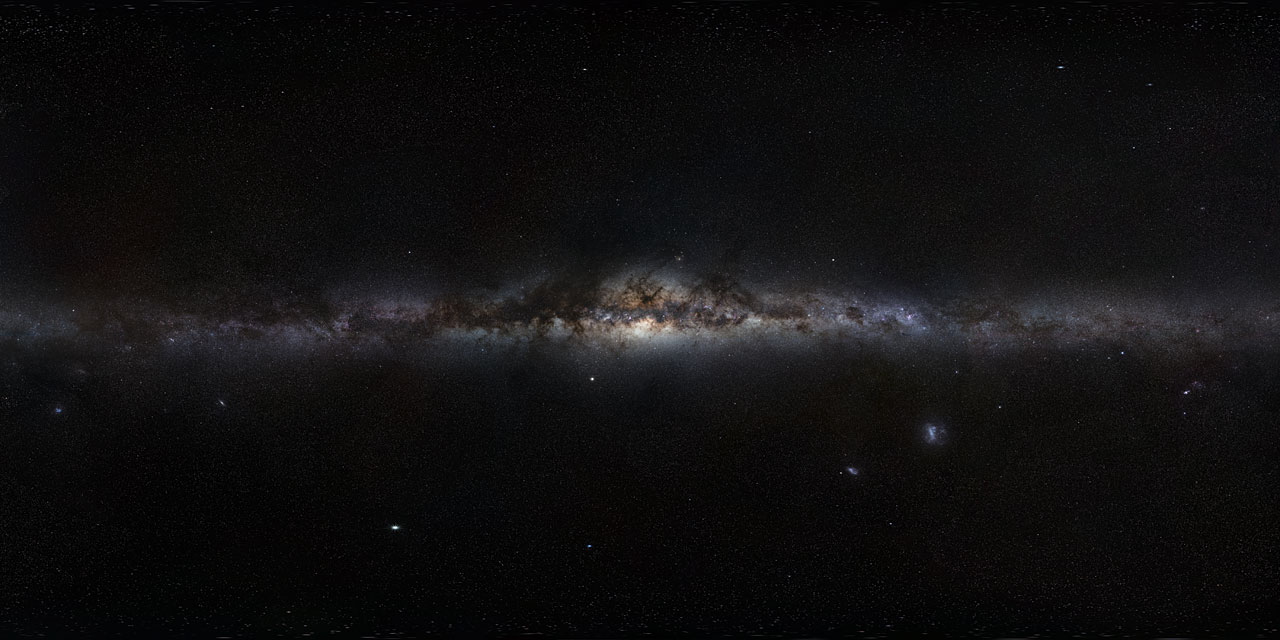
The Vela supercluster also sits behind one of astronomy’s most persistent obstacles: the Zone of Avoidance. This region, where the dense plane of the Milky Way blocks visible light, obscures nearly a fifth of the sky. Optical telescopes simply cannot see through it. “Vela has been something of a ghost,” says Renée Kraan-Korteweg, a professor of astronomy at the University of Cape Town and an expert on large-scale structure in the local universe. Kraan-Korteweg led the team that discovered the Vela supercluster and is also a co-author on the current work. “We could infer its presence, but we couldn’t trace its full extent.”
MeerKAT, which came online in 2018, changes that by looking at radio wavelengths. Instead of relying on starlight, which is snuffed by dust, it detects the 21-centimeter emission line of neutral hydrogen (which falls in the radio regime), a signal that passes through dust largely unimpeded. And using it to explore Vela’s extent proved game-changing.
Seeing through the Milky Way
MeerKAT can capture the faint signals of hydrogen in galaxies hidden behind the Milky Way. Each detection carries a fingerprint: the hydrogen line is shifted in frequency depending on how fast the galaxy is moving away from us, a feature called redshift. Because recession speed depends on distance, thanks to the universe’s expansion, measuring that shift means you can map a galaxy’s distance.
“By tracking the neutral hydrogen line across thousands of galaxies, we’re effectively reconstructing the structure in three dimensions,” explains Konstantinos Kolokythas, a radio astronomer at the South African Radio Astronomy Observatory and a researcher affiliated with Rhodes University, who was not part of the recent study.
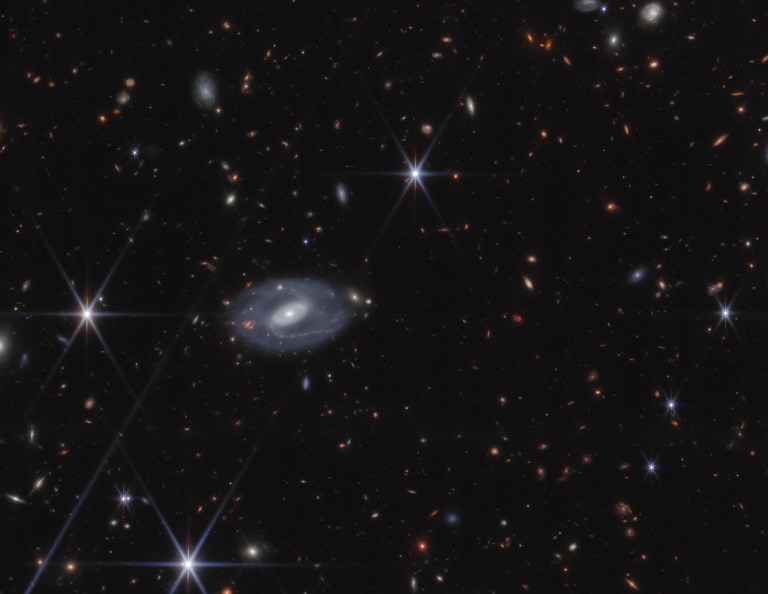
The survey revealed more than 2,000 previously unseen galaxies, filling in what had been a glaring gap in cosmic maps. What had first appeared as a faint overdensity is now resolved into a massive structure with two dense cores, likely moving toward each other within a larger gravitational system.
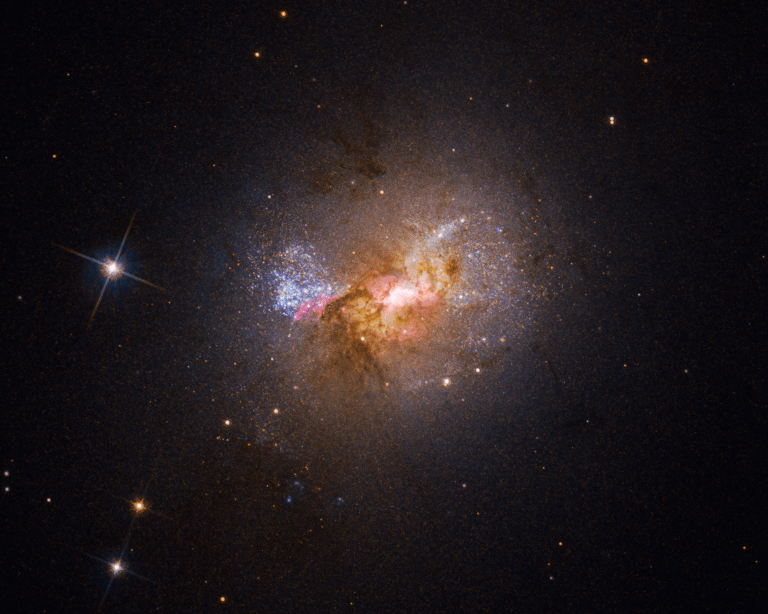
Crucially, the hydrogen signal does more than mark where galaxies are. While it traces hydrogen throughout the galaxy population, it is particularly effective at highlighting the colder, denser gas reservoirs — the raw material from which new stars form. In that sense, the map shows not only where matter sits, but where future star formation may be primed to occur.
A hidden heavyweight
Now mapped, Vela’s scale is impossible to ignore. The structure contains an estimated 30 million billion (3 x 10¹⁶) solar masses of material, placing it among the most massive known features in the nearby universe. Its sheer gravitational influence reshapes how astronomers think about motion on cosmic scales.
“In cosmology, mass is destiny,” says Kolokythas. “Structures like this create gravitational basins, regions that pull galaxies inward and drive large-scale flows.” That matters closer to home than it might seem.
Astronomers have long known that the Local Group — the Milky Way, Andromeda, and their companions — is moving through space at roughly 1.3 million mph (2.2 million km/h) relative to the cosmic microwave background radiation, which pervades the cosmos. The gravitational pull from known structures, such as the Great Attractor and the Shapley Concentration, account for much of that motion. But not all of it.
Vela appears to supply part of that missing pull.
Its position and mass make it a significant contributor to the motion of our galaxy, helping to resolve a longstanding discrepancy in models of cosmic flow.
Apart from its gravitational role, Vela exposes the fact that the universe we have mapped is incomplete.
Historically, astronomers often implicitly treated the Zone of Avoidance as a region of lesser importance, a blank patch where little of consequence might lie. Vela has overturned that assumption. “This is not a minor correction,” Kraan-Korteweg says. “We’re talking about structures on the scale of the largest known formations in the universe, hidden in plain sight.”
If one such structure could remain undetected for so long, others may still be waiting.
Pushing deeper
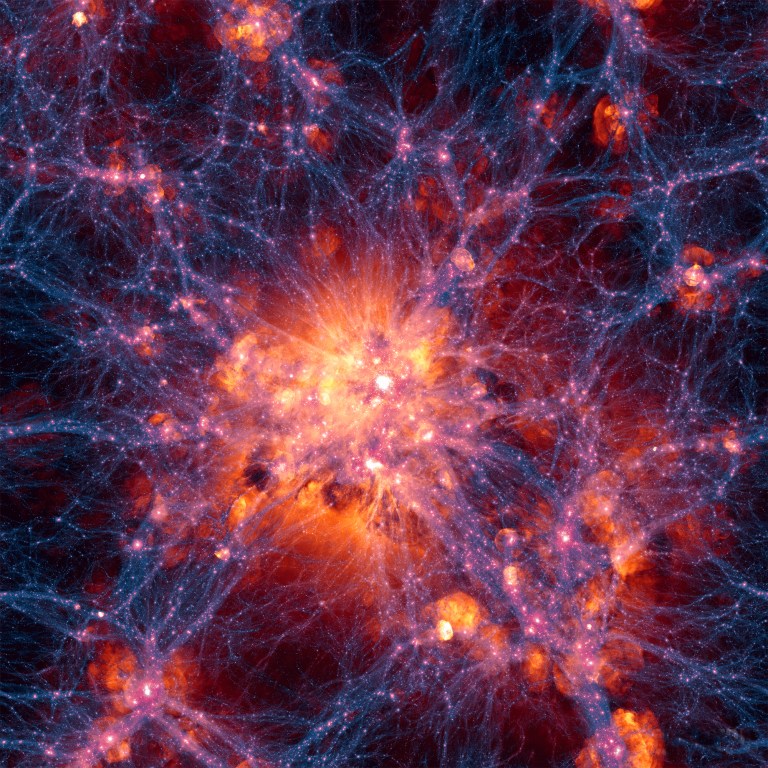
MeerKAT’s observations are already among the most sensitive ever made of the southern sky, but they are only a precursor to what comes next. The forthcoming Square Kilometre Array (SKA) will push radio surveys deeper, detecting fainter galaxies and tracing the fine filaments that connect superclusters into the larger cosmic web strung throughout the universe.
Where MeerKAT has revealed the core of Vela, the SKA may show how it links to even larger structures beyond current detection limits. In time, the Zone of Avoidance may cease to exist because astronomers have finally learned how to see through it.
Even in a well-studied universe, major structures can still hide in the gaps, and Vela’s discovery proves that. What was once a blind spot is now one of the most informative regions of the sky, and a key to understanding how galaxies, including our own, move through the cosmos. In that sense, this discovery is not simply about adding another structure to the map. It is about correcting the map itself.