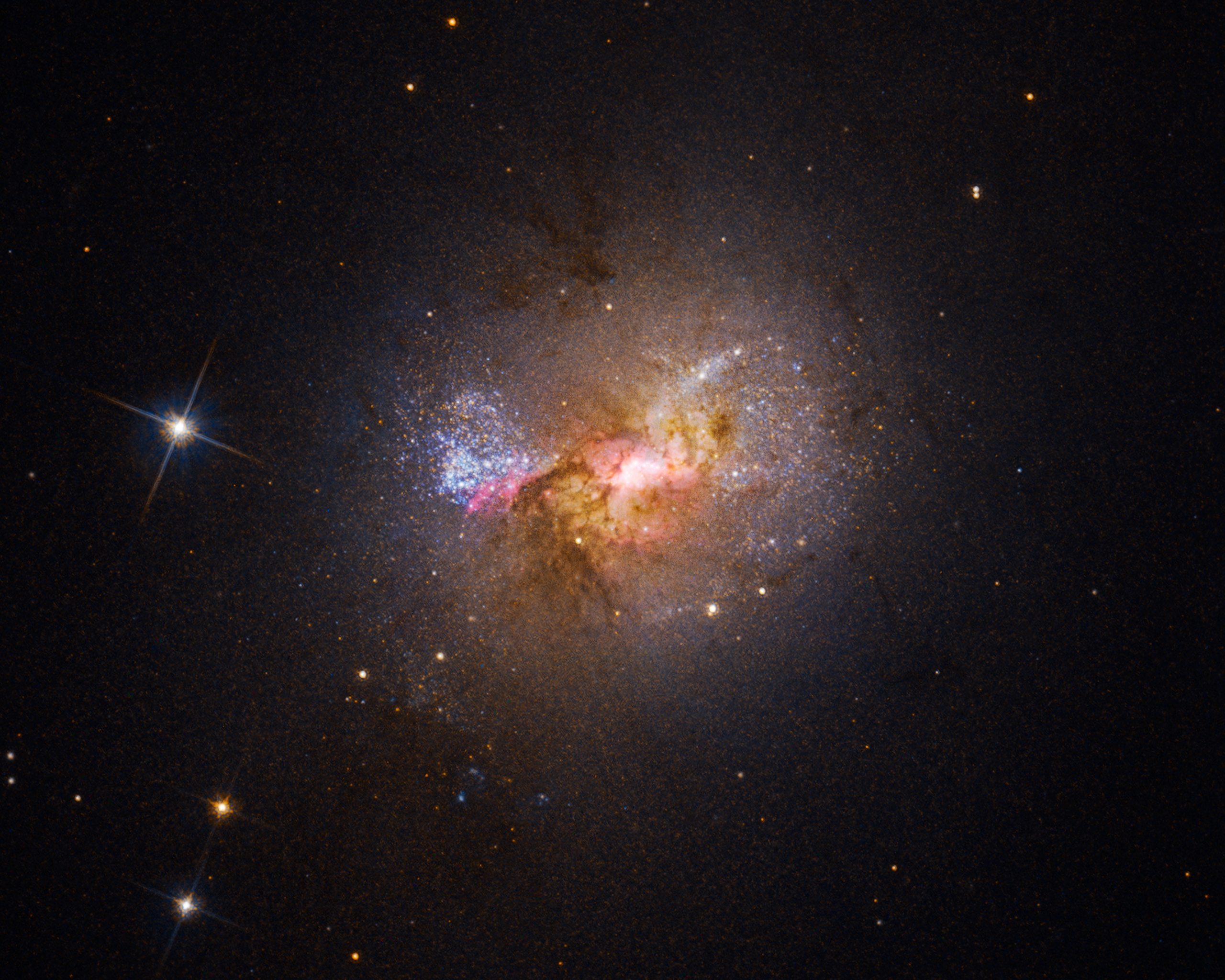
Astronomers have created a comprehensive census of active galactic nuclei (AGN) — galaxies powered by a feeding central black hole. The new census, led by data pipeline developer Mugdha Polimera at the Center for Astrophysics | Harvard & Smithsonian, began while she was a graduate student at the University of North Carolina at Chapel Hill, working with two major galaxy survey teams. The study shows that some 2% to 5% of dwarf galaxies host active black holes — some five times more than found in most prior work. It also reveals a clear trend: as galaxy mass increases, the number of galaxies hosting active black holes rises, with a sharp upturn at intermediate-mass galaxies — those with masses like our own Milky Way, which lie between dwarfs and the largest galaxies.
The findings were presented earlier this year in a press conference at the 247th meeting of the American Astronomical Society on Jan. 8.
Finding active black holes
Astronomers believe that all large galaxies and at least some dwarf galaxies host a central supermassive black hole with millions to billions of solar masses. But not all those black holes are active — i.e., consuming material such as gas and dust.
Finding AGN can be difficult. Disentangling the signal of an active central black hole from the glare of intense star formation in the galaxy around it is one of the most significant challenges, particularly in smaller dwarf galaxies where rapid star formation is common.
Standard diagnostic tests break up a galaxy’s light by wavelength to look for strong oxygen and nitrogen emission, which can point to an actively feeding black hole. Galaxies with AGN typically show a lot of this emission, because these gases require high energy input — such as from a feeding black hole — to shine at certain wavelengths.
But there’s a catch: This emission depends on a galaxy’s metallicity, or the amount of so-called metals (for astronomers, any element heavier than helium) it contains. Dwarf galaxies with low metallicity (that are poor in metals) often show weak nitrogen emission, reducing the efficacy of the standard tests so that astronomers might overlook an AGN due to poor signal. So, in 2022, research led by Polimera developed a new approach to identify AGN in dwarf galaxies using emission from sulfur and neutral oxygen, which is still strong even in low-metallicity dwarfs.
“We identified a category of galaxies where the metallicity-sensitive [standard] indicator showed ‘There’s no AGN,’ but less metallicity-sensitive [new] indicators suggested ‘There could be an AGN present,’” says Polimera.
Updating AGN numbers
To build an updated census of AGN, the team analyzed 8,000 galaxies from the REsolved Spectroscopy Of a Local VolumE (RESOLVE) and Environmental COntext (ECO) surveys using the new classification method. They combined optical observations from the Sloan Digital Sky Survey with mid-infrared data from Wide-field Infrared Survey Explorer to identify AGN across galaxies of different masses. With the new approach, they uncovered about five times more active black holes in dwarf galaxies than in most earlier studies. Results suggest that about 2% to 5% of dwarf galaxies host an active black hole and 16% to 27% of “transitional” galaxies — those between dwarfs and intermediate-sized galaxies, like our own Milky Way — contain active black holes. The fraction rises to 20% to 48% in giant galaxies.
The percentage ranges are so broad simply because even with the improved methods, star formation and black hole activity can blur together a galaxy’s spectrum. The broad ranges reflect that uncertainty.
Nonetheless, the work “is particularly exciting and appears to be a robust result,” says Ragadeepika Pucha, a postdoctoral researcher at the University of Utah who was not involved in the study. She notes that in particular, the use of both optical and mid-infrared data leads to a more complete census, as dust can sometimes hide AGN activity in the optical portion of the spectrum.
Linking AGN and galaxy mass
Although the increase in active black holes in Milky Way-like galaxies versus dwarf galaxies is clear despite uncertainties, researchers remain unsure of the reasons behind it. The jump could reflect real physical changes, observational limitations, or a combination of both. “When something is physically changing in a galaxy or a black hole, it can change your ability to observe or to make the detection,” says Sheila Kannappan, principal investigator of the RESOLVE and ECO surveys at the University of North Carolina at Chapel Hill and study co-author.
“One … hypothesis suggests that extreme star formation in small galaxies might actually prevent black hole fueling,” Polimera explains. Episodes of intense star formation — common in dwarfs — can unleash strong stellar winds and supernova explosions that push gas out of the galaxy’s central regions. If that gas is tossed around or expelled before it has a chance to drift inward, the black hole may be left without fuel.
Another reason could be that as galaxies grow in size and mass, they become better hosts to active black holes. Kannappan explains that the rise in AGN detections at intermediate masses coincides with a shift from dwarf galaxies, which tend to have little structure, to well-ordered galaxies with bulges and spiral arms. “The formation of bulges in particular,” which tend to concentrate gas in the center of the galaxy, “may be linked to the formation and/or the detectability of active black holes … but we really don’t understand the details yet,” she says.
Pucha explains that black holes are easiest to spot when they are actively feeding on gas — when the AGN is “on.” At any given moment, we are likely observing only a fraction of the total black hole population, as many go undetected because they are “off.”
However, observational biases are also a likely factor. “The diagnostics may not work in the same way in the low-mass galaxies as they do on the massive galaxies scale,” Pucha notes.
Additionally, the study relied on optical data that captured only the very center of a galaxy. Kannappan notes that this could mean they are missing activity in galaxies with an off-center AGN.
Building supermassive black holes
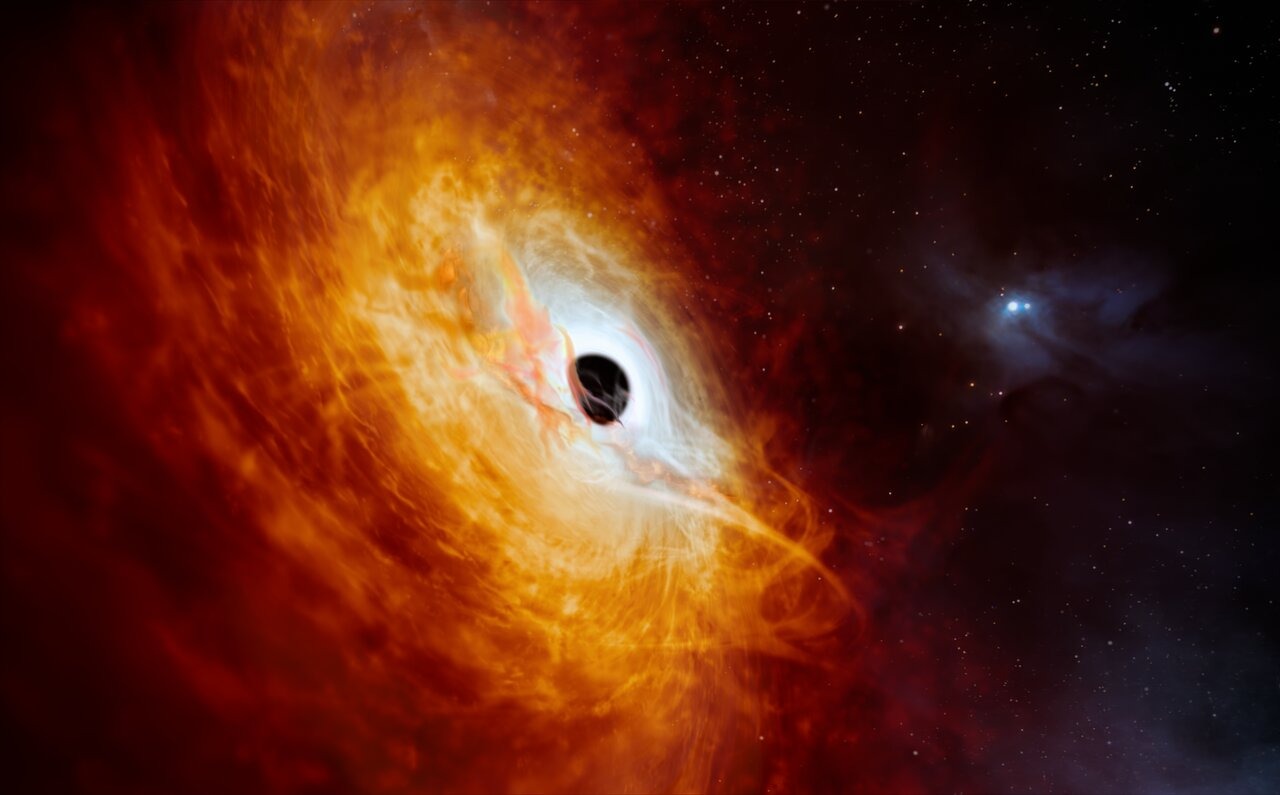
Astronomers still don’t know how supermassive black holes form. One possibility is that dwarf galaxies with smaller central black holes merge over time, gradually building up into larger galaxies with the monster black holes seen today.
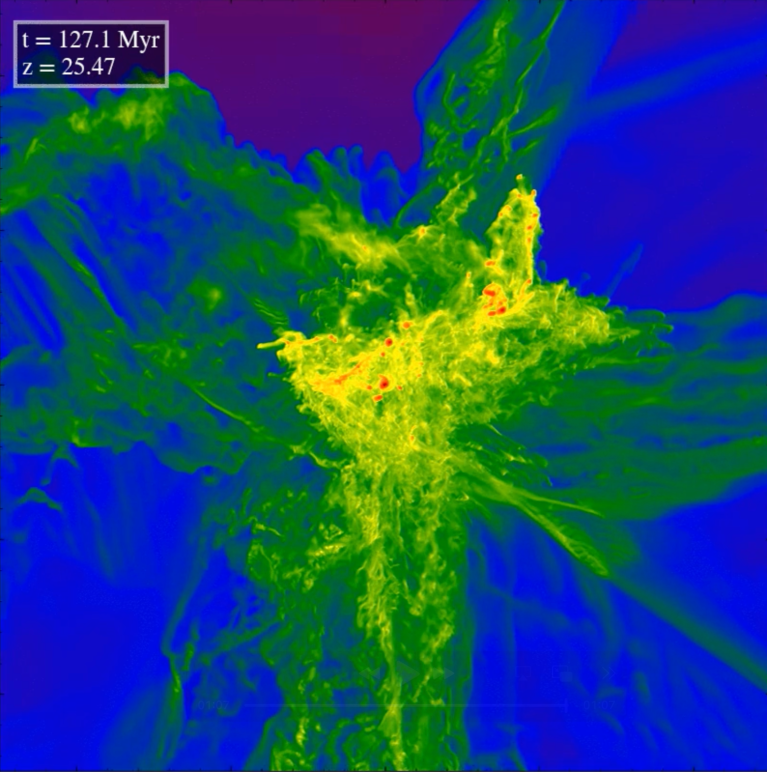
Another major debate centers on whether supermassive black holes formed from “light seeds” left when the first stars went supernovae, which then grew rapidly, or from “heavy seeds” created when huge gas clouds collapsed directly into already massive black holes. Much of the underlying physics of both methods remains uncertain, and our current models of these processes are far from complete.
Understanding how many lower-mass galaxies host AGN is thus crucial for testing these formation scenarios. Based on the number of galaxies with active black holes, researchers can work backward to determine which mechanism is more likely by using these numbers as a baseline in their simulations. The new census thus provides a critical lower limit for these models.
The researchers now aim to obtain a larger inventory of active black holes to deepen our understanding of their properties. Pucha says that because X-rays are the most confident signatures of AGN activity, looking at lower-mass galaxies in these wavelengths would improve the census of AGN.
Follow-up studies are also examining tiny, so-called nugget galaxies where star formation declines at roughly the same galaxy mass at which AGN detections rise. Researchers are also modeling whether star formation in dwarf galaxies can truly suppress AGN activity, making these black holes harder to detect.
Shreejaya Karantha is a science writer based in India. Her work has appeared in Live Science US and The Hindu.