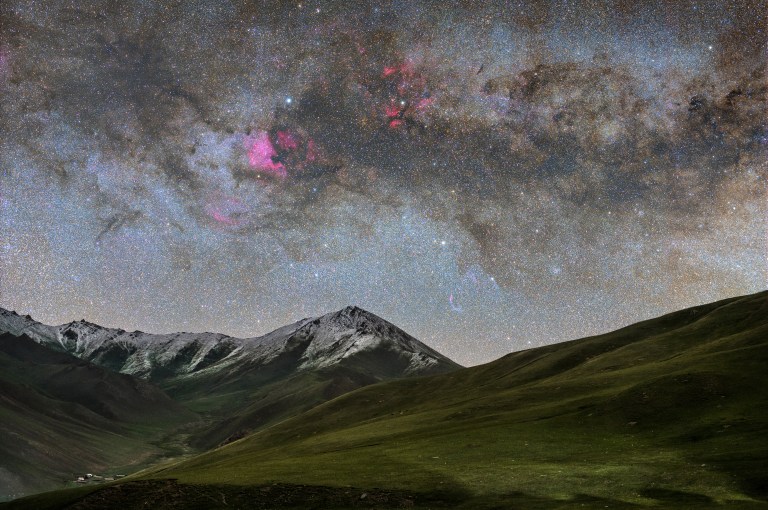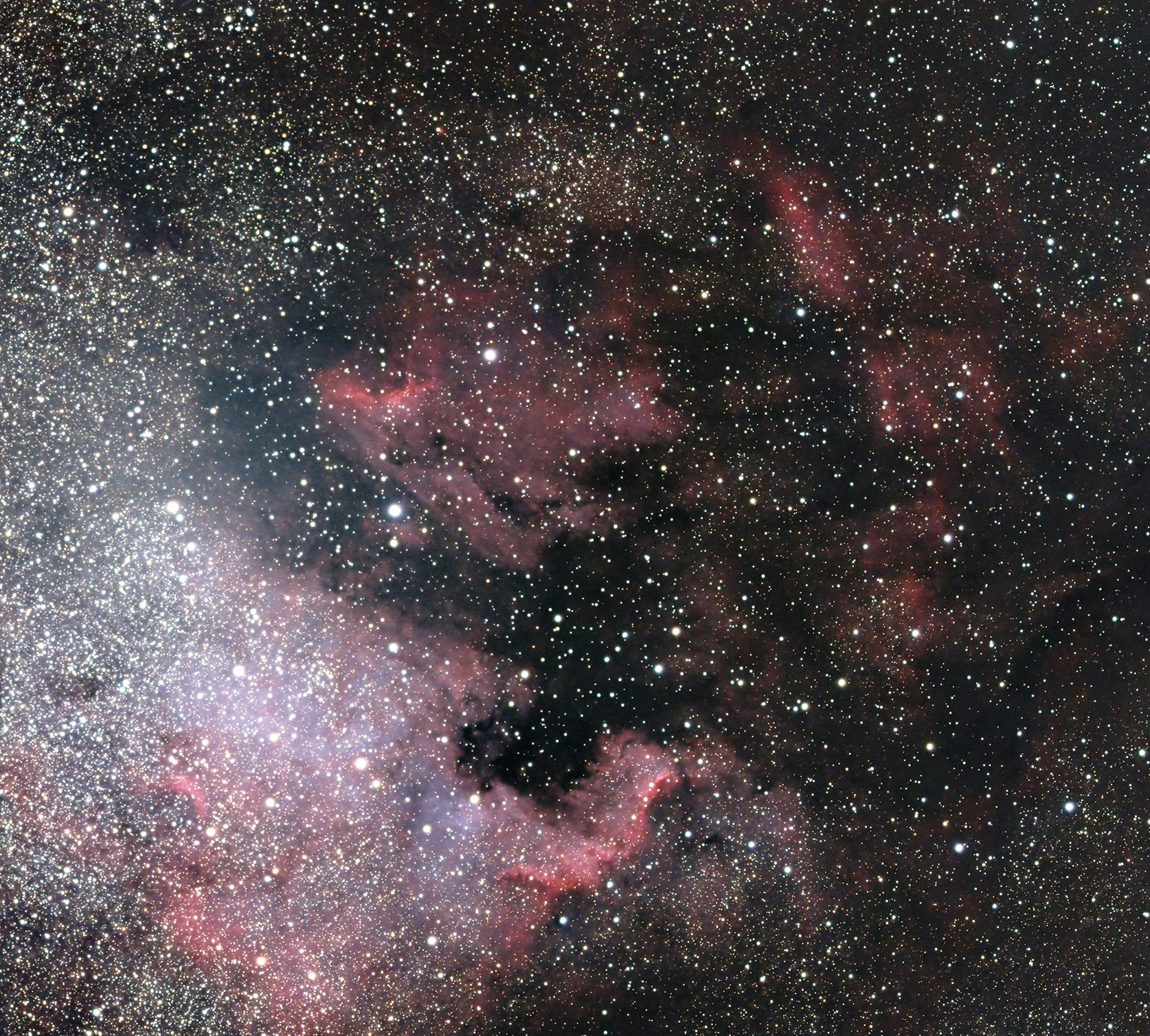
The night sky is littered with galaxies, nebulae, and star clusters — if only we had eyes large enough to see them. Fortunately, cameras and telescopes can see what our eyes cannot.
It can be hard for a beginning astrophotographer to know which filters you should image a particular object with. But once you’ve been in this hobby long enough, you’ll start to see some patterns emerge.
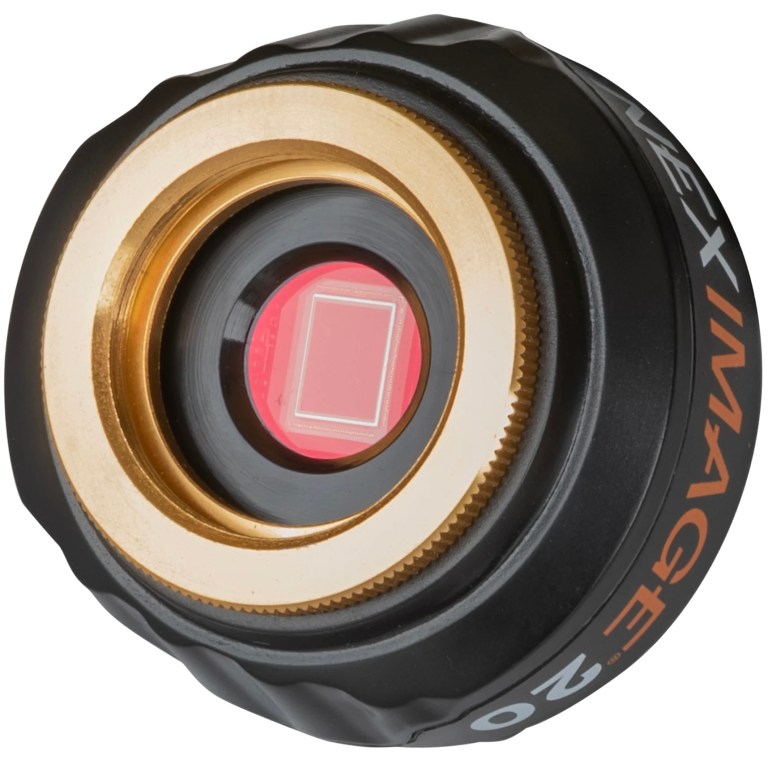
First, there are two classes of astrophotography filters: narrowband and wideband. Narrowband filters capture thin slices of the visible spectrum where elemental gases, such as hydrogen, oxygen, and sulfur, glow brightly. Wideband filters capture broad swaths; red, green, and blue (RGB) filters capture the primary colors separately; luminance (L or UV/IR) filters capture the whole visible spectrum; and light pollution (LP) filters also capture all visible light, but with some chunks blocked out to reduce the interference of either natural or human-made skyglows. On a one-shot color (OSC) camera, you’ll use either an L/LP filter to pass all the light through the camera’s pixel-scale color filters (the Bayer matrix — see my February 2026 column, “Camera face-off”), or you’ll use multiple narrowband filters to capture emission, relying again on the Bayer matrix to separate the colors.
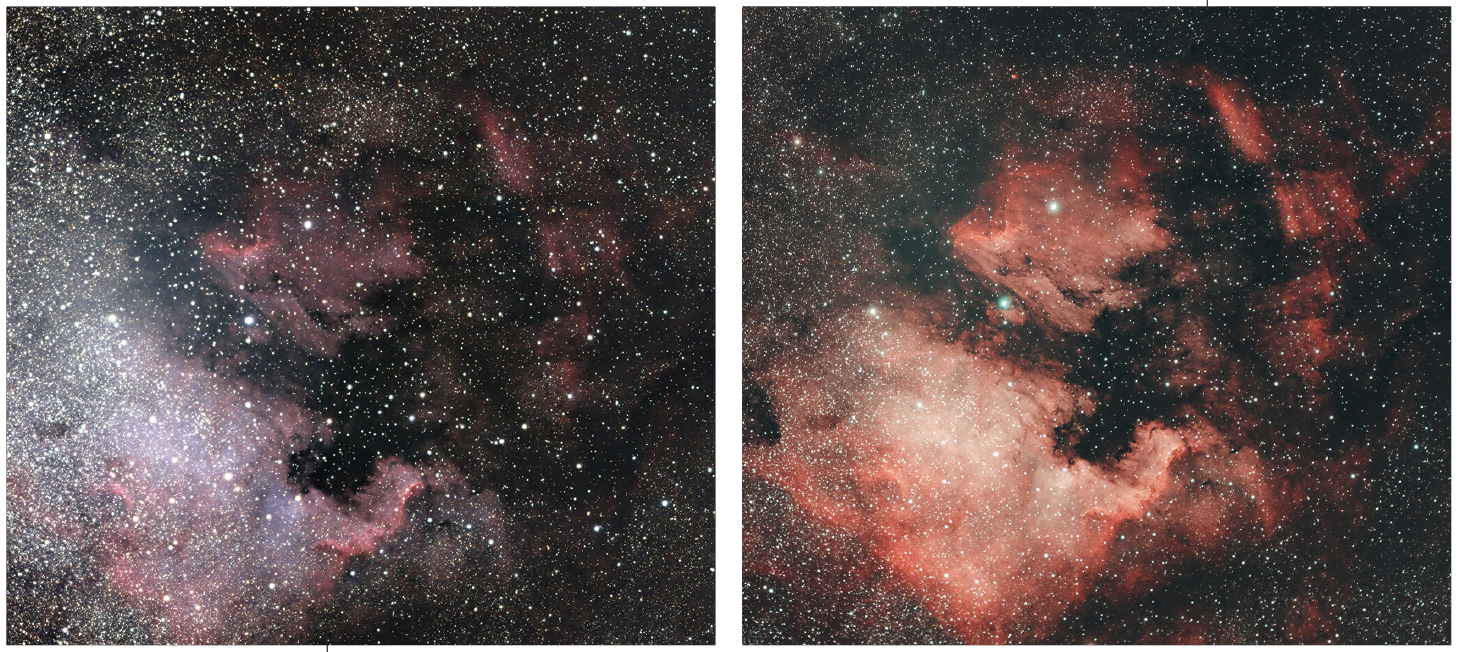
To determine which filter(s) to use, let’s think about what’s happening in the deep-sky targets we love. Stars emit all wavelengths of light, making them wideband sources. So, when you’re going after star clusters, such as the Wild Duck Cluster (M11), wideband filters are the obvious choice. This extends to galaxies, such as the Whirlpool Galaxy (M51), which are just collections of stars and dust. Dark nebulae, such as the Seahorse Nebula (Barnard 150), show an absence of light because they block light from stars behind them, so these are also best done in wideband. For these kinds of targets, you should use L/LP and RGB filters (or just L/LP for OSC cameras).
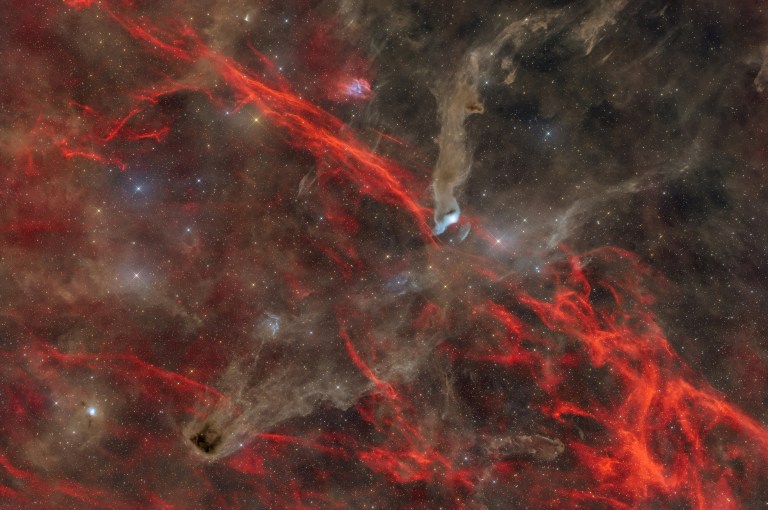
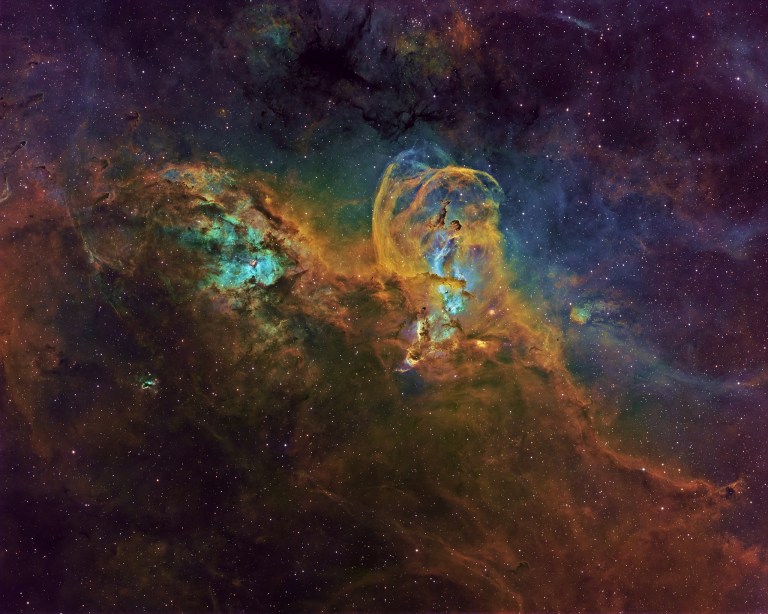
On the other hand, emission and planetary nebulae glow primarily in narrowband wavelengths. Stellar nurseries such as the Orion Nebula (M42) display all three main emissions: hydrogen-alpha, doubly ionized oxygen, and ionized sulfur (Hα, OIII, and SII, respectively). However, planetary nebulae, such as the Ring Nebula (M57), result from Sun-like stars that are in their final stages of life. These stars aren’t massive enough to have produced much sulfur in their lifetimes, so you can usually skip the SII filter. You’ll want to use narrowband filters for these nebulae, and you can also take a little bit of data in RGB (or L/LP for OSC) to get nicely colored stars to add in, if you’re able. You can image these nebulae in wideband, but you will get superior results in narrowband, with dramatically increased contrast and signal-to-noise ratio — especially if you live under heavy light pollution.
In nebulae such as the Trifid Nebula (M20) and the surroundings of the Pleiades (M45), their blue glow can look a lot like OIII emission. But don’t be fooled! It’s actually dust reflecting starlight — a reflection nebula.
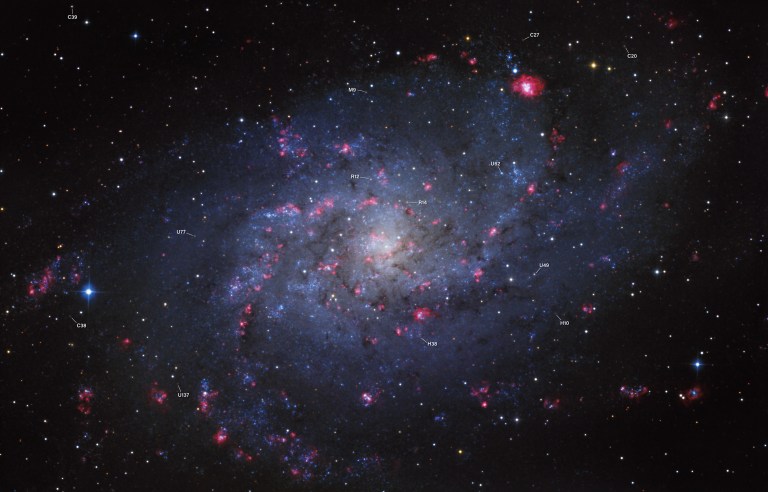
For galaxies with significant active star formation, taking some Hα data can yield fruitful results. The Cigar Galaxy (M82) and the Fireworks Galaxy (NGC 6946) are examples that strongly benefit from adding Hα.
Imaging your target with the best-suited filters for its type can help you create an incredible image. Knowing a little about what you are shooting goes a long way, too. One of the best ways to figure out which filters you should use is to look up your target on AstroBin (https://app.astrobin.com) and see what others have used. But even if you don’t have the same filters, capture it anyway! It’s up there waiting to be seen.
Molly Wakeling is an avid astrophotographer active in STEM outreach. She has a Ph.D. in nuclear engineering. You can browse more of her “Observing Basics” column at www.Astronomy.com/author/molly-wakeling.