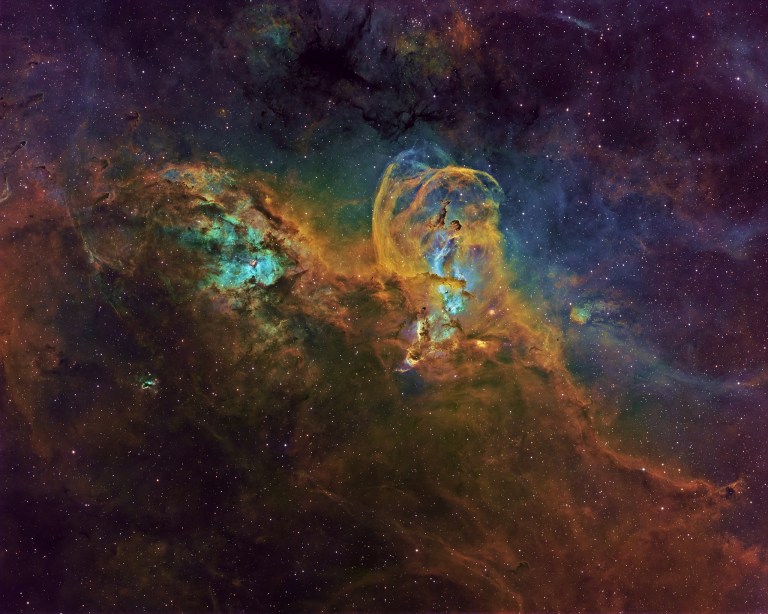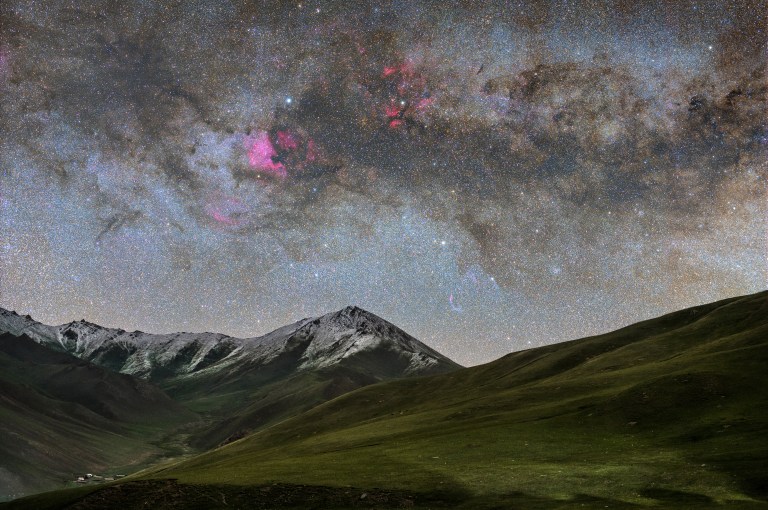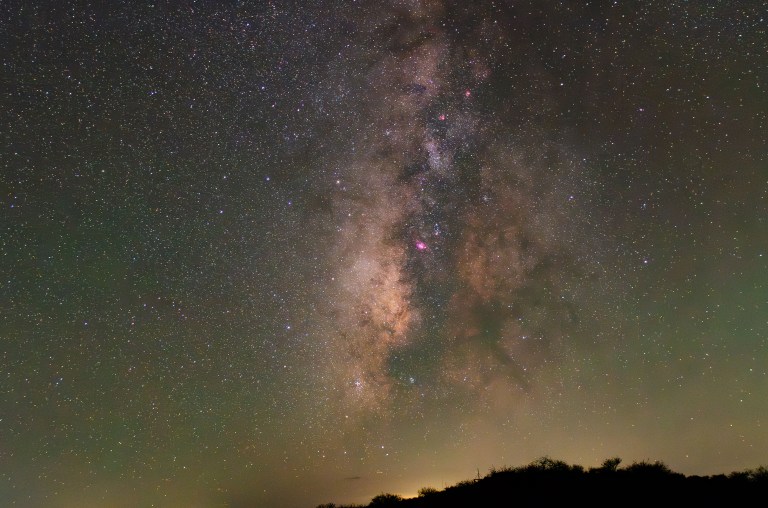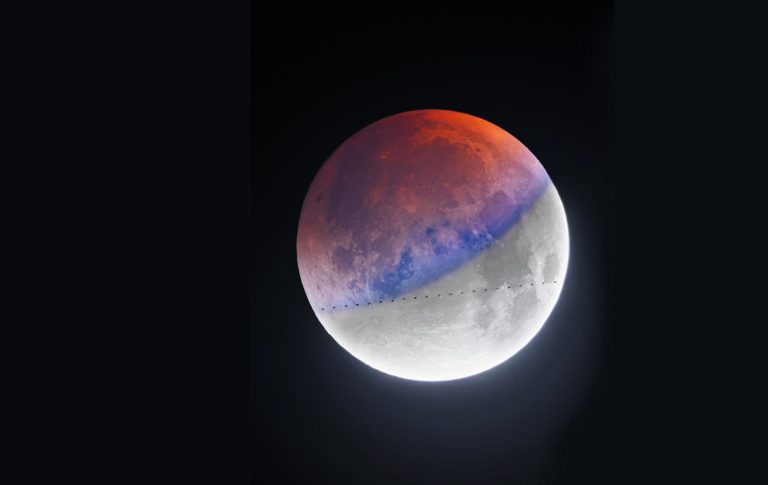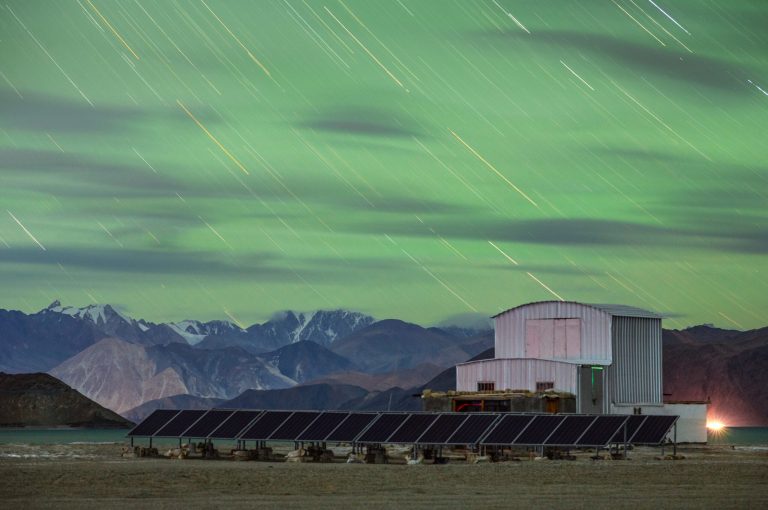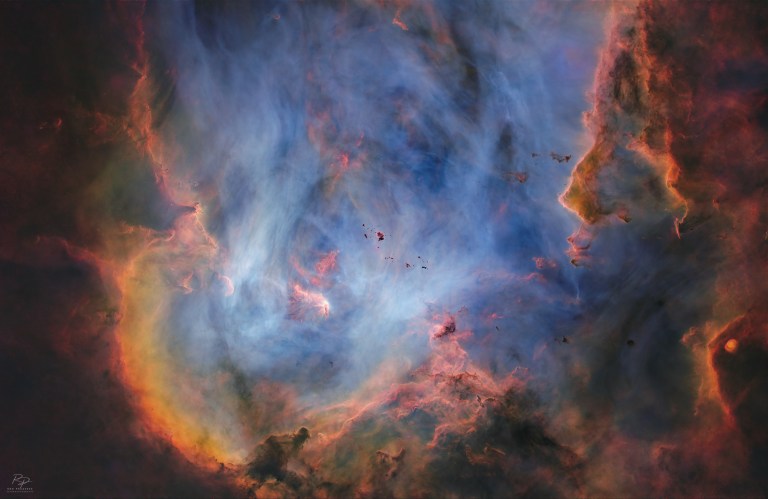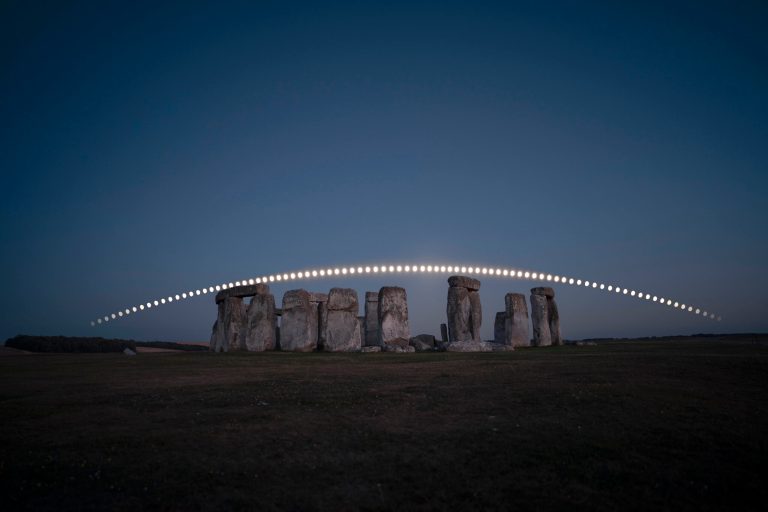
Astrophotography tends to blur the boundary between science and art. The incredible images from Hubble and JWST, for example, captivate us as much for their aesthetic beauty as for their data. Recently, a photography student blurred those lines even further, taking the concept of capturing the cosmos quite literally by creating images from film’s interaction with invisible cosmic radiation rather than light. The result is an uncontrolled experiment as much as an artistic act, one that pushes the definition of photography and yields striking, beautiful images that remind us just how much is happening in the space around us that we can’t see.
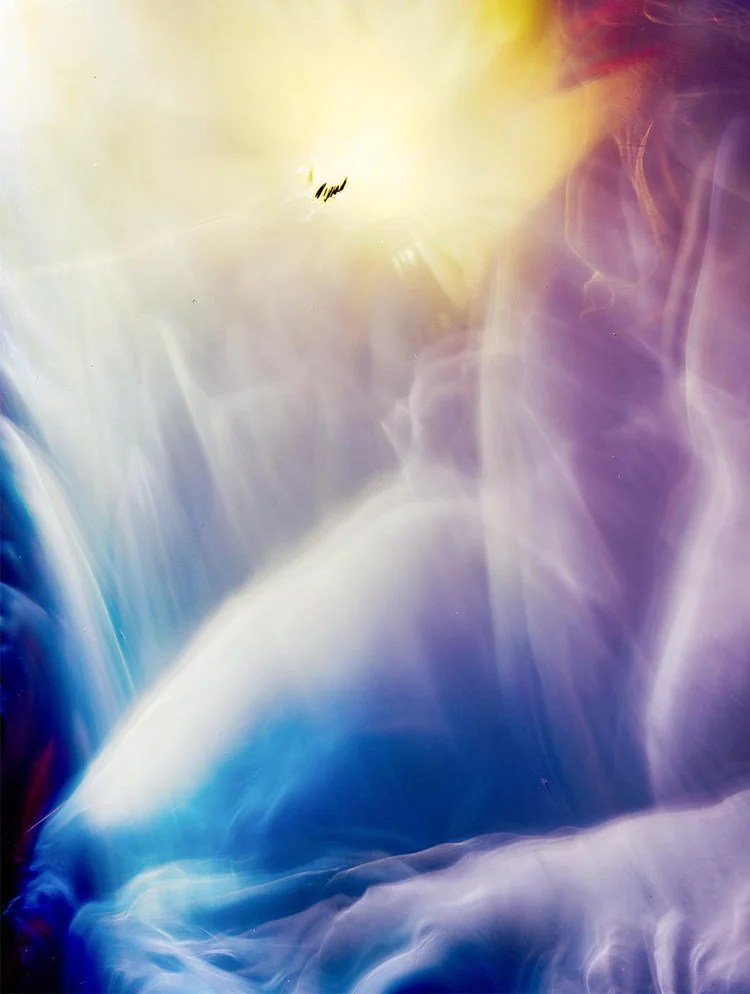
During his second year at Arts University Bournemouth, photography student Tom Liggett began work on a photography project he calls HELIOS. As part of the project, Liggett sent sealed analogue film negatives aboard weather balloons to altitudes exceeding 121,000 feet (36,880 meters), beyond Earth’s protective atmospheric layers. The resulting abstract, ethereal images are likely the result of cosmic radiation striking the film’s emulsion directly.
“Going into this, all I wanted was a speck of dust or something. Even if it was a completely blank image with a tiny alteration in the film, I would have been happy. But to get these celestial abstract results, which are forged from black holes and the sun’s radiation… I was very shocked, but really happy. I’ve turned a dream into a reality and it feels surreal!” Liggett said in an Arts University Bournemouth press release.
Riding a balloon to the stratosphere
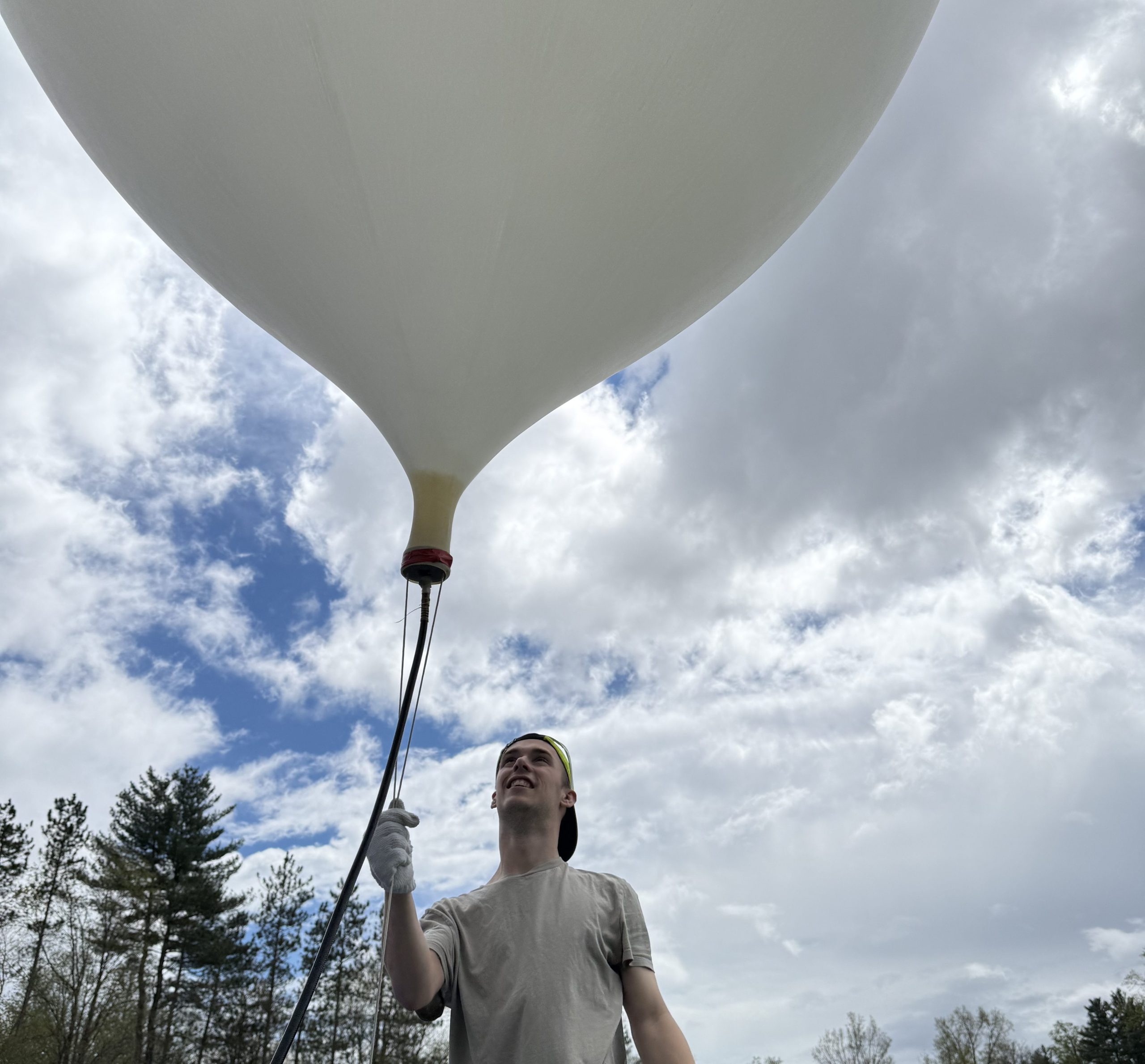
Liggett connected with Filmed in Space, a company specializing in stratospheric balloon launches, to secure a ride to space. The method was simple in principle. A sheet of 5×4 color negative film was sealed in a polyurethane dark bag — the sort of lightproof plastic used to store film — and attached to a weather balloon launched from upstate New York. Experiments with hospital X-rays had taught Liggett that black-and-white film responded poorly to radiation; color was the way to go. The balloon climbed to a peak of 121,000 feet (36,880 m), roughly three times commercial cruising altitude, before bursting and descending by parachute. Liggett and team tracked the payload via GPS and recovered it; the film was developed back in London. The exposure covers the entire flight — not a single moment, but an accumulation of interactions with particles from ground to stratosphere and back.

Is it a photograph?
Film photography works through chemistry. Light strikes silver halide crystals — microscopic light-sensitive grains suspended in the film’s thin chemical coating, called the emulsion — triggering a reaction that a chemical developer later makes visible as an image.
But this process requires light to be channeled. A camera lens focuses photons onto the film in a controlled, directional way. Without that focusing, there’s no photograph. “You can’t just let a sheet of film sit in the Sun,” Liggett tells Astronomy. “You’d just get a completely black result.”
Liggett’s work has no such channeling. There is no lens or focusing mechanism. Instead, the film is exposed throughout the whole journey, interacting with any and all radiation it encounters. Which raises a question Liggett himself finds compelling: Is the result a photograph? The question has no clear answer, but gets at the heart of what’s so intriguing about Liggett’s images – there’s more to space than meets the eye.
“A photo of space isn’t actually a very accurate representation of space,” he argues. “It’s inaccurate, because you’re just seeing light — which is one part of millions of things around us.” What Liggett wants to catalog is the whole journey — every particle that struck the film from launch to burst to recovery. It’s a less datacentric, more artistic way of representing space, and that’s precisely the intention. “The best way I can put it is: making the invisible visible,” he says.
In its lack of editing, the work also diverges from traditional astrophotography, which often relies on post-processing to produce images. “There’s nothing in front of it. No processing,” he says. “It’s just raw radiation.” And because no one has attempted this before, there’s no baseline to compare against. “There aren’t any results online. No one’s tested it before,” Liggett says. “So you don’t know what you’re fully getting.”
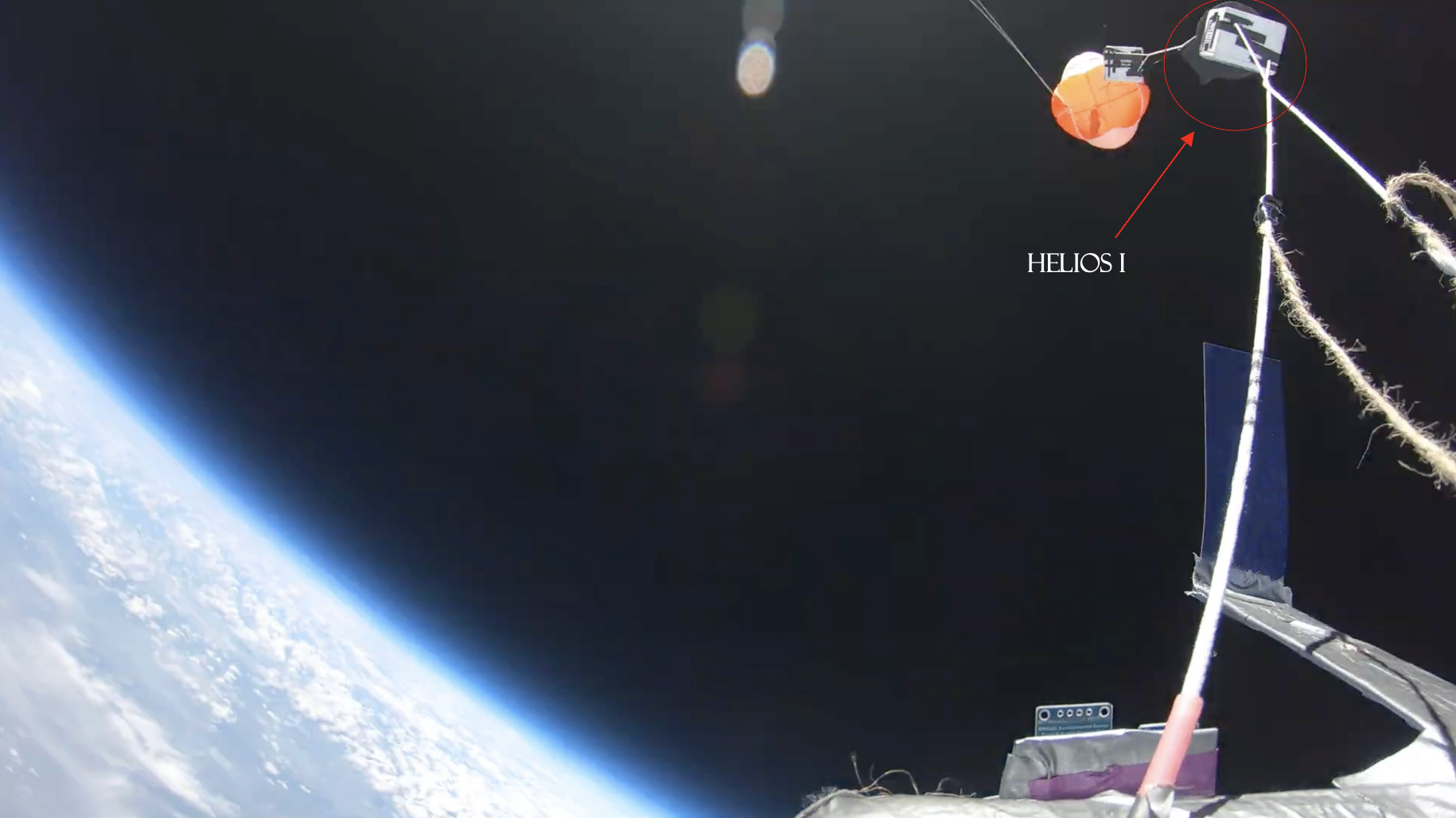
The film negative (circled in red) hangs at 121,000 feet — the edge of Earth’s atmosphere — moments after the balloon burst and the rig pivoted upward during its descent. The HELIOS project sent sealed color negative film to the stratosphere aboard weather balloons to capture the effects of cosmic radiation on the emulsion. Credit: Tom Liggett
What’s hitting the film
Visible light occupies only about one percent of the full electromagnetic spectrum, but photographic film is also sensitive to ultraviolet radiation, X-rays, gamma rays, and high-energy particles. At sea level, Earth’s atmosphere blocks almost all of that. The ozone layer absorbs the Sun’s UV-C radiation — the shortest, most energetic wavelength of ultraviolet light — before it reaches the ground. The atmosphere deflects or absorbs most other high-energy particles. At the heights reached by Liggett’s balloons, that shielding is essentially gone.
Liggett believes two types of radiation are responsible for what appears on his film. The first is UV-C from the Sun, which arrives unfiltered above the ozone layer and is otherwise undetectable at ground level. The second is muons — subatomic particles produced when galactic cosmic rays, originating from sources like supernova remnants, slam into the upper atmosphere and produce cascades of secondary particles. Muons are abundant and good at penetrating; roughly 10,000 pass through every square meter of Earth’s surface each minute even at sea level.
Both UV-C and muons can interact with silver halide emulsion the same way visible light does — by depositing energy that builds a latent image. The difference is that they pass straight through the lightproof bag. Light cannot. “Radiation is on a completely different part of the spectrum,” Liggett says. “Some particles are strong enough to get through the plastic and leave a mark on the film.”
A Ph.D. student recently contacted Liggett with an alternative theory: that the patterns might be caused by static electricity generated as the balloon moves through the atmosphere rather than by cosmic radiation. Liggett is skeptical but he wants to investigate before moving on. One proposed test involves bursting a large balloon near unexposed film and examining the result.
“I still believe it’s muons and UV-C,” he says. “But I need to sit with the work, understand what I’m actually looking at, and then move forward.”
What comes next
For now, Liggett is pausing further launches to analyze the three results he has. But going higher is on his mind. Weather balloons top out around 130,000 feet (39,624 m), and suborbital rockets can reach 300,000 feet (91,440 m) — well into the thermosphere, far above any remaining atmospheric shielding. Mounting film to the exterior of a rocket, he says, could be the natural next step.
Liggett’s broader practice plays with the same experimental, aleatoric processes. His university thesis project involved recording sound waves in water, which he then cast into a 9.8-foot (3 m) concrete slab. The thinking here is the same: Select a material, expose it to invisible forces, then let the invisible make the mark.
“I select the film, I send it to space, and then the art itself is created by what is around us,” he says. “Most art forms — painting, for instance — you see the artwork as you go. This is different. I only see it at the very end.”
The HELIOS project was exhibited in London in July. The original balloon from the first launch — now a crumpled envelope of mylar that once carried film to the edge of space — was displayed alongside the images.
See more images from HELIOS on Liggett’s website.
Brooks Mendenhall is a staff writer for Astronomy magazine and is based in Chattanooga, Tennessee.