Looking for a sky event this week? Check out our full Sky This Week column.
August 11: Venus, half-lit
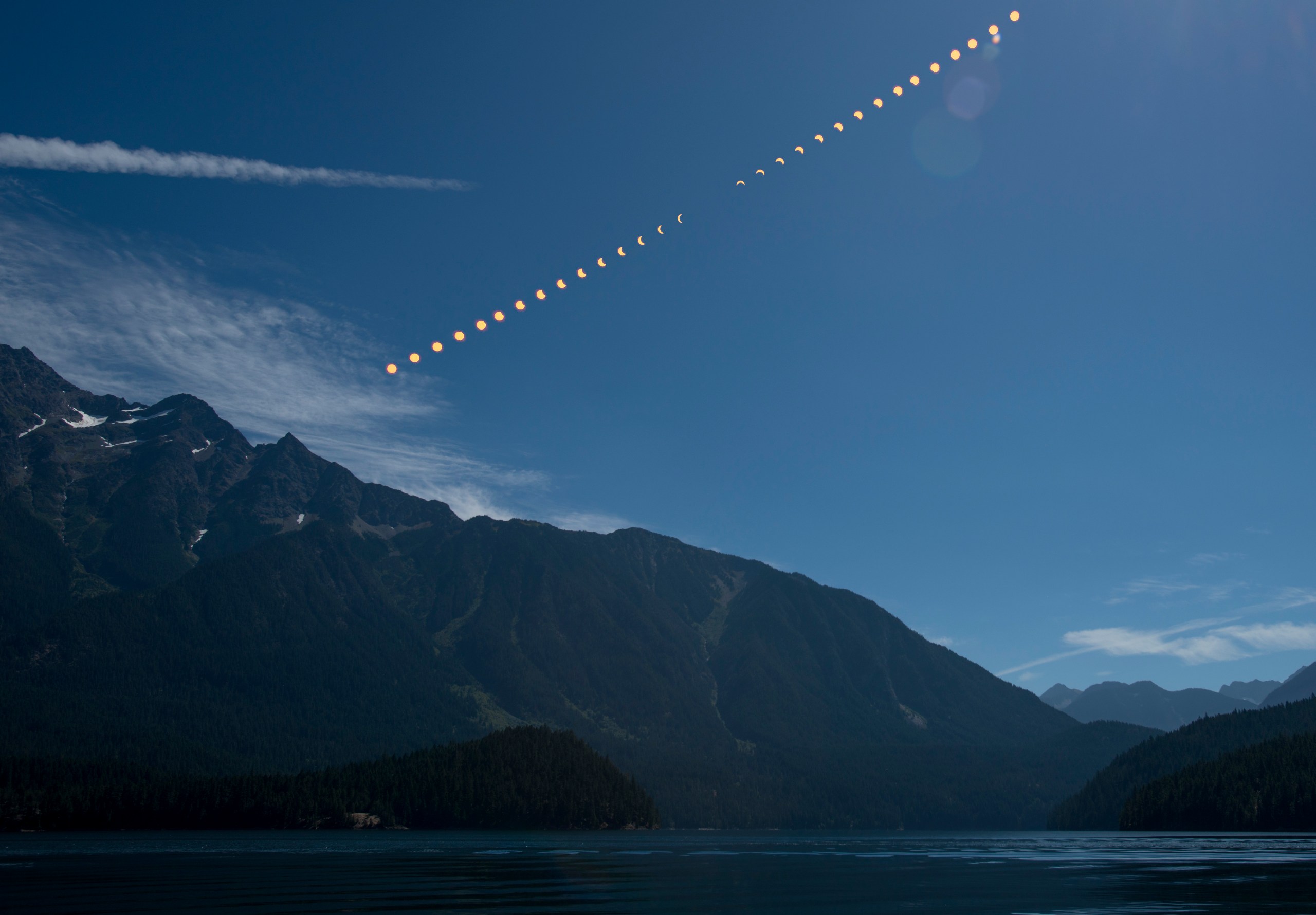
New Moon occurs at 1:37 P.M. EDT, bringing us a total solar eclipse. The event is not visible worldwide — in this case, the narrow path of totality travels only across Greenland, Iceland, and Spain, as well as a tiny sliver of far northeastern Portugal. The longest eclipse visible along this path will be 2 minutes 18 seconds of totality, off the west coast of Iceland. In Reykjavik, observers will see roughly 1 minute of totality, while on the farthest point west along the Icelandic coast, totality will last nearly 2 minutes. Northeastern Spain will also receive nearly 2 minutes of totality all along the central region of the shadow.
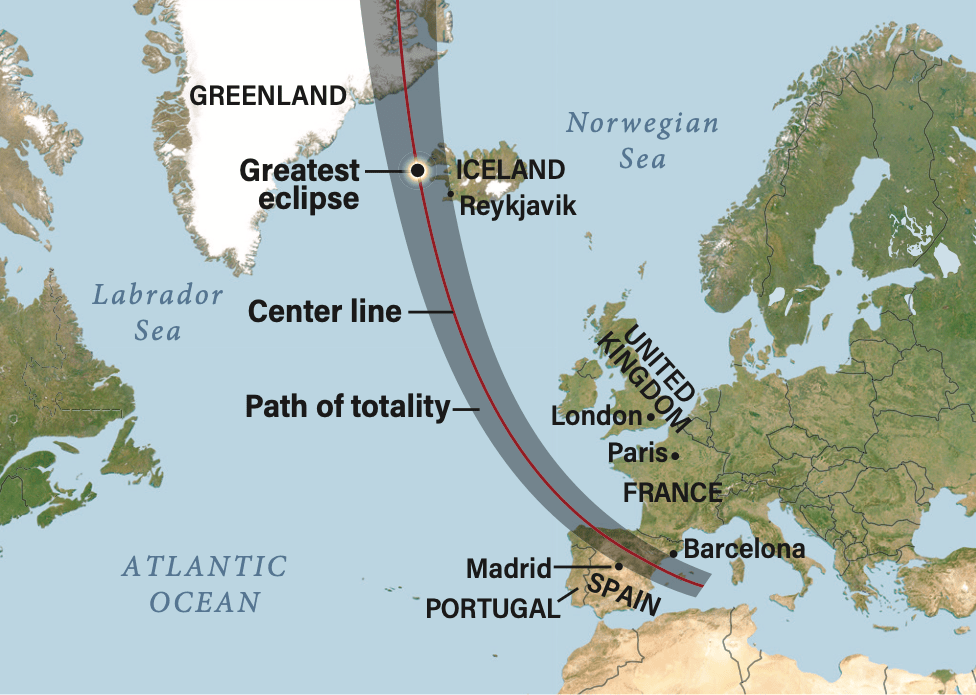
While totality is only visible along a narrow corridor where the Moon’s shadow is darkest, some of the rest of the world will see a partial solar eclipse, where only a portion of the Sun’s disk is covered by the Moon. That will be visible across parts of Europe, Russia, Africa, and North America, including Alaska and portions of the northeastern and eastern U.S. You can visit timeanddate.com’s page for the August 12 total solar eclipse to view an interactive map and determine whether you will see any portion of the eclipse, as well as the timing of your eclipse.
Note that during a partial eclipse, you must use eclipse glasses labeled with ISO 12312–2 or ISO 12312–2:2015 when viewing the Sun at all times. You can find more tips for safe solar observing on Astronomy.com here.
And today’s astronomical events don’t end there: The Perseid meteor shower peaks overnight tonight, under completely dark skies due to the New Moon. You’ll likely start catching meteors from the shower late tonight, as the radiant in northern Perseus is circumpolar (always visible) from many midnorthern latitudes and rises up from near the horizon a few hours after dark. It is highest in the early-morning hours, however, so your best chances for the most spectacular show will be early on the morning of the 13th — keep reading for more details below.
Sunrise: 6:09 A.M.
Sunset: 8:01 P.M.
Moonrise: 5:52 A.M.
Moonset: 8:09 P.M.
Moon Phase: New
*Times for sunrise, sunset, moonrise, and moonset are given in local time from 40° N 90° W. The Moon’s illumination is given at 10 P.M. local time from the same location.
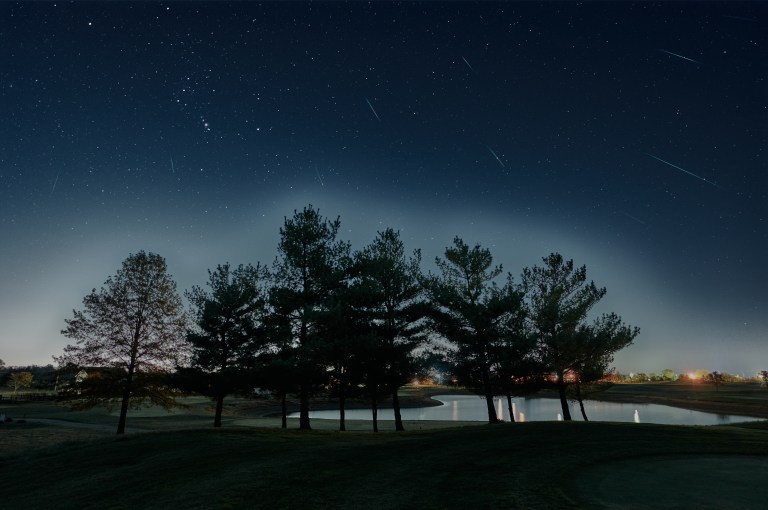
The early-morning hours of August 13 will be the best time to view this year’s Perseid meteor shower, peaking under the New Moon that brought August 12’s total solar eclipse.The shower’s high rate, lack of moonlight, and calendar date (when weather is warm in the Northern Hemisphere) mean it will be one of the best this year.
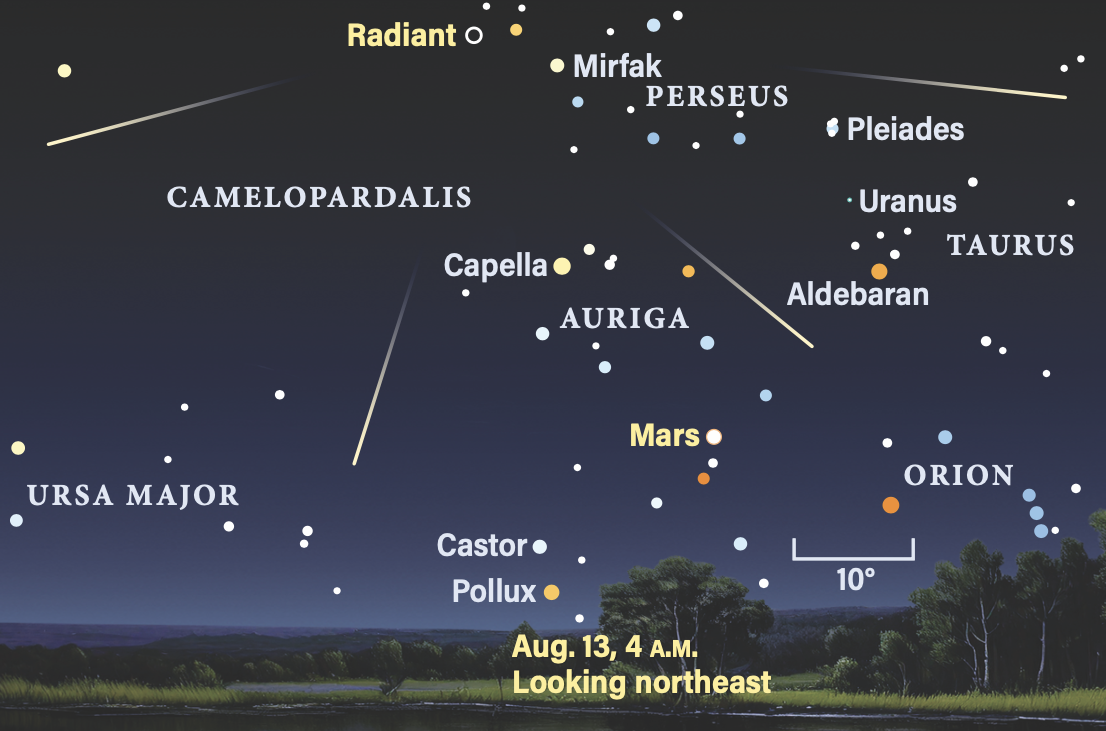
During the hours prior to dawn, observers are on the hemisphere of Earth that is turning into the meteor stream, creating the greatest show. Under dark skies, you may see some 60–80 meteors per hour in the few hours prior to dawn. Even observers under city lights will see bright meteors, though only about 30 or so per hour at best, as the lights wash out fainter streaks.
The Perseids’ radiant lies in northern Perseus, about 8° northwest (to the upper left) of 2nd-magnitude Mirfak. This is the point away from which shower meteors appear to stream, so to see the longest trails, you’ll want to look some 40° to 60° away from the radiant, to either side in the sky. You don’t need a telescope or any equipment to view a meteor shower, and your best bet is to constantly scan the sky with your eyes to catch shooting stars as they occur.
Alison Klesman is senior editor of Astronomy magazine. She holds a Ph.D. in astronomy and has studied a variety of topics, from minor planets to supermassive black holes.