Looking for a sky event this week? Check out our full Sky This Week column.
November 8: Ceres make an appulse
Mercury stands stationary this evening at 6 P.M. EST, bringing its easterly motion to an end. The planet will now begin moving retrograde, or westward, relative to the background stars.
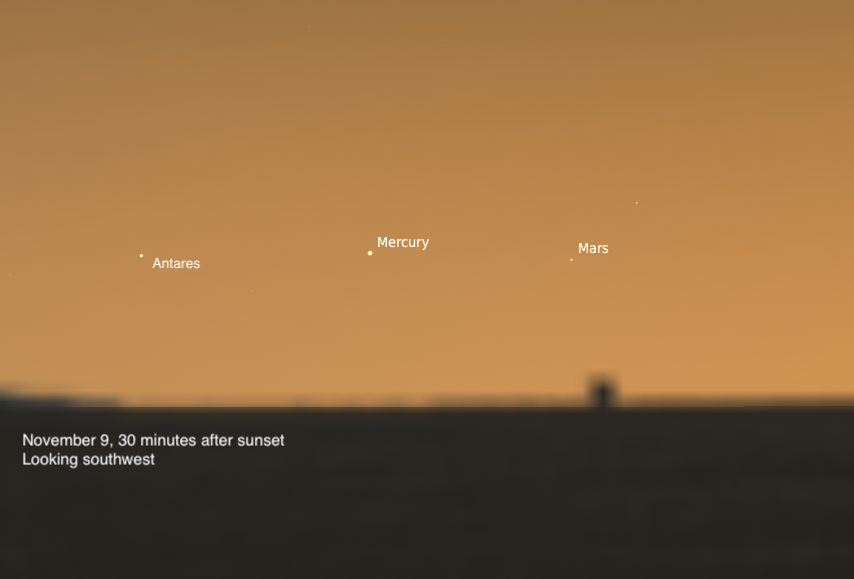
Currently located near the claws of Scorpius, Mercury shines today at magnitude 0.3 and is roughly even with the red giant Antares as they set in the sky soon after sunset. You’ll need to be quick — some 30 minutes after sunset this evening, the pair is just 2.5° high in the southwest. You’ll need a clear horizon if you want to spot them, and binoculars will aid with the search. If you can center on Mercury, look 4° to the left for 1st-magnitude Antares.
Mars is also nearby, even with Mercury and located to the planet’s right above the horizon. The Red Planet is roughly the same brightness as Antares, so will also require optical aid. It will continue to grow harder to see as the days pass, quickly moving toward solar conjunction in early January. This may be one of your last chances to spot it before then.
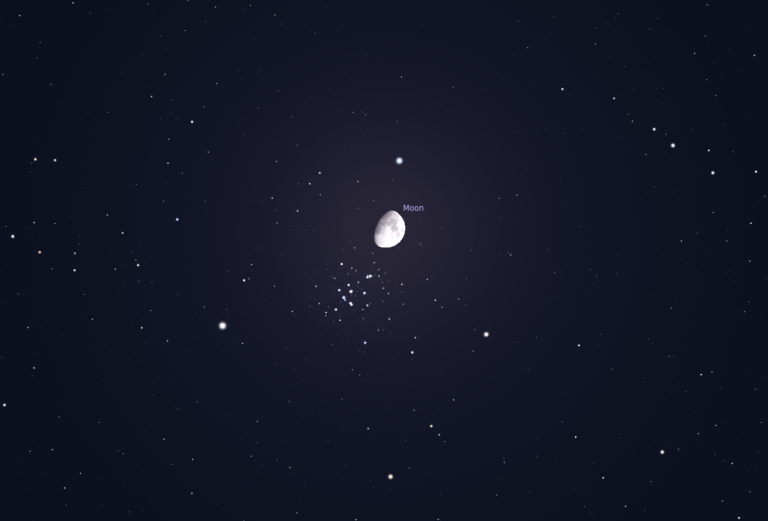
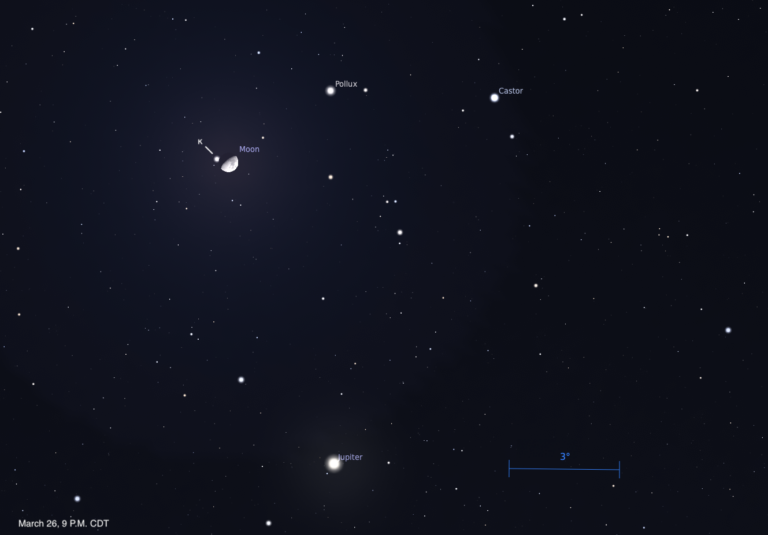
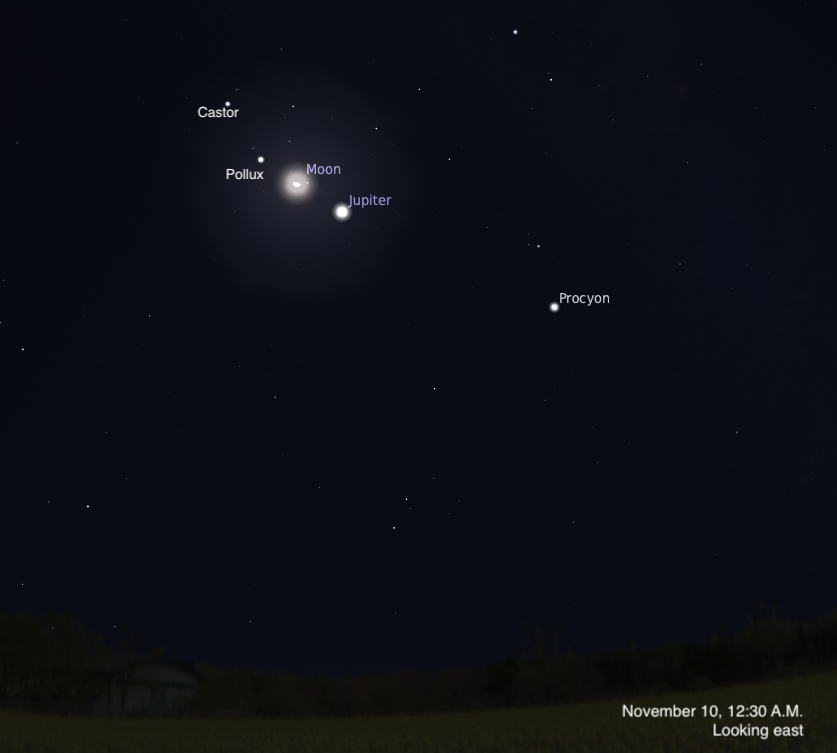
Later tonight, the gibbous Moon rises near Jupiter around 9 P.M. local time. They are visible overnight and into tomorrow morning, offering a great target for observers regardless of whether you’re a night owl or an early bird.
Sunrise: 6:38 A.M.
Sunset: 4:48 P.M.
Moonrise: 8:42 P.M.
Moonset: 11:35 A.M.
Moon Phase: Waning gibbous (72%)
*Times for sunrise, sunset, moonrise, and moonset are given in local time from 40° N 90° W. The Moon’s illumination is given at 10 P.M. local time from the same location.