Looking for a sky event this week? Check out our full Sky This Week column.
June 28: Mercury stands still
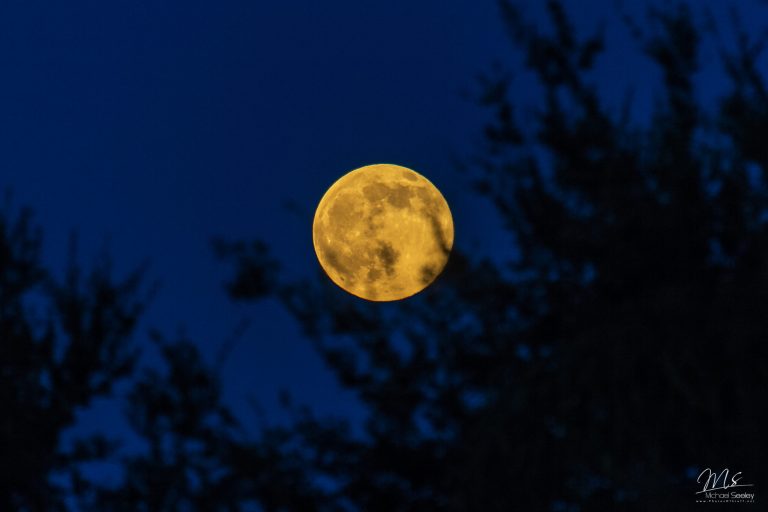
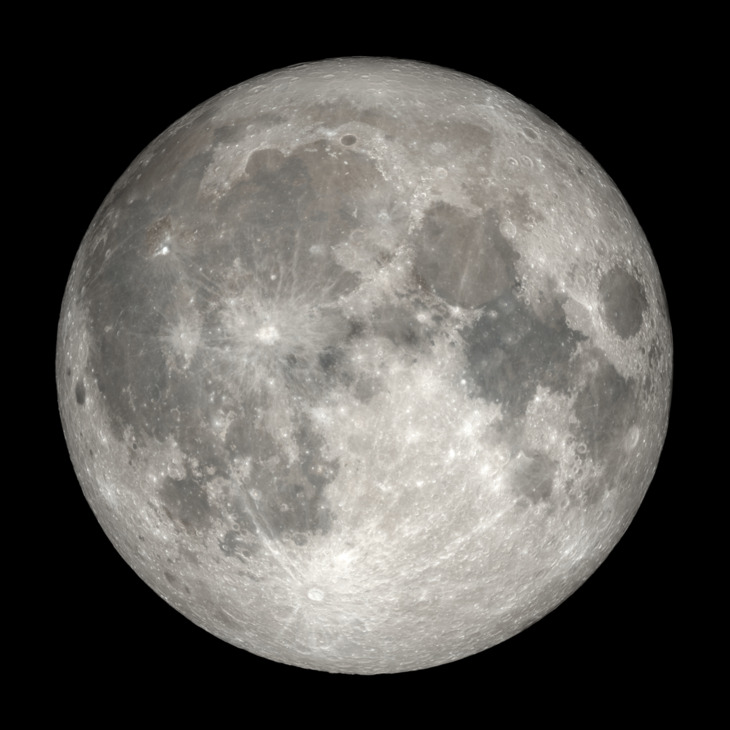
Full Moon occurs this evening at 7:57 P.M. EDT. The June Full Moon is also called the Strawberry Moon. According to NASA, this name comes from the Native American Algonquin tribes.
Rising shortly after sunset, the Full Moon will light the night from roughly dusk until dawn, dominating the constellation Sagittarius from within the Teapot asterism. It passes close to the 3rd-magnitude star Phi (φ) Sagittarii, which marks where the top of the Teapot’s handle joins with the body. From some parts of the world — South America and New Zealand — our satellite will occult nearby Nunki (Sigma [σ] Sgr), passing in front of the star and temporarily blocking it from view.
While the Full Moon is up, it can be hard to observe any deep-sky objects, so tonight concentrate your view on our satellite. Its nearside is mottled light and dark — those dark regions are old lava plains called maria, Latin for seas. In the lunar south, Tycho Crater is extremely prominent, with long rays of ejected material that was flung out when the crater was formed arcing across the nearside. These rays reach as far from the crater as Mare Serenitatis in the northern hemisphere, whose dark landscape is bisected by a bright white streak of ejecta.
Sunrise: 5:34 A.M.
Sunset: 8:33 P.M.
Moonrise: 8:51 P.M.
Moonset: 4:49 A.M.
Moon Phase: Full
*Times for sunrise, sunset, moonrise, and moonset are given in local time from 40° N 90° W. The Moon’s illumination is given at 10 P.M. local time from the same location.
Rising around 12:30 A.M. local daylight time, the distant planet Neptune lies in the constellation Pisces, not far from Saturn. By 3:30 A.M. on June 30, the ice giant has reached an altitude of some 30° in the southeast, offering excellent views in a still-dark sky.
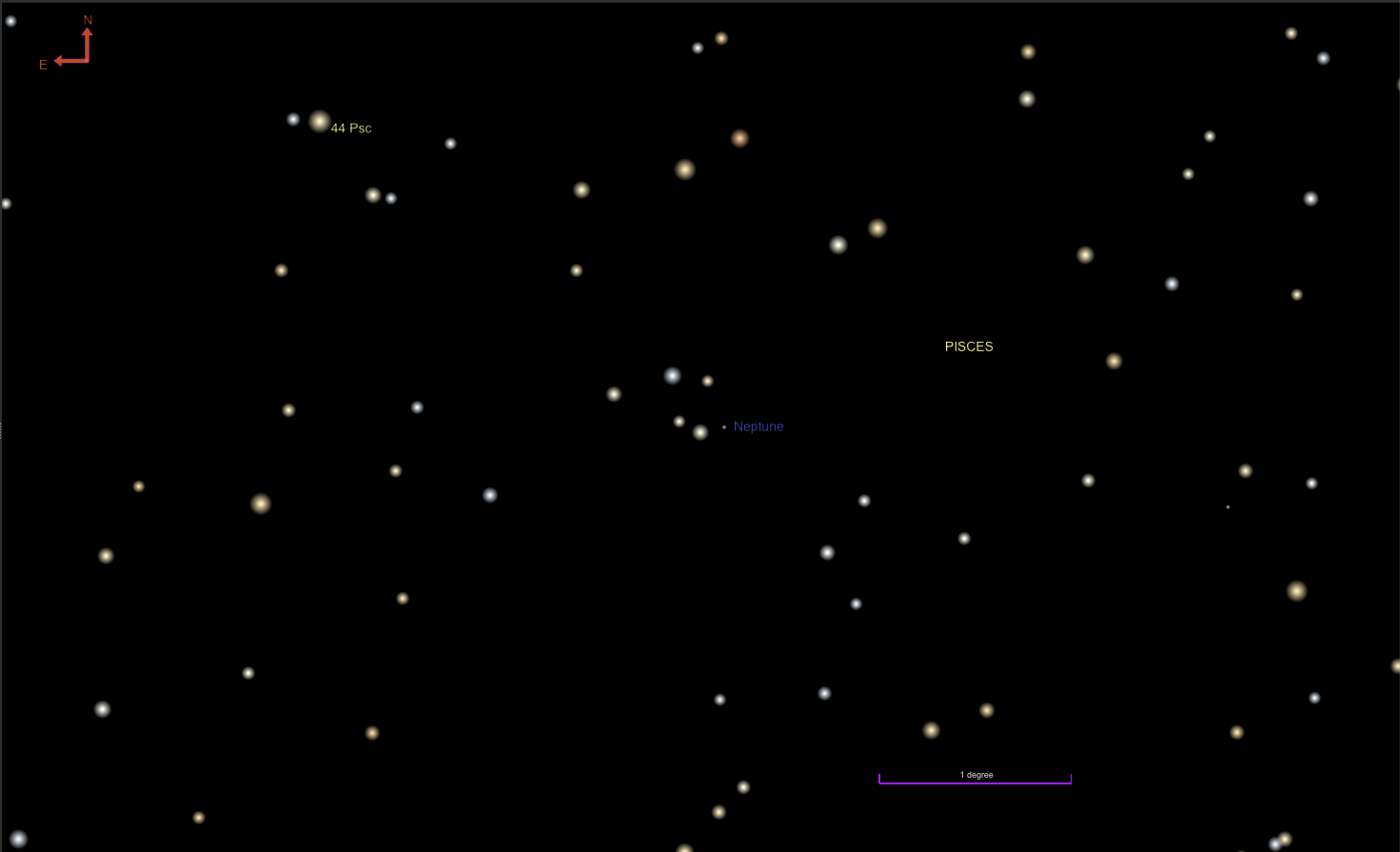
First, find Saturn, the brightest point of light in this region. From there, slide your gaze (through binoculars or a telescope, needed to see Neptune) about 7.4° west, which will land you on the 6th-magnitude star 44 Piscium. Then look about 2° southwest of this star, which will bring a group of some five stars into view, shaped like a carat pointing east. The brightest of the group is a 7th-magnitude sun; this morning Neptune is located some 20’ southwest of this star, and about 8’ from a fainter, 8th-magnitude field star. Shining at magnitude 7.8, Neptune fits right in with this grouping, but lies farther west than any of the stars. Its tiny disk spans 2” and glows a grayish-blue — see if you can separate it from the pinprick lights of the stars.
Alison Klesman is senior editor of Astronomy magazine. She holds a Ph.D. in astronomy and has studied a variety of topics, from minor planets to supermassive black holes.