Credit: Michael E. Bakich
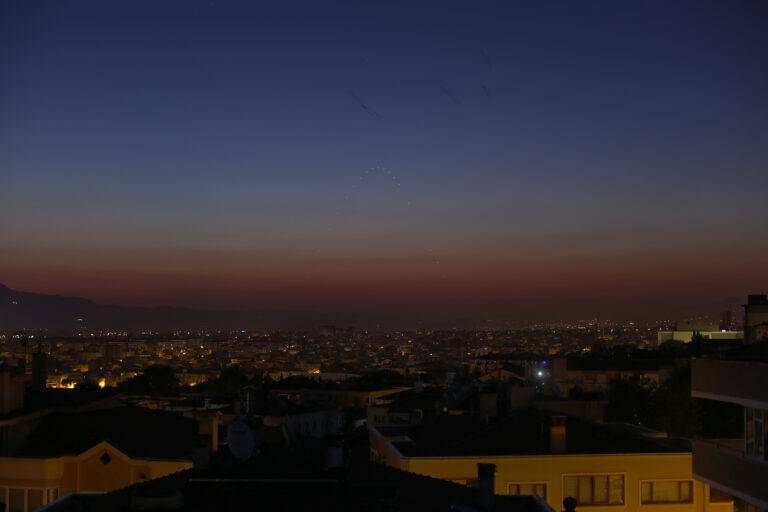
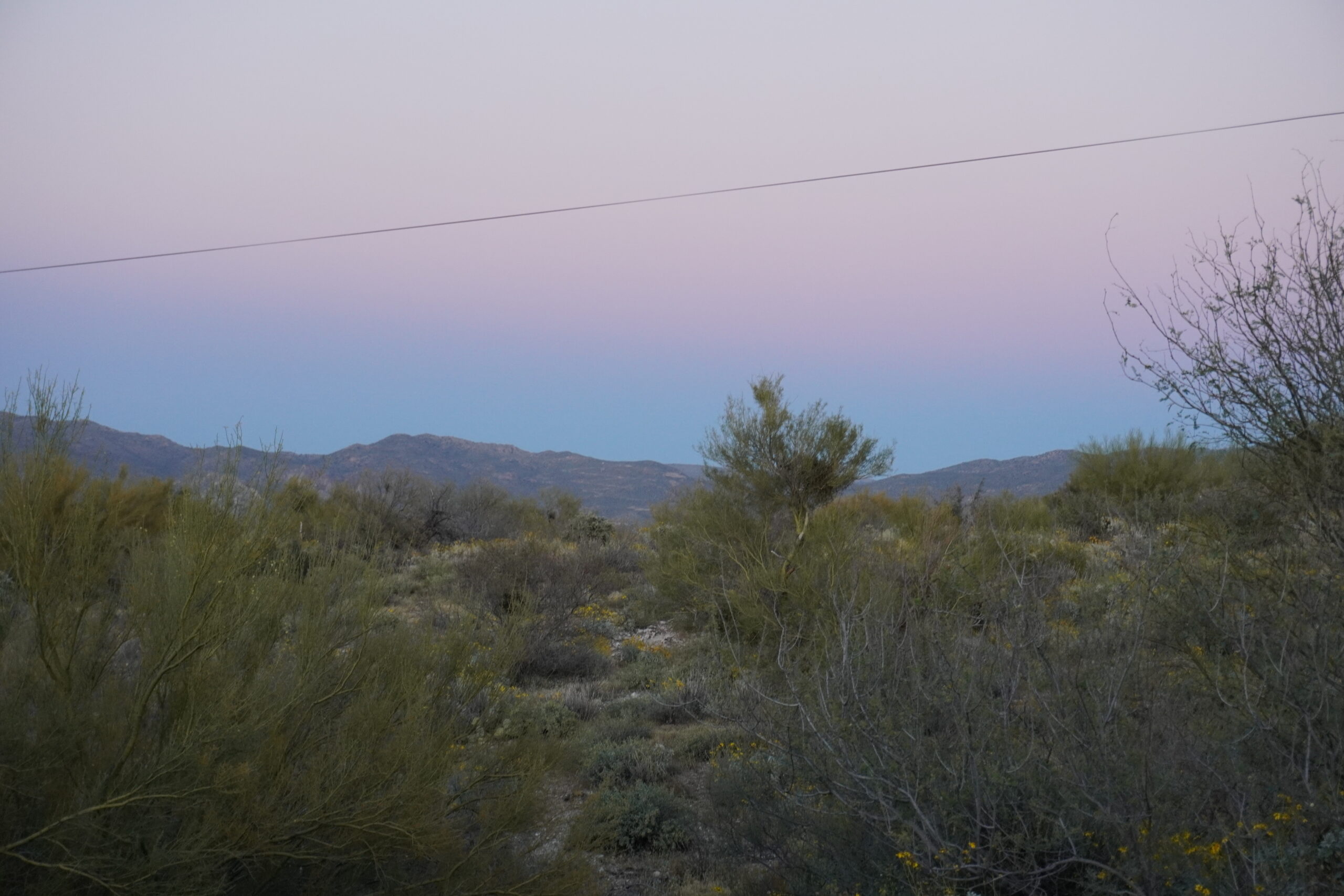
During the recent total lunar eclipse on March 3, a friend who was watching it with me from my observatory here in Tucson commented, “It’s so cool to actually be able to see Earth’s shadow!” That got me thinking about the many times I’ve seen our planet’s shadow on days other than those that featured lunar eclipses — and the thousands of times I’ve pointed it out to groups and individuals, nearly all of them having never seen it before.
You can see it, too. But you definitely need a clear eastern sky in the evening before sunset, or a clear western sky in the morning before sunrise.
At night, wait at least 15 minutes after the Sun sets before you start looking. That will give the shadow enough time to rise about 4°. To visualize this angle, hold your hand out in front of you. The width of two of your fingers equals roughly 4°. At my location in Tucson, 4° doesn’t even make it to the top of the mountain range to the east, so I have to wait a bit longer.
Credit: Michael E. Bakich
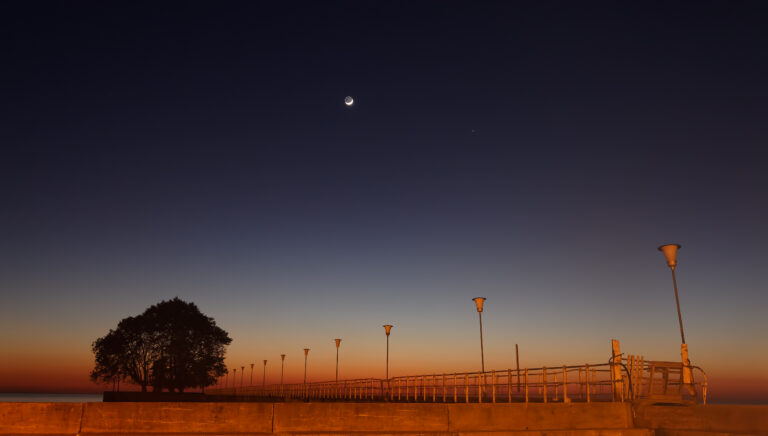
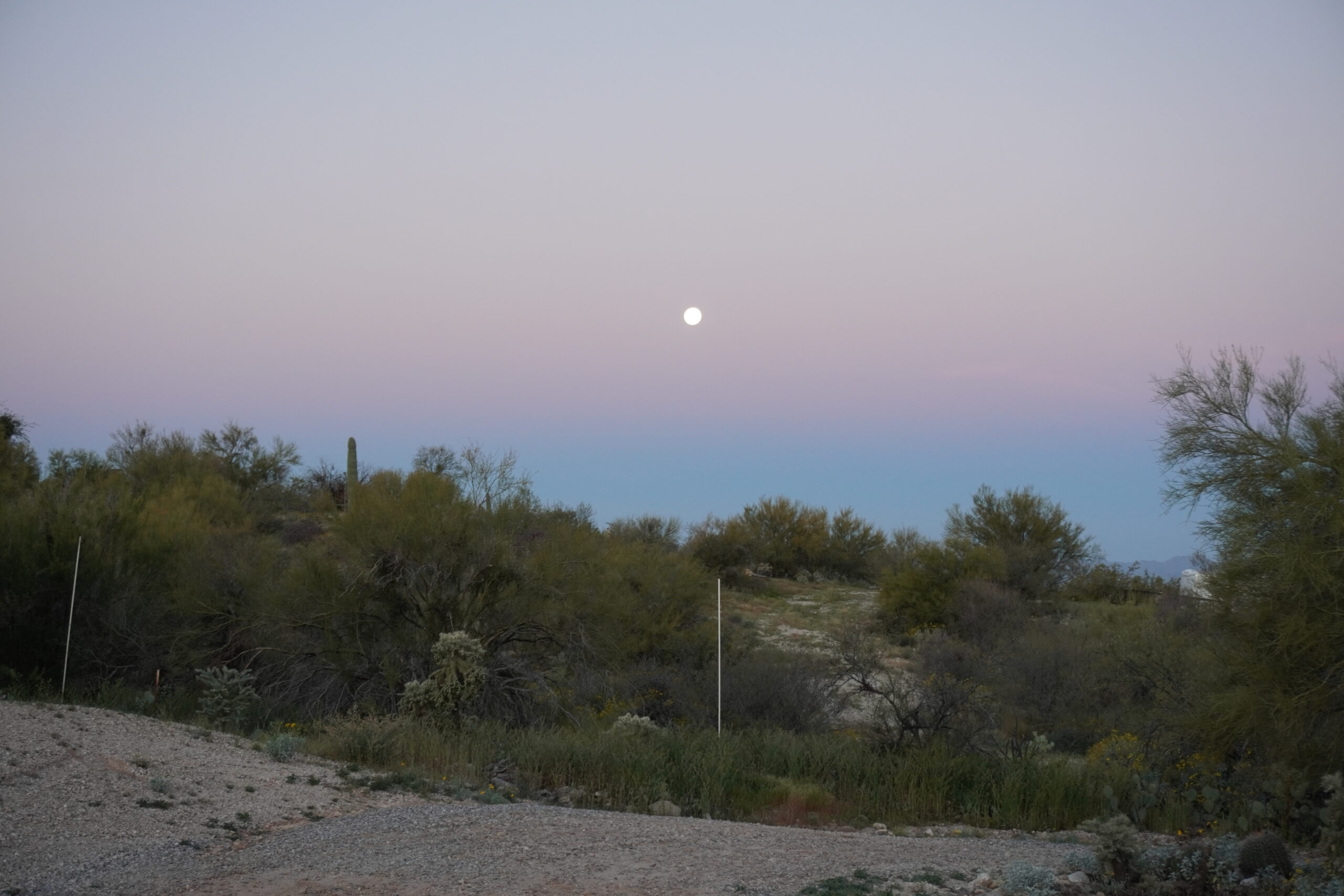
In the morning, start looking low in the west as much as 45 minutes before sunrise. Once the background sky low in the west gets brighter than the shadow, it will pop into view.
Oh, and there’s something else you might notice. Above the shadow (evening and morning), you may see a faint pink band. It’s called the belt of Venus, but it has nothing to do with the planet, since Venus can never be seen across the sky from the Sun. The name comes from a piece of clothing — a girdle — occasionally worn by the Roman goddess of beauty, Venus. As if she needed it!
The belt of Venus’ color comes from reddened sunlight (after sunset or before sunrise) reflecting back to your location. For both Earth’s shadow and the belt of Venus, their centers are directly across from the point of sunrise or sunset, usually called the antisolar point.
This isn’t a difficult observation if your sky is clear. So, head out sometime soon and see Earth’s shadow on a day when there’s no lunar eclipse. Good luck!