Home > Features > News
News
The latest from Astronomy
Saturn to make its best appearance of the year
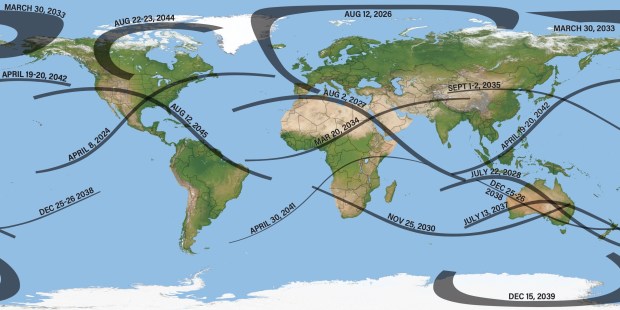
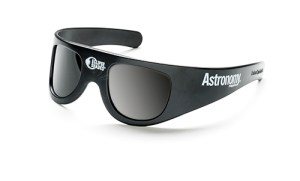
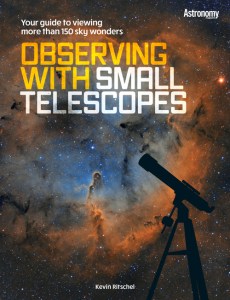
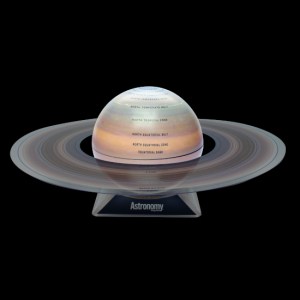
Saturn's opposition, March 21, marks the best time of year to view the ringed planet because it lies closest to Earth and thus appears its biggest and brightest. Astronomy magazine has all the tools you need to get the most of this great observing opportunity.
Soyuz landing caps milestone space station mission
Working in frigid temperatures, Russian recovery teams were on hand at the landing site to help the crew exit the Soyuz vehicle and readjust to gravity. The crew members will return to the Gagarin Cosmonaut Training Center in Star City, outside of Moscow.
Astronomers discover most primitive supermassive black holes known
As grimy and unkempt as our present-day universe is today, scientists believe the very early universe didn't have any dust — which tells them that the most primitive quasars should also be dust-free. But nobody had seen such pristine quasars — until now.
First temperate exoplanet sized up
Corot-9b is the first exoplanet that resembles planets in our own solar system.
Jupiter's spot seen glowing: scientists get first look at weather inside the solar system's biggest storm
Telescopes show swirls of warmer air and cooler regions never seen before within Jupiter's Great Red Spot.
Super supernova: White dwarf star system exceeds mass limit
The findings could affect the way cosmologists measure the expansion of the universe.
New Hubble treasury project to survey first third of cosmic time
By imaging more than 250,000 distant galaxies, the project will provide the first comprehensive view of the structure and assembly of galaxies over the first third of cosmic time.
Scientists say Einstein's theory applies beyond the solar system
Scientists' analysis of more than 70,000 galaxies demonstrates that the universe plays by the rules set out by Einstein in his famous theory.
Shocking recipe for making killer electrons
Killer electrons are highly energetic particles trapped in Earth's outer radiation belt.
Epsilon Aurigae and the Citizen Sky Project
The American Association of Variable Star Observers' Citizen Sky project promotes a beginner-oriented program to study Epsilon Aurigae. No special equipment is needed, as observers can readily see Epsilon Aurigae with the unaided eye.
The story of a variable star observation
Astronomy magazine columnist Glenn Chaple explains how to observe variable stars and submit brightness data to the American Association of Variable Star Observers' web site.
Astronomy magazine to sponsor Northeast Astronomy Forum
Astronomy, the world's largest magazine on the subject, proudly announces a partnership with the Rockland Astronomy Club to sponsor this terrific event.
Astronomy magazine celebrates its new observatory
On September 17, 2009, editors will dedicate the magazine's observatory at Rancho Hidalgo, near Animas, New Mexico.
Lunar Reconnaissance Orbiter (LRO): NASA's mission to map the lunar surface
Keep up with Astronomy magazine's coverage of this important mission. Here you'll find the latest headlines and blogs about the Lunar Reconnaissance Orbiter and the Lunar Crater Observation and Sensing Satellite (LCROSS).
E-mail Address: Password:
Remember me?

Forgot your password » | Login help »

Not a member? Register » | Why join? »

Newsletter Signup

Receive news, sky-event information, observing tips, and more from Astronomy's free weekly e-mail newsletter.

Privacy Policy

Cosmology's Greatest Discoveries