
Mission Highlight: Innospace launches Spaceward mission
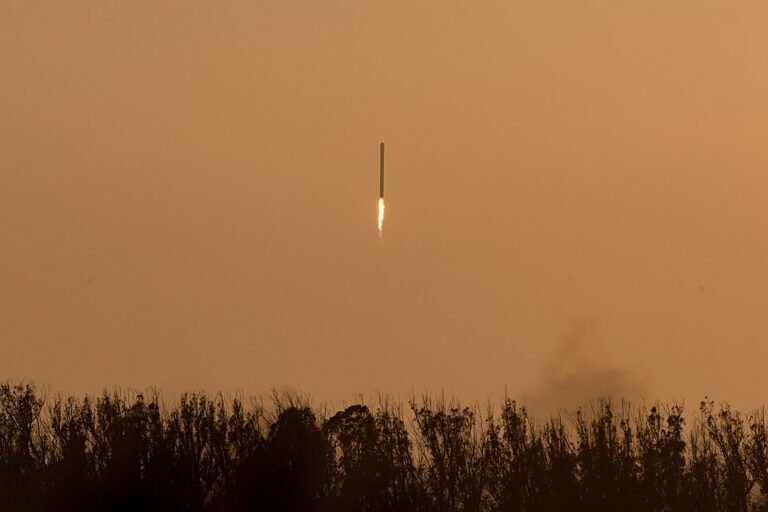
The mission highlight this week is the first commercial launch for South Korean private spaceflight company Innospace. The mission, dubbed “Spaceward,” is scheduled to lift off on Wednesday, Dec. 17, at 1:45 p.m. EST from the Alcântara Launch Center in Maranhão, Brazil.
Watch the livestream here.
This flight features the Hanbit-Nano, a two-stage vehicle designed to serve the small satellite market. The rocket employs a powerful 25-ton thrust hybrid engine that powers the first stage, while the second stage relies on a liquid methane and oxygen engine.
The Spaceward mission will see Hanbit-Nano attempt to deploy payloads into a 186-mile (300-kilometer) low Earth orbit (LEO). If successful, Innospace will become the first private South Korean company to place a customer satellite into orbit.
The vehicle is carrying a total of eight payloads: five small satellites to be deployed and three experimental payloads that will remain onboard. The manifest includes two small satellites for the Universidade Federal do Maranhão dedicated to technology development and educational missions.
Additionally, the Brazilian space agency Agência Espacial Brasileira is flying two small satellites for collecting climate and environmental data, plus one experimental inertial navigation system (INS) payload.
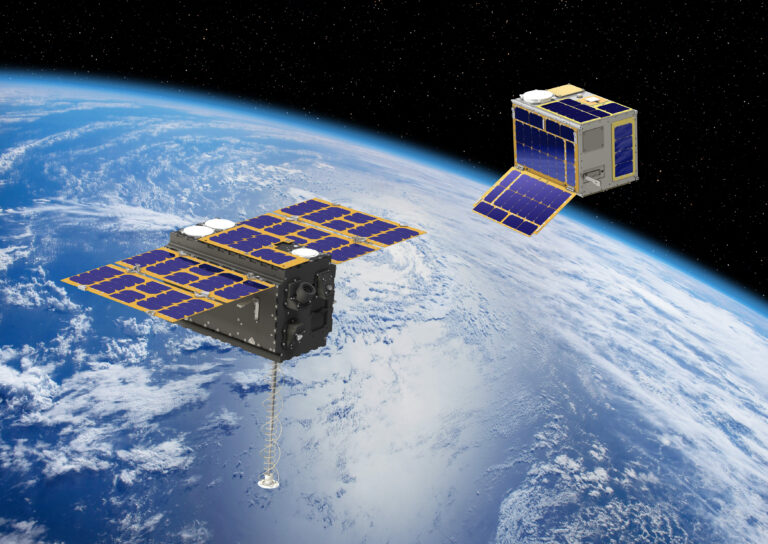
The payload also features one global navigation satellite system receiver and one INS payload from private Brazilian aerospace firm Castro Leite Consultoria. Rounding out the manifest is one nanosatellite from Indian startup Grahaa Space, designed to demonstrate technology for a future constellation that will stream near-real-time high-definition video of Earth.
Preparations at the launch site are in the final stages. The vehicle is scheduled to roll out to the pad on Monday morning, Dec. 15. Innospace CEO Kim Soo-jong highlighted the significance of the flight in a news release, stating, “The first commercial launch ‘Spaceward’ mission has great symbolic significance in that it marks the beginning of a space transportation service using a launch vehicle developed by a private Korean company.”
Other missions this week
A diverse array of missions is scheduled this week, ranging from commercial broadband deployment to classified government operations and next-generation navigation satellites.
On Monday, Dec. 15, Rocket Lab kicks off the week with the “Bridging The Swarm” mission, launching an Electron rocket from the Māhia Peninsula in New Zealand at 7:55 p.m. EST. The primary payload is NEONSAT-1A for the Korea Advanced Institute of Science and Technology (KAIST). This high-resolution optical satellite will monitor natural disasters on the Korean Peninsula and serve as the first of a planned constellation.
Later, at 10:15 p.m. EST, China is scheduled to launch a Long March 4C from the Taiyuan Satellite Launch Center. The payload is currently undisclosed, but the vehicle is frequently used for government remote sensing satellites.
On Tuesday, Dec. 16, at 3:28 a.m. EST, United Launch Alliance (ULA) launches an Atlas V 551 from Cape Canaveral. The “Amazon Leo” (LA-04) mission will deploy another batch of Project Kuiper satellites, Amazon’s LEO constellation designed to provide global broadband internet.
SpaceX has a double-header of Starlink missions. First, a Falcon 9 launches Starlink Group 6-99 from Kennedy Space Center at 7:45 a.m. EST. Just a few hours later, at 10:24 a.m. EST, another Falcon 9 lifts off from Vandenberg Space Force Base with Starlink Group 15-13.
In the evening, Mitsubishi Heavy Industries (MHI) launches the H3-22S rocket from Tanegashima, Japan, at 9:10 p.m. EST. The payload is Michibiki 5 (QZS-5), a navigation satellite that will replace the original Michibiki satellite in Japan’s Quasi-Zenith Satellite System, ensuring continuous high-precision positioning services for the region.
Watch the launch here.
On Wednesday, Dec. 17, Arianespace targets 12:01 a.m. EST for an Ariane 62 launch from French Guiana. The mission carries the Galileo FOC FM33 and FM34 satellites, adding two more spacecraft to Europe’s global navigation satellite system.
Watch the launch here.
On Thursday, Dec. 18, Rocket Lab conducts its second mission of the week, “STP-S30,” launching an Electron from Wallops Flight Facility in Virginia at 12:00 a.m. EST. This mission for the U.S. Space Force’s Space Test Program carries DISKSat, a unique disk-shaped satellite designed to test sustained operations in Very Low Earth Orbit (VLEO).
Blue Origin returns to flight with NS-37, a crewed suborbital mission launching on the New Shepard vehicle from West Texas at 9:30 a.m. EST.
On Saturday, Dec. 20, SpaceX launches the Starlink Group 6-88 mission on a Falcon 9 from Cape Canaveral at 12:00 a.m. EST.
China’s heavy-lift Long March 5 is scheduled to launch from Wenchang at 6:00 a.m. EST. While the specific payload has not been publicly confirmed, the Long March 5 is typically reserved for China’s largest and most critical space assets.
The week concludes with a major launch from India. The Indian Space Research Organisation (ISRO) launches an LVM-3 from the Satish Dhawan Space Centre at 11:00 p.m. EST. The payload is BlueBird Block 2 FM1 for AST SpaceMobile. This is the first of the company’s Block 2 satellites, featuring the largest commercial communications array ever deployed in low Earth orbit to support direct-to-cell broadband connectivity.
Last week’s recap
The week of Dec. 8–14 was quite busy, featuring 12 orbital launches from across the globe.
SpaceX launched five Falcon 9 missions, including the classified NROL-77 (National Reconnaissance Office Launch) reconnaissance satellite and four batches of Starlink internet satellites.
China conducted six launches. The surge included flights of the Long March 6A and Long March 12 carrying SatNet LEO internet satellites, as well as missions by the Long March 4B carrying the Yaogan 47 remote sensing satellite and Long March 3B/E launching the classified TJSW-22 test satellite. Commercial providers also contributed, with Chinese firm CAS Space launching a Kinetica 1 with a commercial rideshare and state-owned Chinese firm ExPace launching a Kuaizhou 11 carrying the DEAR-5 experimental capsule.
Rocket Lab successfully launched the “RAISE And Shine” mission from New Zealand, deploying the RAISE-4 technology demonstrator for the Japan Aerospace Exploration Agency (JAXA).
Looking ahead
The launch calendar remains packed through the end of the year, with Russia and China targeting multiple high-profile missions. Roscosmos is preparing two Soyuz launches: the Obzor-R n°1 radar imaging satellite from Plesetsk on Dec. 23, and the twin AIST-2T stereoscopic satellites from Vostochny no earlier than (NET) Dec. 28.
In China, CASC is targeting late December for the launch of the Fengyun-4C weather satellite on a Long March 3B/E, alongside potential demo flights of three new commercial vehicles: the reusable Long March 12A, CAS Space’s Kinetica 2, and private space firm Galactic Energy’s Ceres 2.
Meanwhile, SpaceX aims to close out 2025 with the launch of the CSG-3 radar satellite for Italy and the classified USSF-31 mission for the U.S. Space Force, while continuing its Starlink cadence. Finally, ISRO is scheduled to launch the EOS-N1 Earth observation satellite on a Polar Satellite Launch Vehicle (PSLV) mission on Dec. 30.