Editor’s Note: This article was originally published with a headline and text indicating a potential launch as early as Sunday, Feb. 8. Following the conclusion of the wet dress rehearsal on Feb. 3, 2026, NASA has officially waved off the February window and is now targeting March.
Mission Highlight: Artemis 2
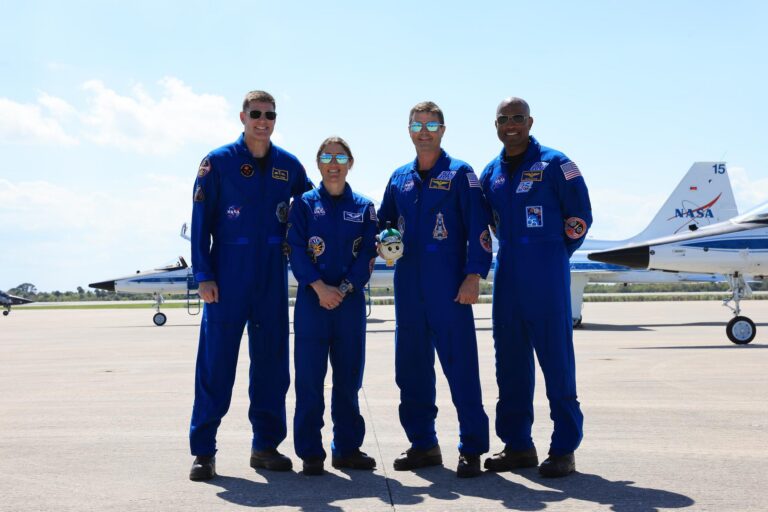
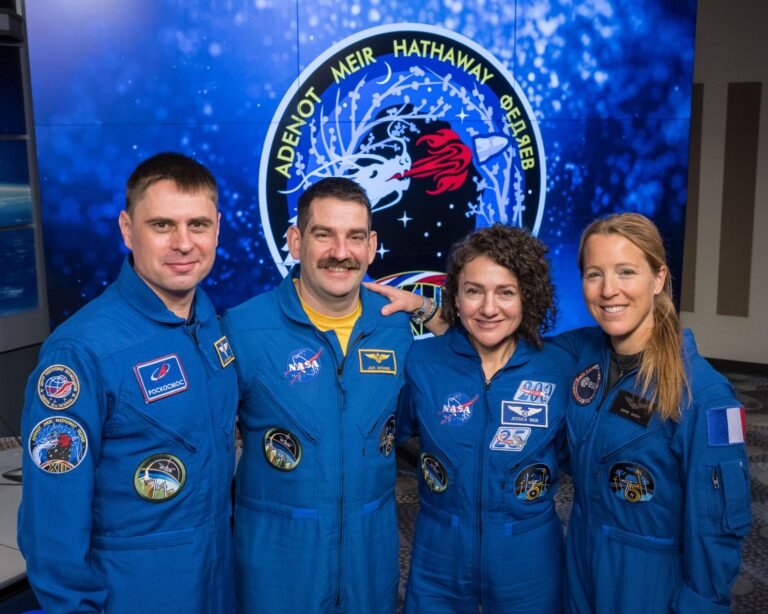
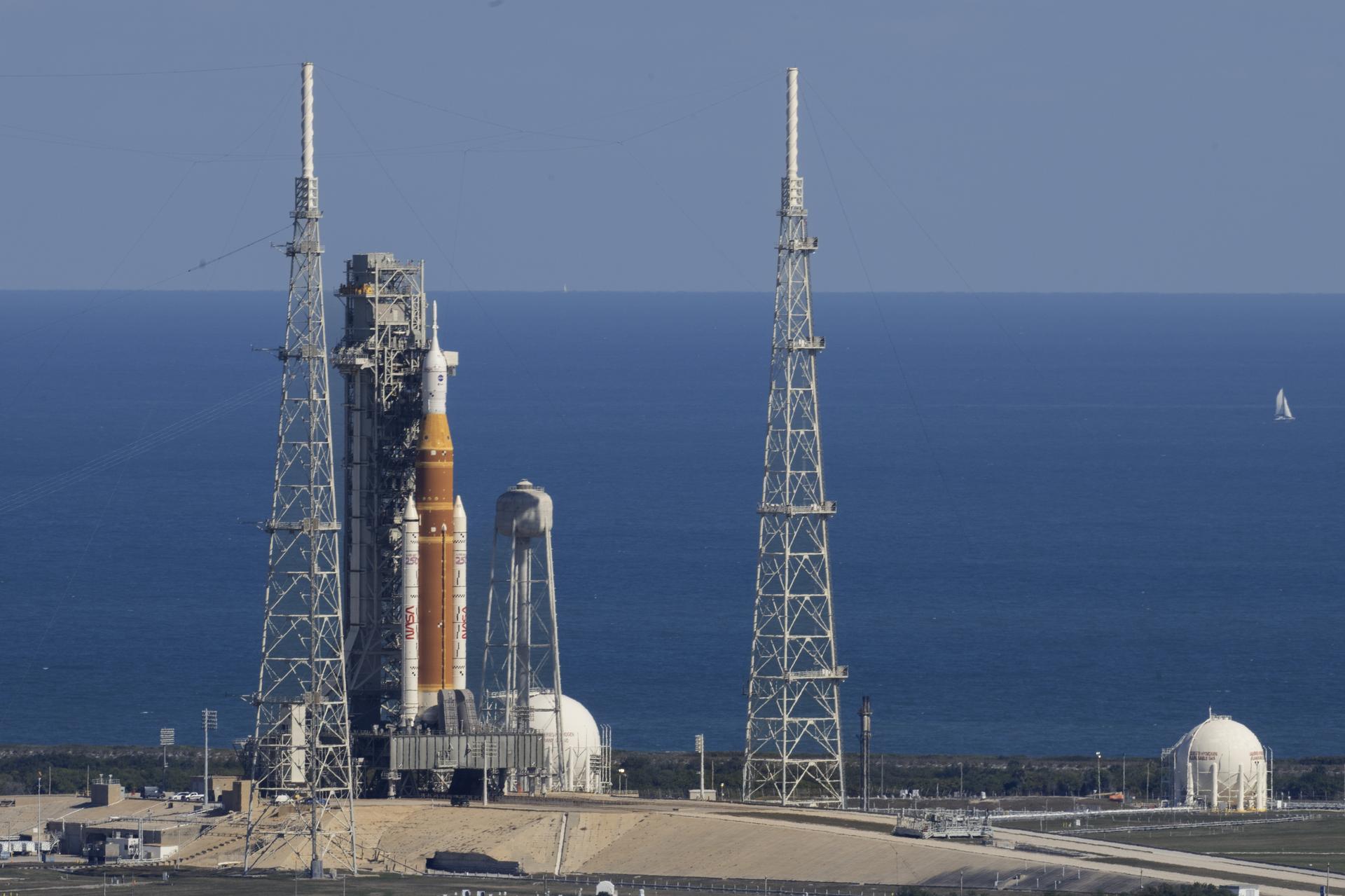
NASA is targeting no earlier than Sunday, Feb. 8, for the launch of the historic Artemis 2 mission. The ten-day journey will be the first time astronauts have visited the moon since 1972’s Apollo 17. The four-person crew — consisting of NASA astronauts Reid Wiseman, Victor Glover, Christina Koch, and Canadian astronaut Jeremy Hansen — will launch in a Space Launch System (SLS) rocket onboard the Orion spacecraft on Sunday at 11:20 p.m. EST, assuming no additional delays.
The initial launch window opened on Feb. 6, but due to unusually cold temperatures at Florida’s Kennedy Space Center, NASA delayed launch preparations. Those included a pre-launch test with the rocket fully fueled and a simulated countdown — a so-called wet dress rehearsal — originally scheduled for Jan. 31. The wet dress rehearsal is happening today instead, with the simulated launch window opening tonight at 9:00 p.m. EST. The official countdown clock for this test began at 8:13 p.m. EST on Feb. 1, roughly 49 hours before “launch”, with the arrival of launch teams to their stations.
Since their arrival, teams have practiced every step of the launch process, including charging Orion’s flight batteries and preparing the rocket for fueling. Engineers began the critical phase of loading the SLS core stage and interim cryogenic propulsion stage tanks with more than 700,000 gallons of liquid oxygen and liquid hydrogen this morning around 11:25 a.m. EST. The wet dress rehearsal is expected to last until 1:00 a.m. EST Tuesday, as the team will practice holding the countdown and restarting it several times.
Stream the wet dress rehearsal
This crewed flight test follows 2022’s uncrewed Artemis 1 mission, which revealed an unexpected loss of charred material from the Orion heatshield during its high-speed reentry into Earth’s atmosphere. NASA investigated the phenomenon and determined the incident occurred because hot gases built up underneath the shield as the craft skipped in and out of the atmosphere. As a result, mission planners have modified the reentry trajectory of the craft for Artemis 2. Additionally, engineers have spent the last several months addressing other technical issues with the Orion electrical system and life support systems to ensure the safety of the four-person crew during their journey.
Artemis 2 is just the beginning. The mission is designed to test Orion’s critical systems in a deep-space environment, paving the way for Artemis 3 — the mission that will return humans to the lunar surface. By verifying that the SLS and Orion can safely transport and sustain humans in lunar orbit, NASA moves one step closer to establishing the Gateway station and eventually sending the first astronauts to Mars.
Other missions this week
On Monday, Feb. 2, a classified mission from the Russian Aerospace Forces is scheduled to lift off from the Plesetsk Cosmodrome in Russia at 10:00 a.m. EST. The Soyuz 2.1a rocket, equipped with a Fregat-M upper stage, will carry a Cosmos payload of unknown nature into orbit, continuing Russia’s steady cadence of military satellite deployments.
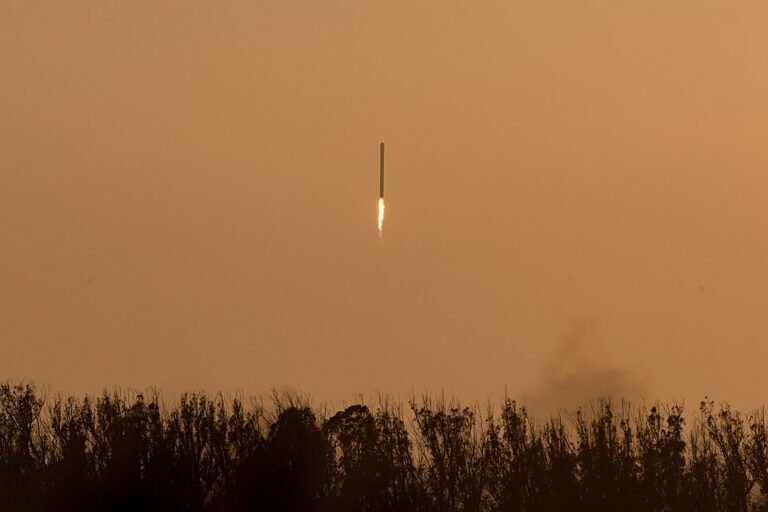
On Monday, Feb. 2, SpaceX is scheduled to launch the Starlink Group 17-32 mission from Vandenberg Space Force Base in California at 10:47 a.m. EST. The Falcon 9 first-stage booster will attempt a landing on the droneship Of Course I Still Love You in the Pacific Ocean.
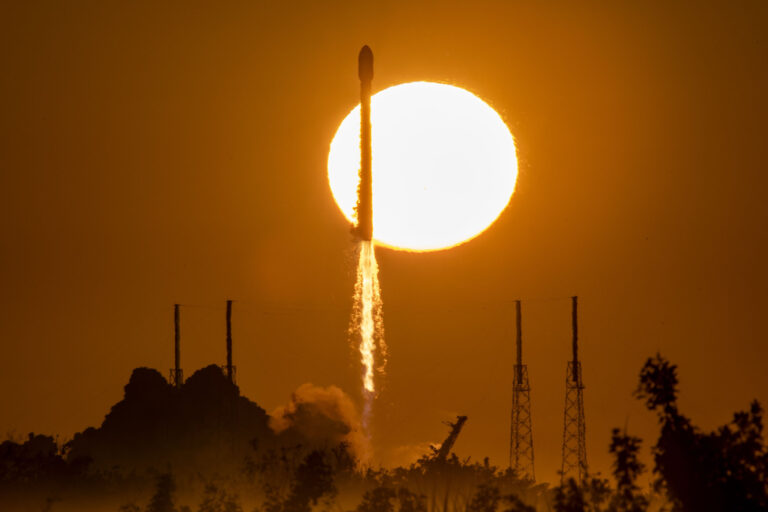
On Wednesday, Feb. 4, a Falcon 9 is scheduled to launch the Starlink Group 6-103 mission from Cape Canaveral Space Force Station at 04:46 p.m. EST, targeting a landing on the droneship A Shortfall of Gravitas.
On Friday, Feb. 6, the SpaceX manifest continues with the Starlink Group 17-33 mission launching from Vandenberg at 12:05 p.m. EST.
On Saturday, Feb. 7, the Starlink Group 6-104 mission will lift off from Cape Canaveral at 04:41 a.m. EST to close out the week’s scheduled primary launches, with the booster slated to land on the droneship Just Read the Instructions.
Last week’s recap
Recapping a busy end to January, the week was headlined by the successful delivery of the GPS III SV09 satellite, which launched from Cape Canaveral on Jan. 27 at 11:53 p.m. EST, marking the ninth next-generation GPS Block III satellite to reach orbit. Activity ramped up on Thursday, Jan. 29, with SpaceX launching the Starlink Group 17-19 mission from Vandenberg at 12:53 p.m. EST, followed later that evening by Rocket Lab’s successful “Bridging The Swarm” mission from New Zealand at 08:21 p.m. EST, which deployed a Korean disaster monitoring satellite. The week concluded on Friday, Jan. 30, with a double-header: SpaceX launched the Starlink Group 6-101 mission from Cape Canaveral at 2:22 a.m. EST, while the China Aerospace Science and Technology Corporation (CASC) launched the AlSat 3B mission aboard a Long March 2C from China at 11:01 p.m. EST.
Looking ahead
On Tuesday, Feb. 10, SpaceX is slated to launch yet another batch of Starlink satellites, Group 17-34, from Vandenberg at 9:07 a.m. EST.
On Wednesday, Feb. 11, the schedule is headlined by one of NASA’s most significant missions of the year as SpaceX launches the Crew-12 mission from Cape Canaveral at 6:00 a.m. EST. This flight will carry a fresh crew of four astronauts to the International Space Station, reinforcing the station’s research capacity following the recent early return of the Crew-11 astronauts due to a medical situation.
On Thursday, Feb. 12, Roscosmos is preparing a Proton-M rocket to launch the Elektro-L n°5 weather satellite from the Baikonur Cosmodrome in Kazakhstan at 03:56 a.m. EST.
On Thursday, Feb. 12, Arianespace is set to debut the powerful Ariane 64 configuration from the Guiana Space Centre at 11:45 a.m. EST, carrying the first large-scale deployment of satellites for Amazon’s Project Kuiper.