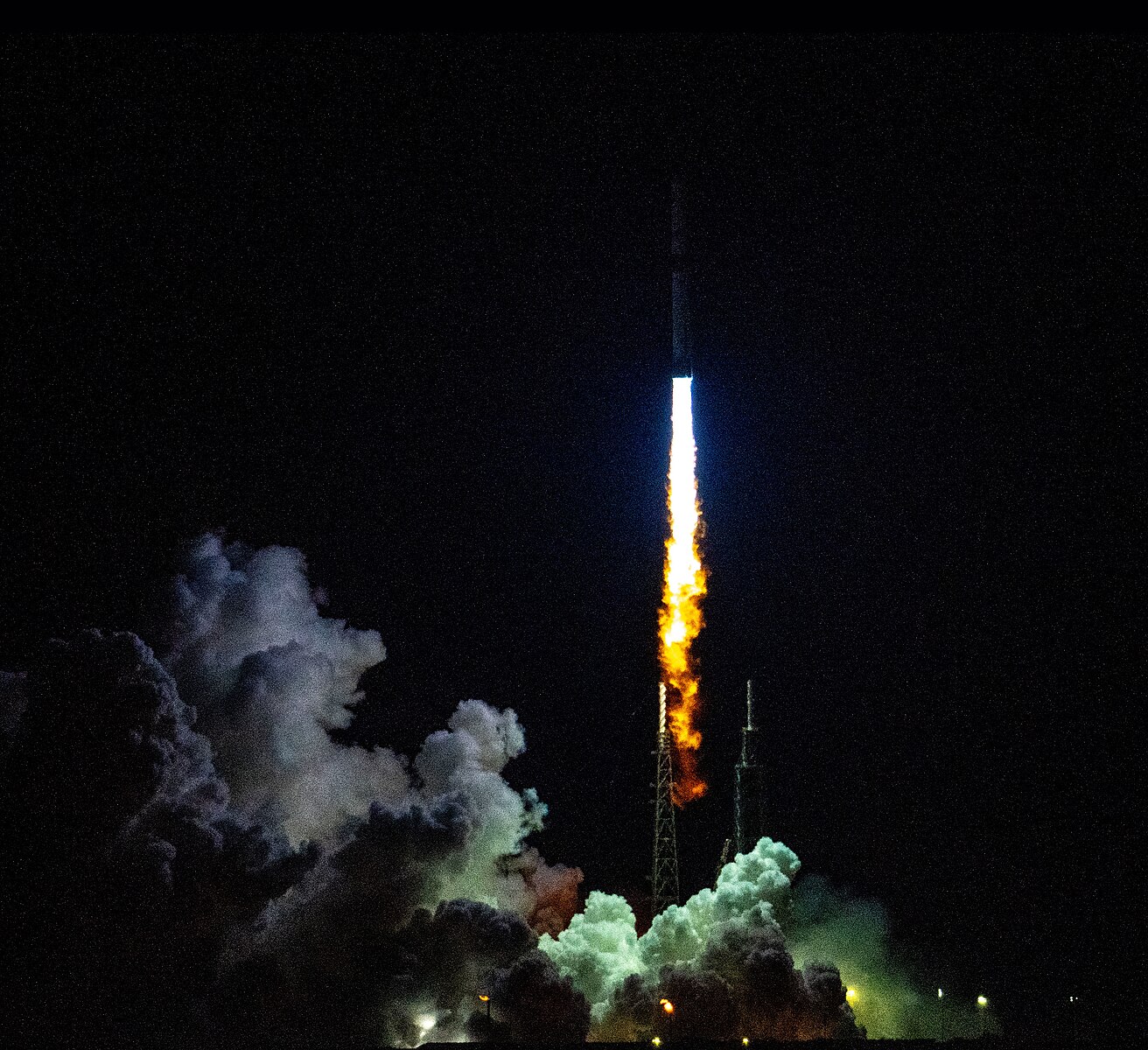
Mission Highlight: New Glenn’s second flight to launch NASA’s ESCAPADE
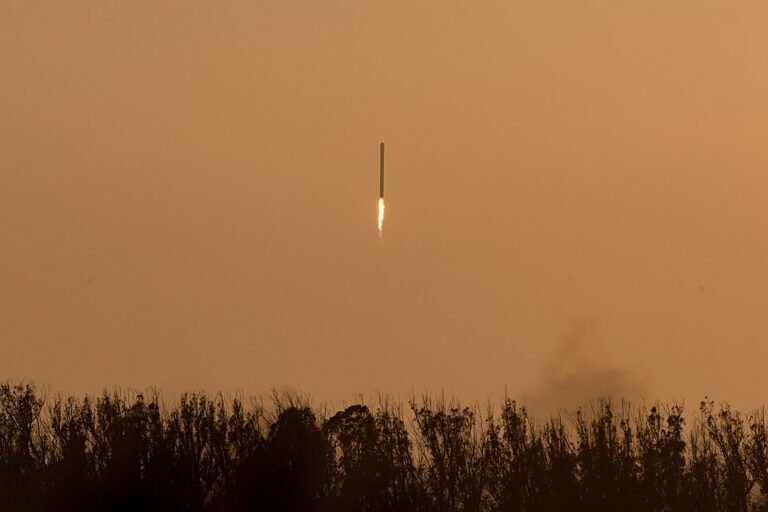
This week’s highlight is the second-ever launch of Blue Origin’s New Glenn heavy-lift rocket, carrying NASA’s ESCAPADE mission. The rocket is scheduled to lift off from Space Launch Complex 36 at Cape Canaveral Space Force Station no earlier than Sunday, Nov. 9. This flight follows the rocket’s debut mission in January and is its first operational launch for a NASA science payload.
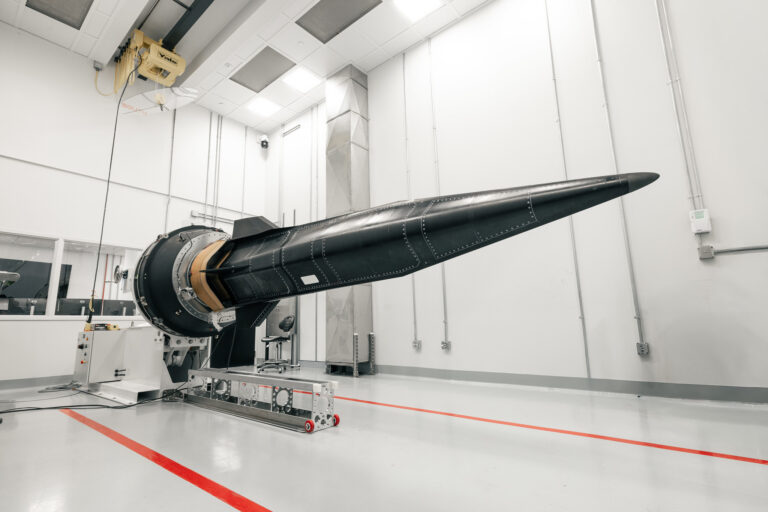
The payload, ESCAPADE (Escape and Plasma Acceleration and Dynamics Explorers), consists of two identical small satellites. The twin probes, nicknamed “Blue” and “Gold,” were built by Rocket Lab and are part of NASA’s Small Innovative Missions for Planetary Exploration (SIMPLEx) program.
Once they arrive at Mars, the two spacecraft will enter complementary orbits to study the planet’s unique magnetosphere. Their goal is to understand how the solar wind interacts with the Martian atmosphere, stripping it away over time. This dual-satellite view will give scientists a real-time, 3D picture of atmospheric escape, helping to solve the puzzle of how Mars lost its ancient, watery climate.
The 321-foot-tall (98-meter) New Glenn rocket recently completed a successful static fire of its seven BE-4 engines on Oct. 30 in preparation for this flight. Blue Origin will attempt to land the reusable first stage on its drone ship, named Jacklyn, in the Atlantic Ocean. This second flight features a new booster named Never Tell Me the Odds. The first booster, So You’re Telling Me There’s a Chance, was not recovered on the debut mission in January after its engines failed to relight for the landing, according to the Federal Aviation Administration. Blue Origin hopes for a successful recovery this time; if the booster is refurbished, the company plans to reuse it for New Glenn’s third flight. That mission is slated to carry the first Blue Moon Mk. 1 robotic lander, a cargo version that will aid in the development of the crewed lander for NASA’s Artemis 5 mission.
Other missions this week
Tuesday, Nov. 4: Arianespace is scheduled to launch the Sentinel-1D satellite on an Ariane 62 rocket from Guiana Space Centre, French Guiana, at 4:03 p.m. EST. This advanced radar satellite will join the EU’s Copernicus constellation to provide all-weather, day-and-night imaging of Earth for environmental monitoring.
Wednesday, Nov. 5: Rocket Lab is set to launch “The Nation God Navigates” mission on an Electron rocket from Māhia Peninsula, New Zealand, at 2:45 p.m. EST. The mission will deploy the QPS-SAR-14 (YACHIHOKO-I) satellite for the Japanese Earth-imaging company iQPS.
Wednesday, Nov. 5: SpaceX is scheduled to launch the Starlink Group 6-81 mission on a Falcon 9 from Cape Canaveral SFS, Florida, at 6:08 p.m. EST.
Wednesday, Nov. 5: A United Launch Alliance (ULA) Atlas V 551 rocket is set to launch the ViaSat-3 F2 satellite from Cape Canaveral at 10:24 p.m. EST. This is a massive geostationary satellite designed to provide more than 1 terabit per second of broadband capacity for the Americas.
Thursday, Nov. 6: SpaceX returns to California for the Starlink Group 11-14 launch on a Falcon 9 from Vandenberg SFB at 3:56 p.m. EST.
Thursday, Nov. 6: CAS Space, a Chinese commercial rocket firm, is scheduled to launch an unknown payload on a Kinetica 1, China’s largest solid-fueled rocket, from Jiuquan Satellite Launch Center at 10:30 p.m. EST.
Saturday, Nov. 8: A SpaceX Falcon 9 will launch the Starlink Group 10-51 mission from Kennedy Space Center, Florida, at 3:30 a.m. EST.
Sunday, Nov. 9: China Aerospace Science and Technology Corporation (CASC), a government-owned Chinese firm, is scheduled to launch an unknown payload onboard a Long March 12 rocket from the Wenchang Space Launch Site at 9:42 p.m. EST.
The launch schedules for the Chinese missions (Kinetica 1 and Long March 12) are tentative. These dates are based on external sources such as Next Spaceflight, as official confirmations from Chinese state agencies are typically announced much closer to the actual launch time.
Last week’s recap
The week of Oct. 27–Nov. 2 was exceptionally busy, with seven launches. The highlights were China’s launch of the Shenzhou-21 crew to the Tiangong space station on Oct. 31 and India’s successful launch of the CMS-03 (GSAT-7R) communications satellite on Nov. 2. SpaceX also had a packed-schedule, launching the Bandwagon-4 rideshare mission and three separate Starlink missions (Group 11-21, 10-37, and 11-23) from both coasts. China rounded out the period with a Yaogan 46 launch on Nov. 2.
Looking ahead
Next week, launch fans can look forward to SpaceX’s Transporter-15 dedicated rideshare mission, scheduled for no earlier than Nov. 10. That’s joined by a steady cadence of Starlink launches, including Groups 6-87, 6-89, and 6-85, planned throughout the week.