Mission Highlight: Artemis 2
NASA’s first crewed Moon mission in over half a century is finally ready to fly.
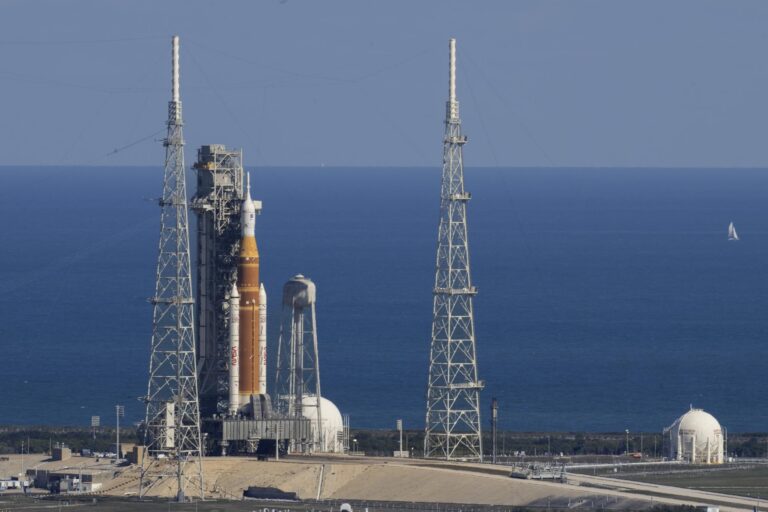
NASA is targeting no earlier than 6:24 p.m. EDT on Wednesday, April 1, for the launch of Artemis 2 from Launch Pad 39B at Kennedy Space Center in Florida, with a two-hour window. Teams are finalizing launch preparations for the historic mission, and forecasts indicate only a 20% chance of delays due to foul weather. If a delay does occur, additional opportunities run through Monday, April 6.
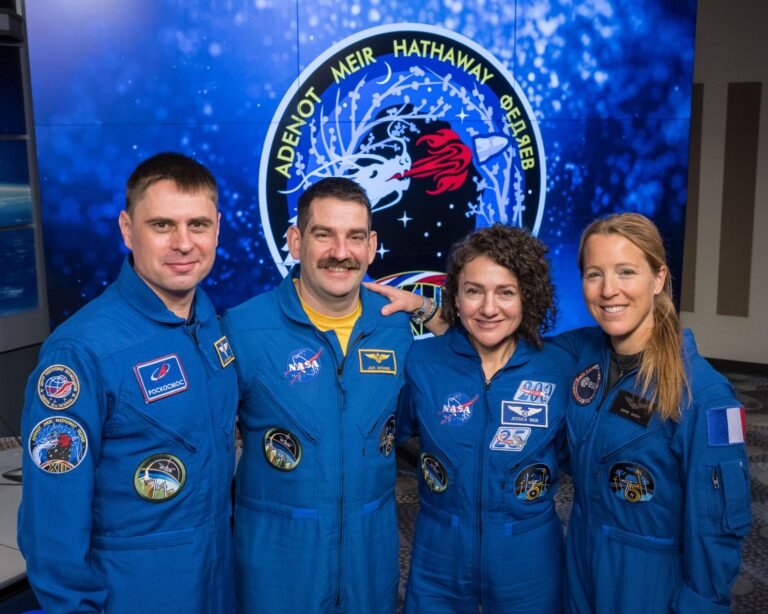
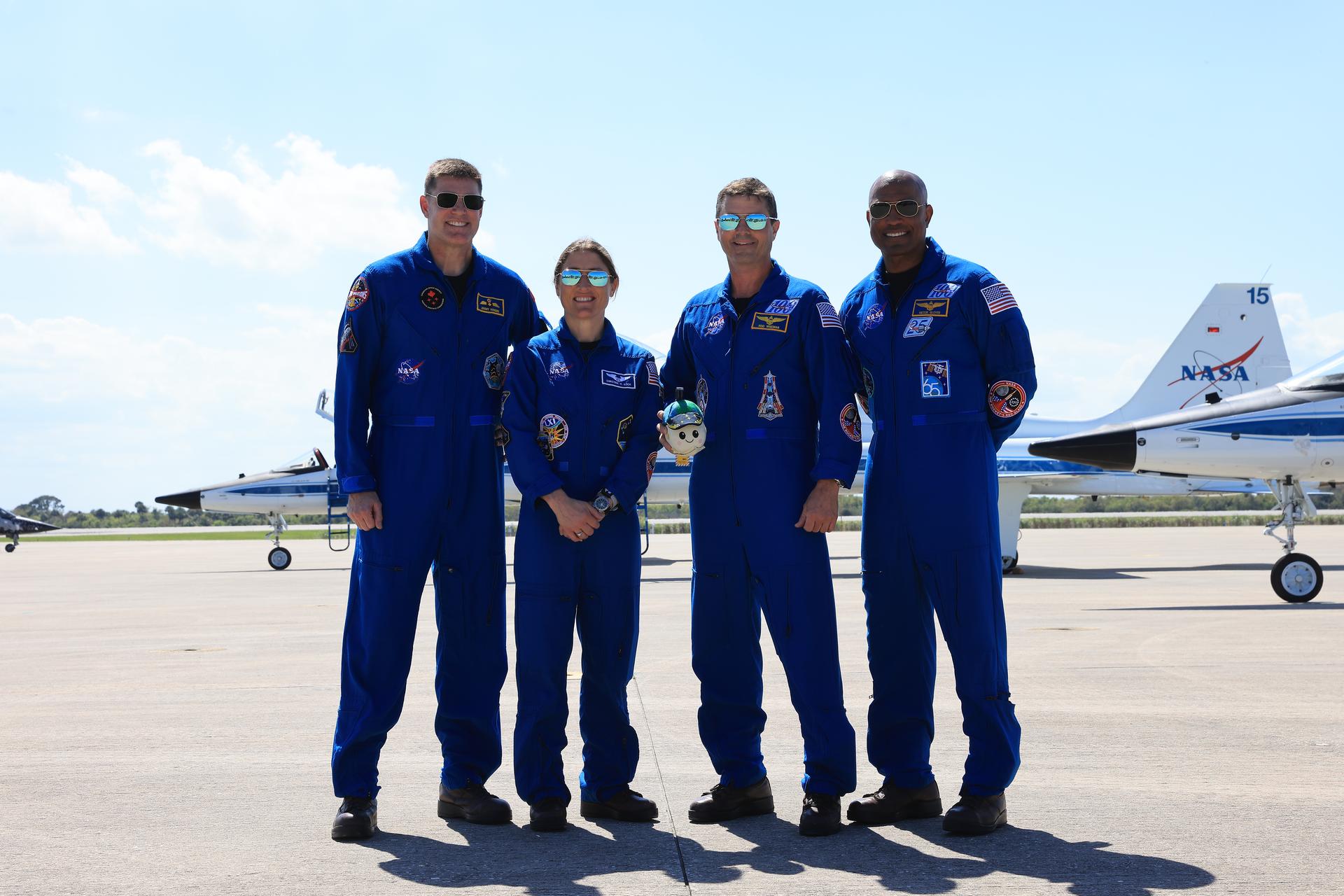
Lifting off atop one of the most powerful rockets ever built, the Space Launch System (SLS) Block 1, the Orion spacecraft will carry Reid Wiseman, Victor Glover, Christina Koch, and the Canadian Space Agency’s (CSA) Jeremy Hansen on a 10-day journey around the Moon.
Artemis 2 is not a landing mission. The crew will follow a free-return trajectory — a figure-eight path that allows the spacecraft to return safely even if the main engine fails — swinging within about 4,600 miles (7,043 kilometers) of the lunar farside. If the mission goes to plan, the crew is expected to break the record for the farthest distance humans have traveled from Earth, set by the Apollo 13 crew at 248,655 miles (400,171 km).
RELATED: When will Artemis 2 launch and what will the mission do?
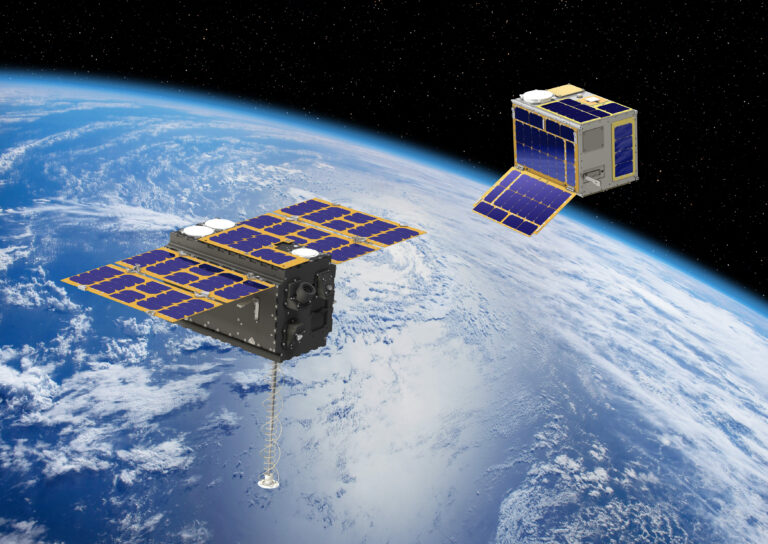
The primary goal is to test Orion‘s life-support systems with humans aboard for the first time. The crew will also conduct health research, photograph the Moon’s farside for geologic analysis, and deploy four international CubeSats from Germany, South Korea, Saudi Arabia, and Argentina in high Earth orbit — designed to measure radiation and space weather effects at various distances from Earth.
Splashdown is targeted for approximately 8:06 p.m. EDT on Friday, April 10. NASA+ and YouTube coverage begins at 12:50 p.m. EDT on launch day, and the public can register to attend virtually.
Other missions this week
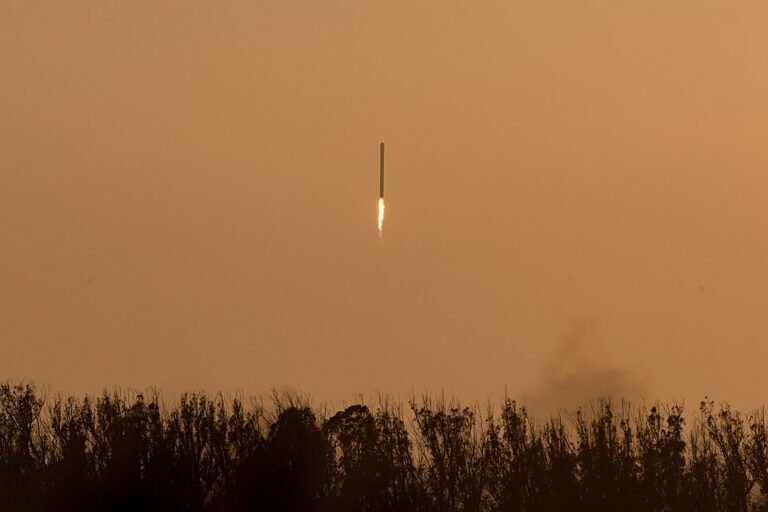
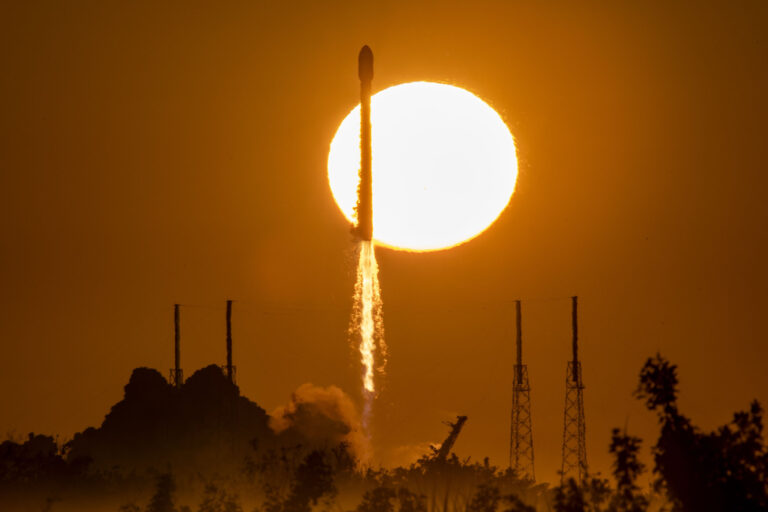
Today, Monday, March 30, SpaceX flew the Transporter 16 rideshare mission from California’s Vandenberg Space Force Base at 7:02 a.m. EDT. Chinese commercial firm CAS (Chinese Academy of Sciences) Space successfully debuted its Kinetica 2 rocket from the Jiuquan Satellite Launch Center in northwestern China at 7:00 a.m. EDT, carrying three satellites, including the New March-02 technology demonstration spacecraft and an educational satellite. Later this afternoon, SpaceX is targeting 5:15 p.m. EDT for the Starlink Group 10-44 mission from Cape Canaveral, Florida, with the booster expected to land on the droneship Just Read the Instructions.
On Tuesday, March 31, Russia’s VKS RF will launch the Meridian-M n°21L military communications satellite from Plesetsk Cosmodrome in Mirny, Arkhangelsk Oblast, aboard a Soyuz 2.1a/Fregat-M rocket. The launch is scheduled for 10:00 p.m. EDT.
On Thursday, April 2, Space Pioneer — a Chinese commercial launch startup — will attempt a demo flight of its Tianlong 3 rocket from Jiuquan Satellite Launch Center at 12:00 a.m. EDT. The Tianlong 3 is a medium-lift orbital vehicle, and this is its debut flight.
Later on Thursday, SpaceX will fly Starlink Group 10-58 from Cape Canaveral at 7:52 a.m. EDT, with the booster targeting a landing on Just Read the Instructions, and Starlink Group 17-35 from Vandenberg Space Force Base in California at 7:03 p.m. EDT, with the booster set to land on the droneship Of Course I Still Love You.
On Saturday, April 4, ULA’s Atlas V 551 will carry a batch of Amazon Leo (formerly Project Kuiper) broadband internet satellites to orbit. Designated LA-05, the mission is scheduled for 1:45 a.m. EDT from Cape Canaveral. Leo is Amazon’s answer to SpaceX’s Starlink constellation, and this is one of several Atlas V flights contracted to get the first operational satellites to orbit.
Also targeting this week, with some sources reporting Saturday, April 4, Roscosmos is preparing the maiden flight of the Soyuz 5 rocket from the Baikonur Cosmodrome in Kazakhstan. Soyuz 5, also known as Irtysh, is Russia’s first new orbital vehicle in decades, designed to replace the Ukrainian-built Zenit. This demo flight will carry only a mass simulator. An exact date has not been publicly confirmed, though Roscosmos has indicated no earlier than early April.
Last week’s recap
The week of March 23–29 was a busy one across multiple countries and launch providers.
The week opened on Monday, March 23, with Roscosmos launching a cluster of 16 Rassvet-3 satellites on a Soyuz 2.1b from Plesetsk Cosmodrome. On Tuesday, March 25, China’s China Aerospace Science and Technology Corporation (CASC) orbited the SuperView Neo 2-05 and 2-06 Earth observation satellites on a Long March 2D from the Taiyuan Satellite Launch Center in Shanxi province.
On Wednesday, March 26, SpaceX launched Starlink Group 17-17 from Vandenberg, with the booster recovering on Of Course I Still Love You. On Thursday, March 27, CASC launched Shiyan 33 — an experimental satellite — on a Long March 2C/YZ-1S from Jiuquan.
On Friday, March 28, Rocket Lab successfully launched its Electron rocket on a mission called Daughter of the Stars, from the Māhia Peninsula in New Zealand.
Looking ahead
On Monday, April 6, SpaceX will fly Starlink Group 17-21 from Vandenberg, targeting 10:39 p.m. EDT with a landing on Of Course I Still Love You.
On April 7, CASC has a Long March 8 launch scheduled from Wenchang Space Launch Site in China at 9:00 a.m. EDT, carrying an unknown payload. Also on April 7, Northrop Grumman is targeting a Minotaur IV launch carrying the STP-S29A national security payload from Vandenberg.
On April 8, SpaceX is scheduled to fly the CRS NG-24 resupply mission to the International Space Station on a Falcon 9 from Cape Canaveral at 8:51 a.m. EDT, with the booster landing on LZ-40.
On April 9, Avio’s Vega C rocket will carry the SMILE (Solar wind Magnetosphere Ionosphere Link Explorer) science satellite — a joint ESA/Chinese Academy of Sciences mission to study solar wind interactions with Earth’s magnetosphere — from the Guiana Space Centre in French Guiana at 2:29 a.m. EDT.
And no earlier than April 10, Blue Origin’s New Glenn rocket will carry LPV-1, a BlueBird Block 2 satellite for broadband internet operator AST SpaceMobile, from Cape Canaveral.