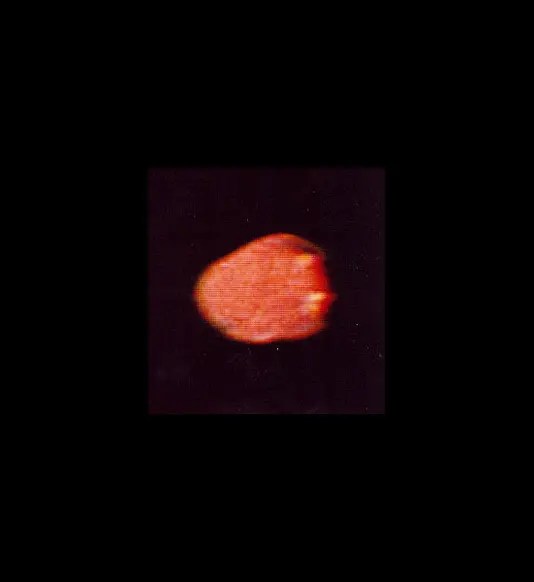
When Edward Emerson Barnard peered through the 36-inch refractor at Lick Observatory on Sept. 9, 1892, and spotted Amalthea, it marked the first discovery of a moon of Jupiter in 280 years. Galileo had discovered the four largest jovian moons – Io, Europa, Ganymede, and Callisto – in 1610. Though this fifth moon was closer to Jupiter than any of the Galilean moons, Barnard was known for his exceptional vision and observational skills. French astronomer Camille Flammarion suggested the name Amalthea for the moon, after the nymph who cared for the infant Zeus (Jupiter in Roman mythology), but the name wasn’t widely adopted until after Voyager 1 imaged Amalthea in 1979.
Elisa Neckar is senior production editor of Astronomy magazine, and the editor of the Today in the History of Astronomy feature on Astronomy.com.