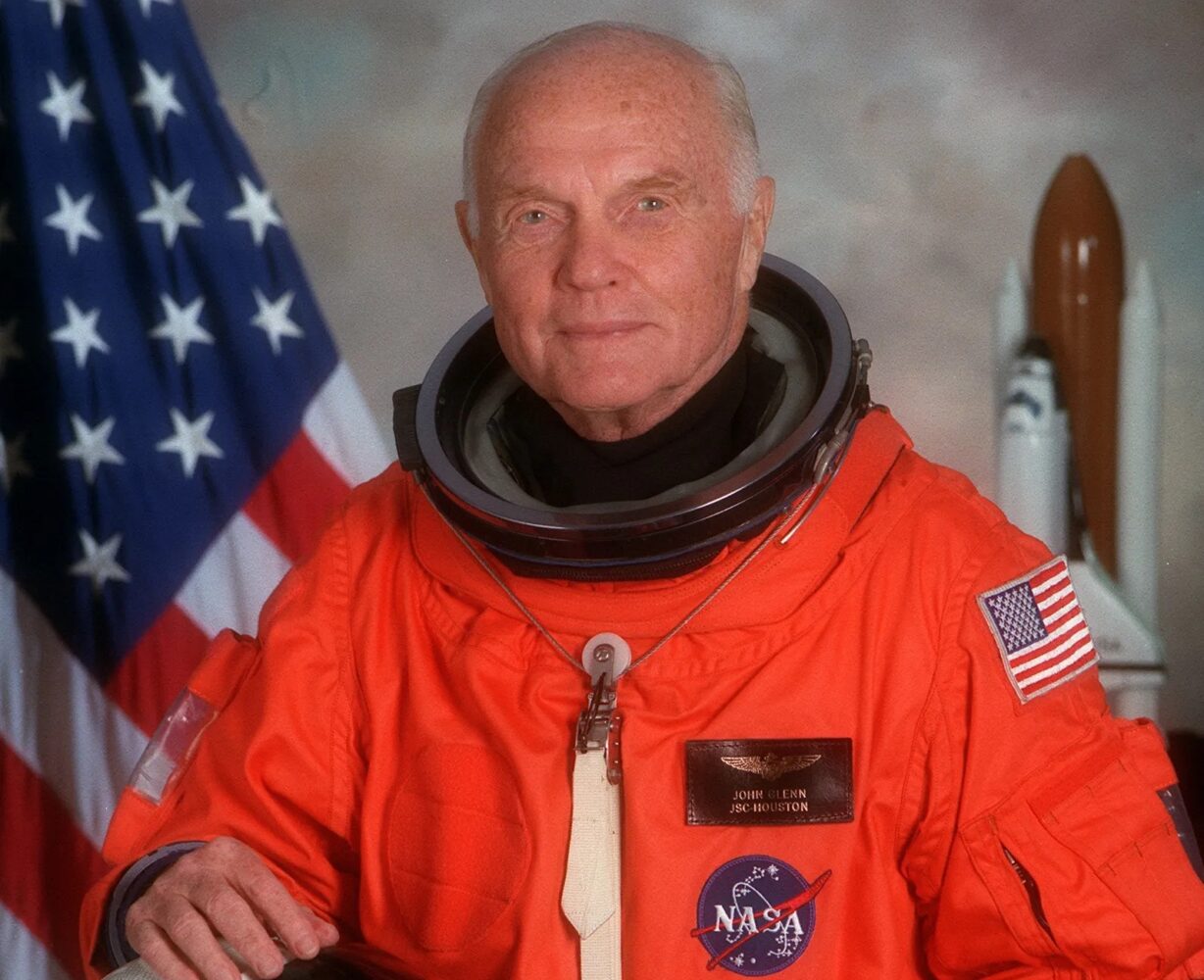
John Glenn became the first American to orbit Earth when he blasted off in Friendship 7 on Feb. 20, 1962. His flight made him an American hero during the heights of the Space Race, and the oldest man in space at the time of that mission. He subsequently served four six-year terms in the Senate (D-Ohio). In 1995, he noticed that many of the medical conditions that impacted astronauts – osteoporosis, muscle loss, balance and perception problems, issues with metabolism and blood flow – also afflicted the elderly. He proposed to NASA that studying an older astronaut in space may yield data that helped illuminate these parallels, and volunteered to make the trek. It took some persuading, and NASA required Glenn to pass the same tests as his much younger crewmates, but on Oct. 29, 1998, Glenn blasted off on a nine-day mission as a payload specialist on the space shuttle Discovery. At age 77, he once again set the record for the oldest person in space (to that point), and he would later write in his memoir of his pride at redefining what the elderly were capable of doing.