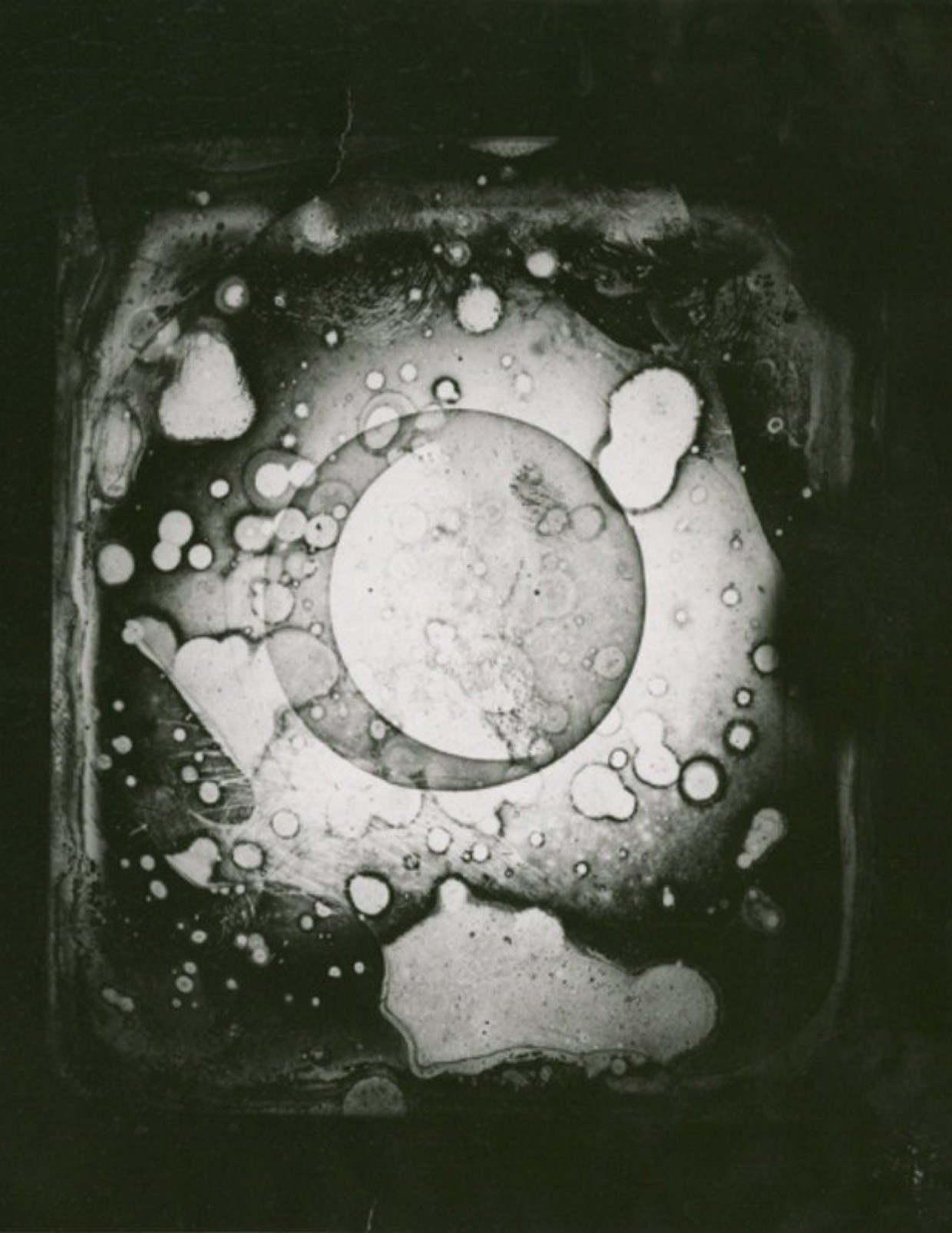
French inventor Louis Daguerre, pioneer of the early photography process of daguerreotypes, is believed to have captured the first photo of the Moon on Jan. 2, 1839. However, the quality and other details about the image are unknown, as Daguerre’s lab and all the historical images it contained burned to the ground in March of 1839. The following year, doctor and chemist John William Draper used the same daguerreotype process to image the Moon from his rooftop observatory in Greenwich Village. While his first attempt was overexposed, he tweaked the process and timing for his next effort. On March 23, 1840, he announced at a meeting of the New York Lyceum of Natural History that he had captured a successful daguerrotype of a 17-day-old Moon. It was exhibited at the Lyceum in April of that year.
Astronomy became a family legacy: Draper’s son, Henry, would continue his father’s work in astrophotography, capturing the first photo of a star’s spectrum and the first image of the Great Orion Nebula with his wife Anna. After his death, Anna memorialized him by sponsoring the stellar spectroscopy work of Edward Pickering’s Harvard computers, who compiled the Henry Draper Catalogue. Draper’s granddaughter, Antonia Maury, was one of those computers.