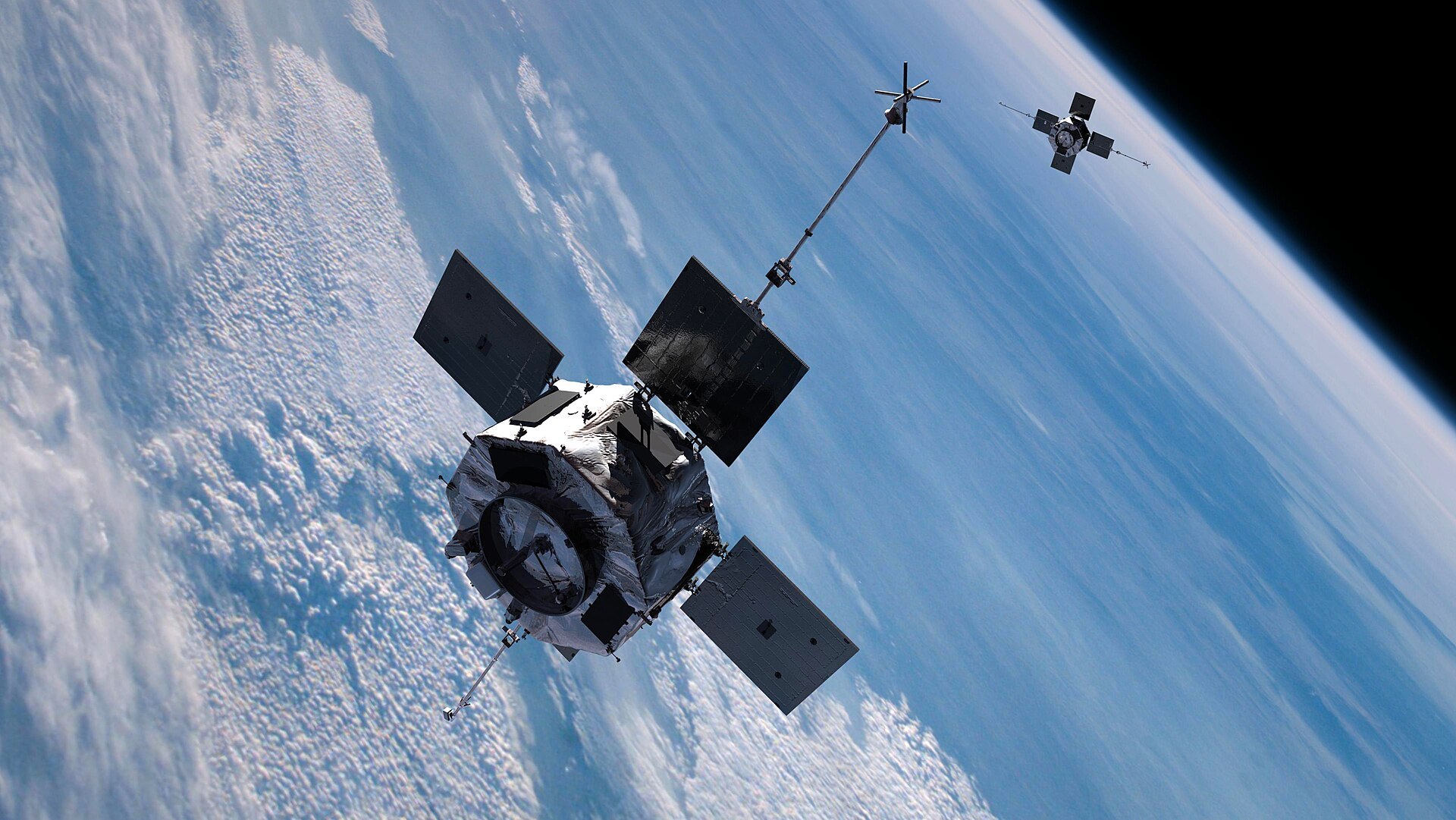
NASA’s Van Allen Probe A re-entered Earth’s atmosphere on Wednesday, March 11, at 6:37 a.m. EDT, marking the final chapter for a spacecraft that reshaped scientists’ understanding of the radiation environment around our planet.
The U.S. Space Force confirmed the spacecraft came down over the eastern Pacific Ocean. NASA said most of the 1,300-pound (600 kilograms) probe burned up during reentry, though some pieces may have reached the surface. Its twin, Probe B, remains in orbit and is not expected to re-enter before 2030.
The twin probes launched together on Aug. 30, 2012, on what was supposed to be a two-year mission. They operated for nearly seven years instead, circling Earth inside the Van Allen radiation belts — zones of high-energy charged particles held in place by the planet’s magnetic field.
The belts take their name from James Van Allen, the Iowa-born physicist whose instruments aboard the Explorer 1 satellite first detected them in 1958. Van Allen, who spent decades studying the belts, died in 2006 at 91.
The twin probes were the first spacecraft built to work inside the belts. Most satellites and crewed missions pass through the region as fast as possible because the radiation can damage electronics and endanger astronauts. The Van Allen Probes carried radiation-hardened instruments designed to investigate what accelerates and transports belt particles, how electrons escape the belts, and how the entire system shifts during geomagnetic storms.
The Johns Hopkins University Applied Physics Laboratory, which ran the mission for NASA, produced several major findings. Within days of launch, scientists turned on the probes’ Relativistic Electron Proton Telescope (REPT) ahead of schedule so its data would overlap with the aging Solar, Anomalous, and Magnetospheric Particle Explorer (SAMPEX) mission. The instrument captured something no one had observed before: a temporary third radiation belt forming around Earth. Scientists watched the structure for four weeks before a solar shock wave wiped it out. Until that point, researchers had known of only two permanent belts.
The probes also revealed how particles in the belts gain their extreme speeds. Scientists had debated two competing ideas. Radial acceleration held that particles speed up as they move inward toward Earth, gaining energy from increasingly strong magnetic fields closer to the planet. Local acceleration proposed that an energy source within the belts themselves does the work. Data from the twin spacecraft settled the question: energy increases started in the middle of the belts and spread both inward and outward, confirming local acceleration driven by electromagnetic waves inside the belts. That finding helped researchers better predict dangerous space weather.
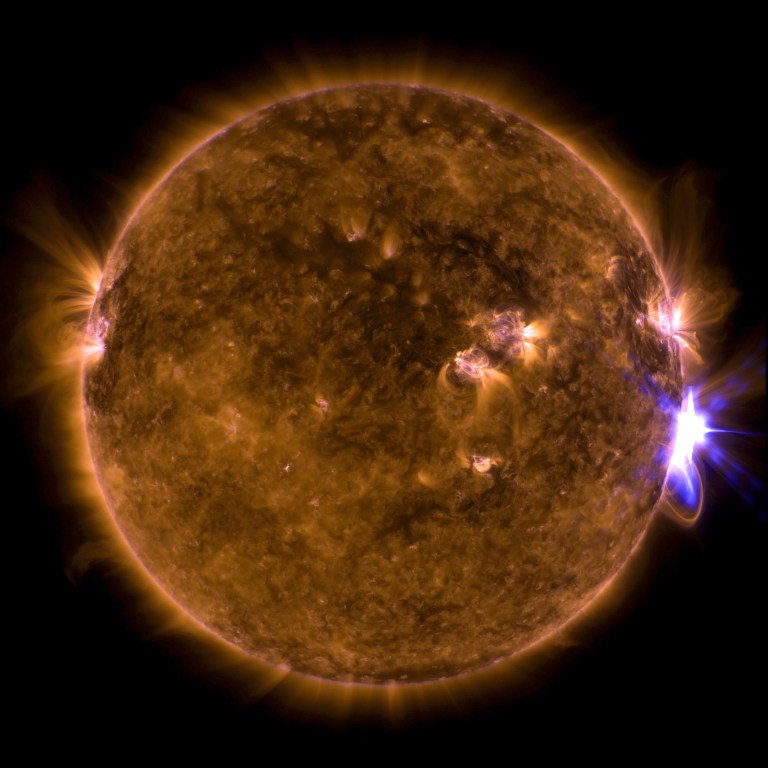
NASA shut the mission down in 2019 after both probes exhausted their fuel supply, leaving them unable to stay oriented toward the Sun. At the time, scientists predicted Probe A would re-enter Earth’s atmosphere in 2034. But the current solar cycle turned out to be far stronger than expected. The Sun hit solar maximum in 2024, and atmospheric drag increased on the spacecraft, pulling it down ahead of schedule.
Archived data from the probes continues to support research into the effects of space weather on spacecraft, astronauts, power grids, and satellite networks.