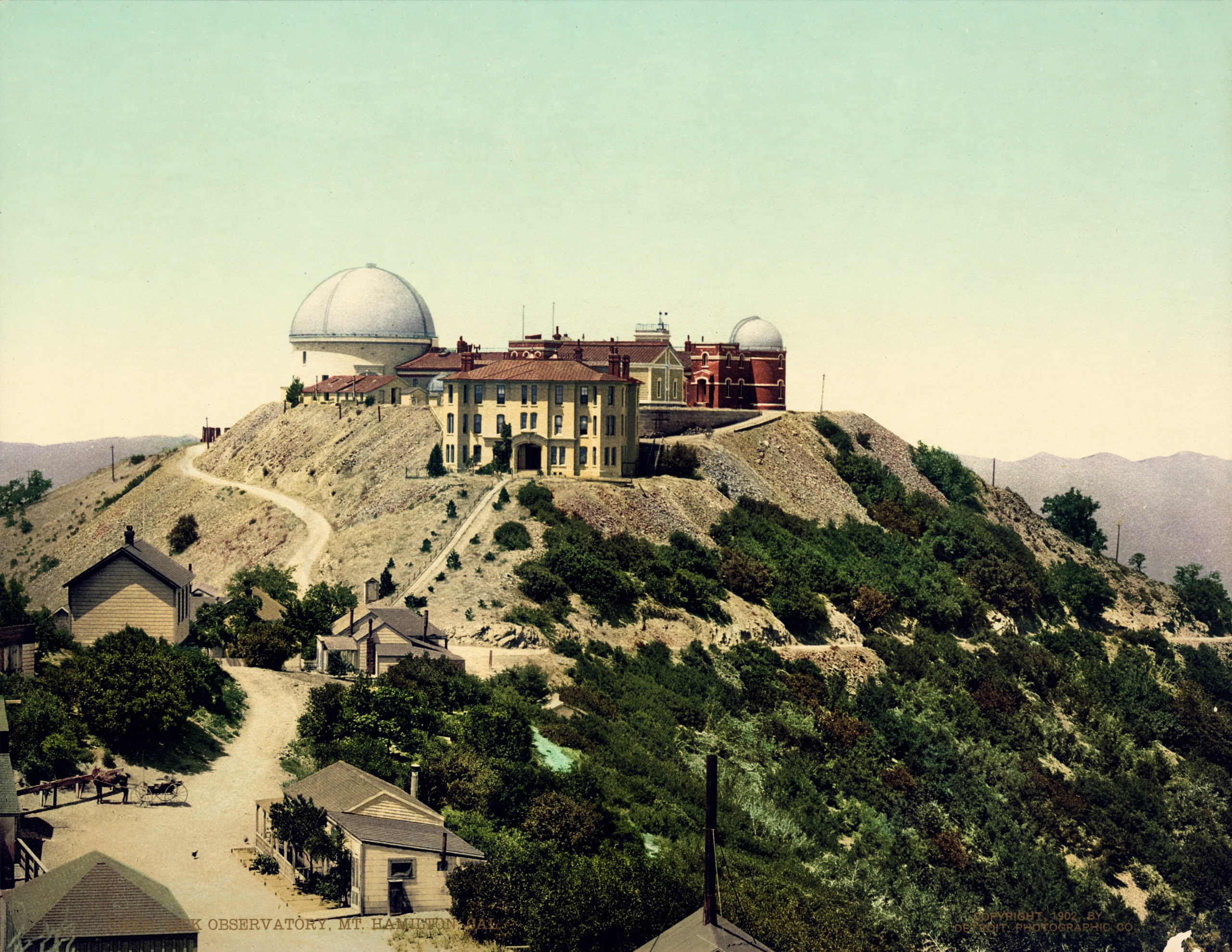
In the 1870s, real-estate mogul James Lick established a trust of $700,000 (around $1.2 billion today) for the purpose of constructing the world’s most powerful telescope. By August 1875, he had selected the peak of Mount Hamilton, near San Jose, California, as his site, taking advantage of the clear air at the high elevation.
Construction of the observatory required a new road to be built by blasting through solid rock; at the summit, more than 40,000 tons of rock had to be removed for the site to be leveled. The road alone took until 1877 to complete, and the observatory would take until 1888. Lick died in October 1876, over a decade before the project was complete, and was interred in the foundation under the main telescope. The project continued under the administration of the Lick Trust.
The 36-inch Great Refractor installed at the summit was the largest in the world when the observatory began work in January 1888 – a title it would hold for nine years. But the greater significance of Lick Observatory was in its staffing and ownership: On June 1, 1888, officers of the Lick Trust met with the University of California regents and granted ownership of the observatory to the system. The facility became an independent campus as well as a department of the university, allowing it to be a dedicated hub for university research. The ongoing nature of academic research meant Lick was permanently staffed instead of being a standalone site for visitors – on-site housing was constructed, and Lick became the world’s first residential mountaintop observatory.