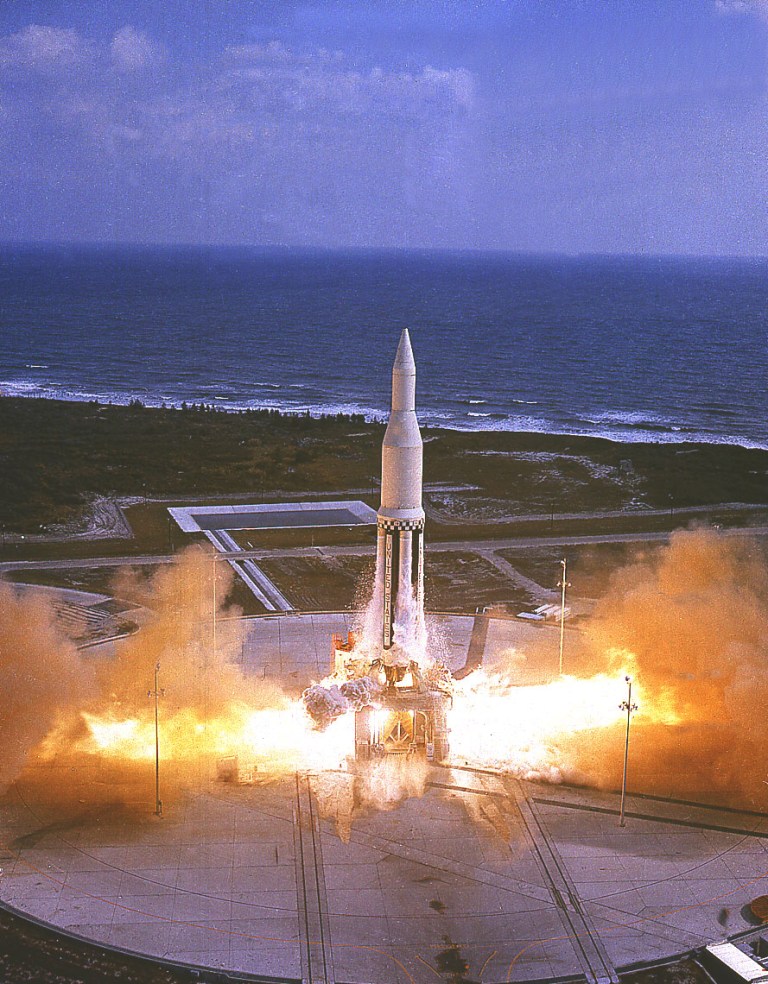
On Feb. 14, 1980, the Solar Maximum Mission (or SolarMax) launched from Cape Canaveral, Florida, and slipped into orbit around the Earth. With goals of better understanding solar flares, the solar constant, and solar atmosphere, the spacecraft carried instruments to image and observe the Sun in X-ray, gamma ray, and ultraviolet.
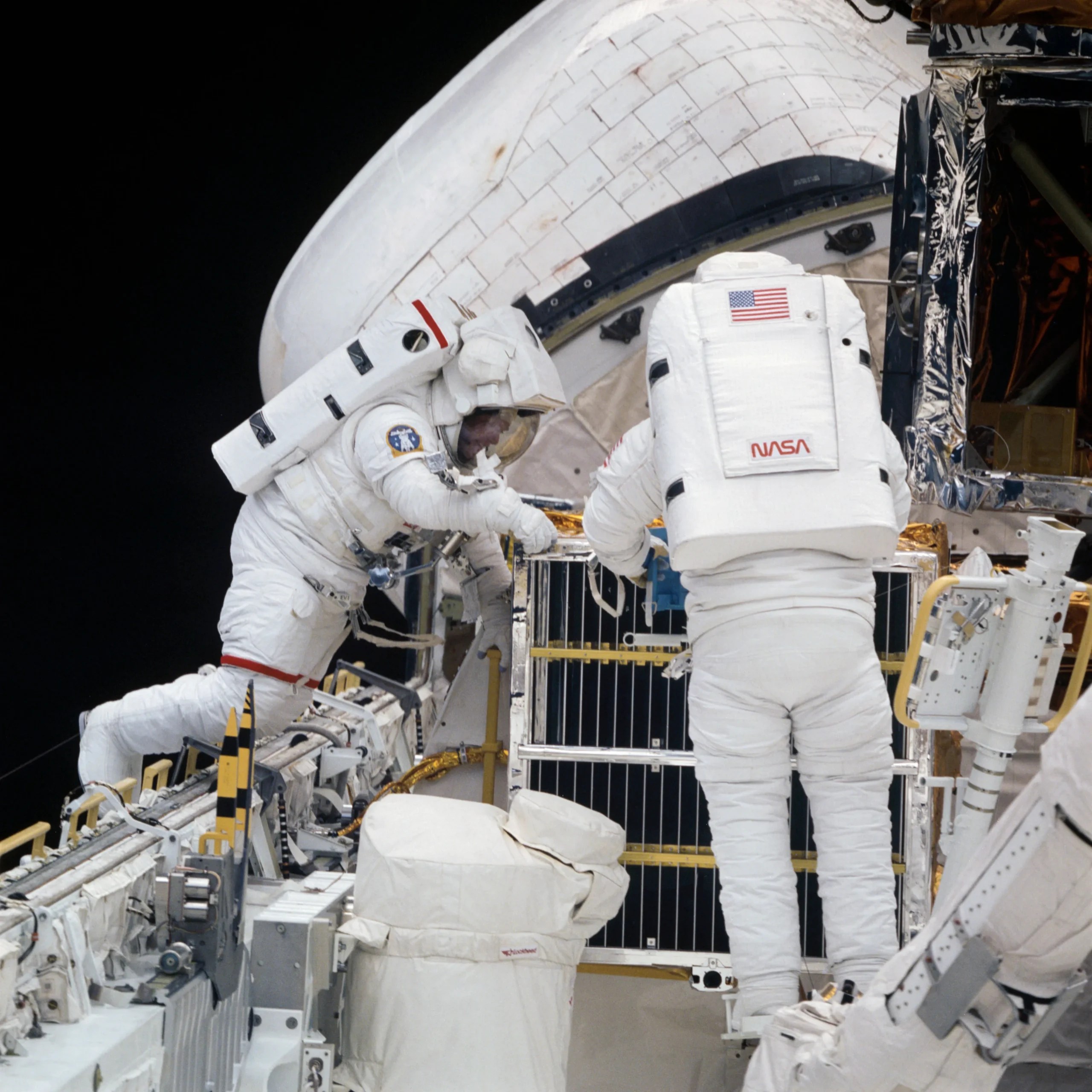
Only months into its mission, SolarMax experienced an electronics malfunction in its coronagraph, and, not long after, a fuse failure that left it unable to point at the Sun. It was placed in standby mode for three years. In 1984, Challenger rendezvoused with the SolarMax, the crew capturing it and repairing it in the shuttle’s payload bay. It was the first such repair mission.
Over the course of its time in space, SolarMax revealed the commonality of gamma-ray emissions from solar flares and provided extensive data on CMEs. It also observed the 1986 visit of Halley’s Comet. The mission ended in late 1989, with the spacecraft burning up in the atmosphere over the Indian Ocean. The Solar and Heliospheric Observatory and Solar Dynamics Observatory would carry on its work, among others.