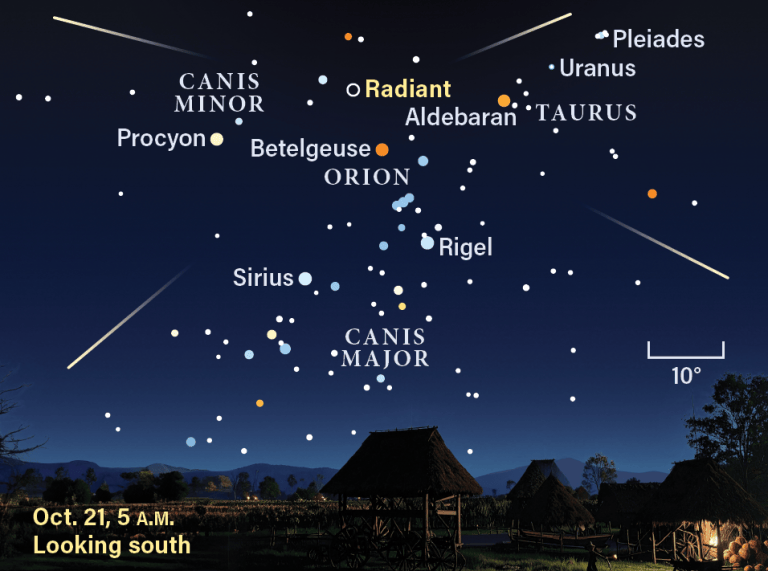
Rising around midnight and nearly 50° high in the south two hours before sunrise is Orion the Hunter, one of autumn’s premier constellations. As the season progresses, Orion will rise earlier and earlier each night until it is visible during the evening.
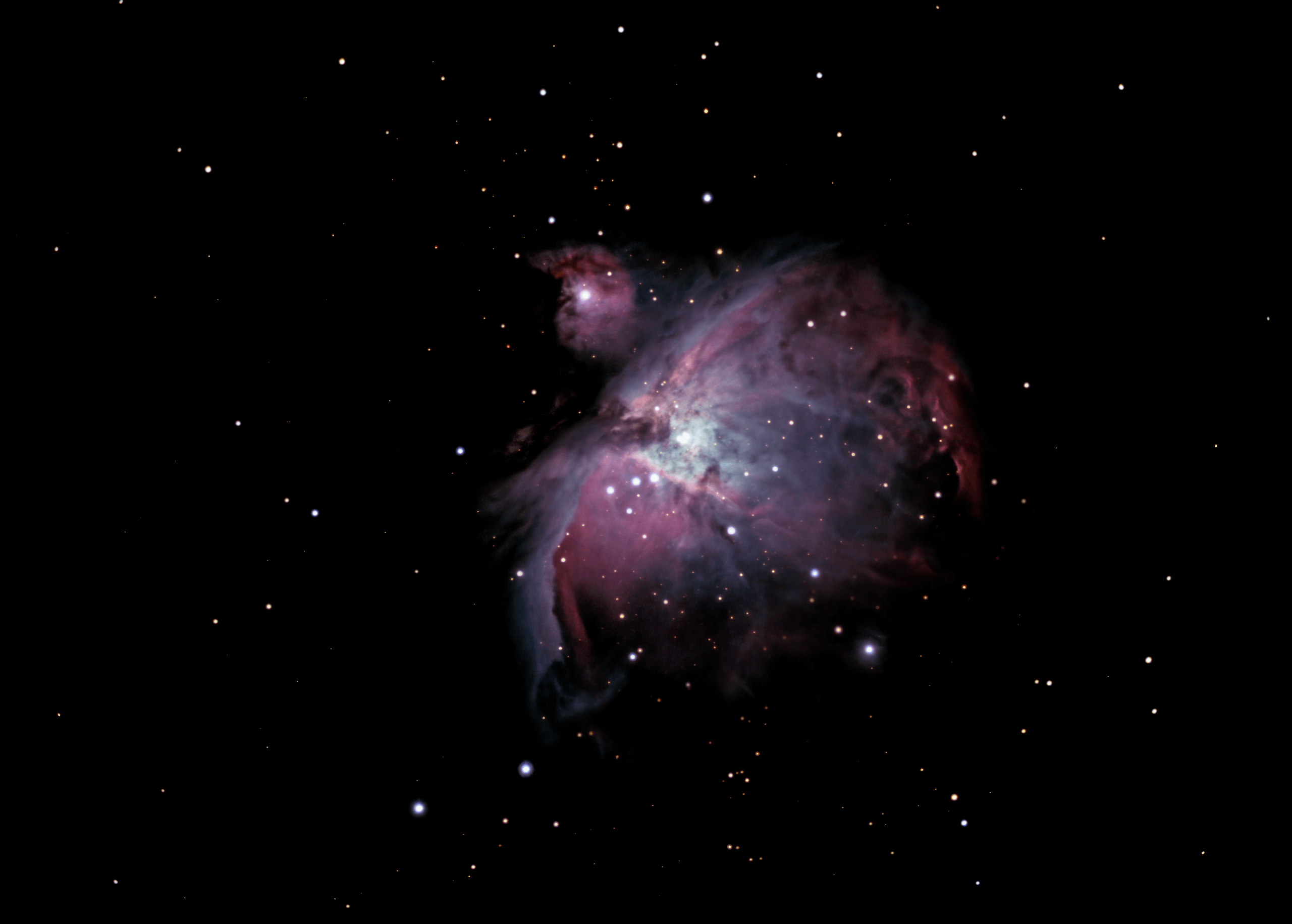
For now, the best time to observe this famous star pattern is in the few hours before the Sun rises. Many observers can easily spot Orion’s three-star belt and larger hourglass figure, anchored at one shoulder by magnitude 0.5 Betelgeuse and at one knee by magnitude 0.2 Rigel. Just below the belt is the Hunter’s Sword, which contains the famous star-forming Orion Nebula, cataloged as M42.
Visible to the naked eye, this bright (magnitude 4.0) and large (85’ by 60’) nebula is one of the most popular amateur astronomy targets. You can enjoy it with binoculars or any telescope, bringing out more detail (albeit ever-smaller views) with higher magnification. At the center of the cloud of gas and dust is the Trapezium Cluster, a young open cluster of stars birthed by the nebula and whose winds are carving away a cavity within it. The brightest of the Trapezium’s stars is Theta1 (θ1) Orionis, which shines at magnitude 5.1
Take your time with this stunning target, scanning around and maybe even trying your hand at astrophotography!
Sunrise: 6:57 A.M.
Sunset: 6:42 P.M.
Moonrise: 3:59 P.M.
Moonset: 12:22 A.M.
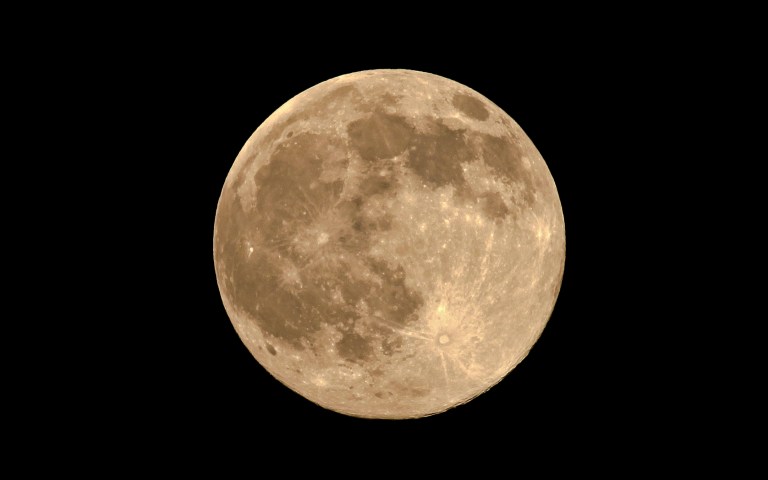
Moon Phase: Waxing gibbous (67%)
*Times for sunrise, sunset, moonrise, and moonset are given in local time from 40° N 90° W. The Moon’s illumination is given at 12 P.M. local time from the same location.
For a look ahead at more upcoming sky events, check out our full Sky This Week column.