Looking for a sky event this week? Check out our full Sky This Week column.
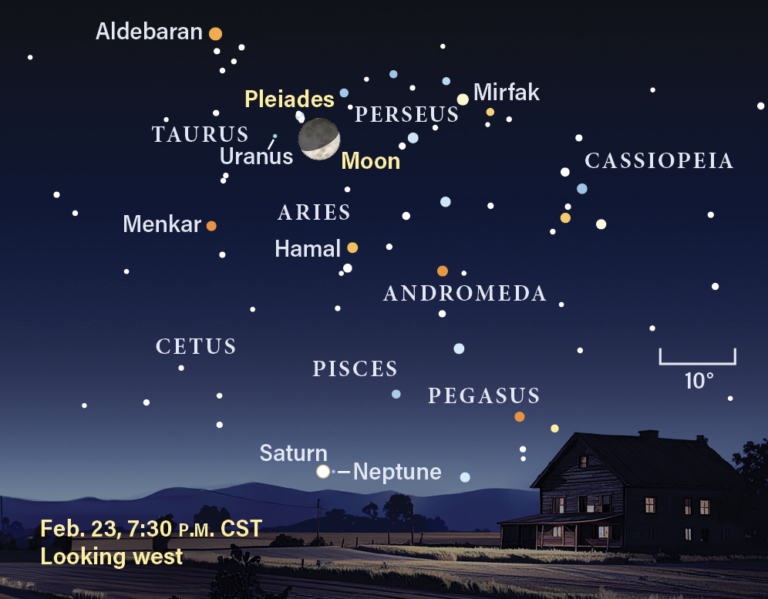
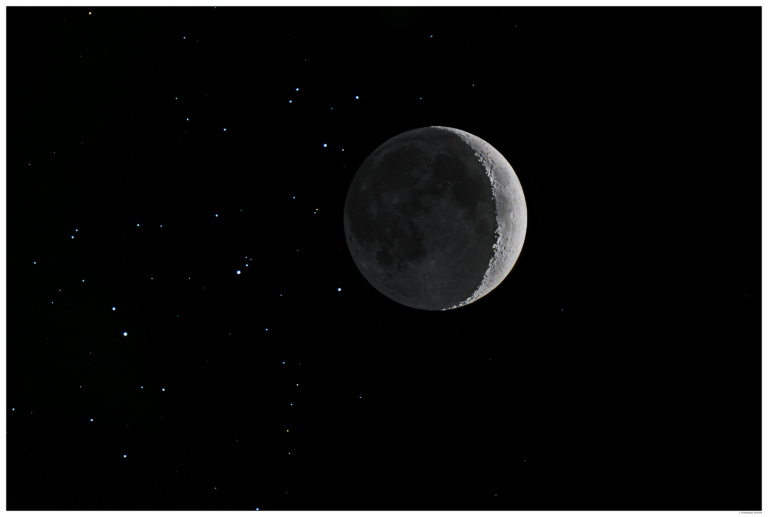
February 23: The Moon occults some Pleiads
First Quarter Moon occurs at 7:28 A.M. EST. The Moon then reaches perigee, the closest point to Earth in its orbit, at 6:14 P.M. EST. At that time, our satellite will be 229,991 miles (370,135 kilometers) away. The Moon is still in Taurus, following its brush with the Pleiades yesterday. The region is setting after dark, slowly sinking toward the western horizon. In the east, the constellation Coma Berenices is rising higher. By 10:30 P.M. local time, it is some 40° above the horizon, ready for targeting with your telescope.
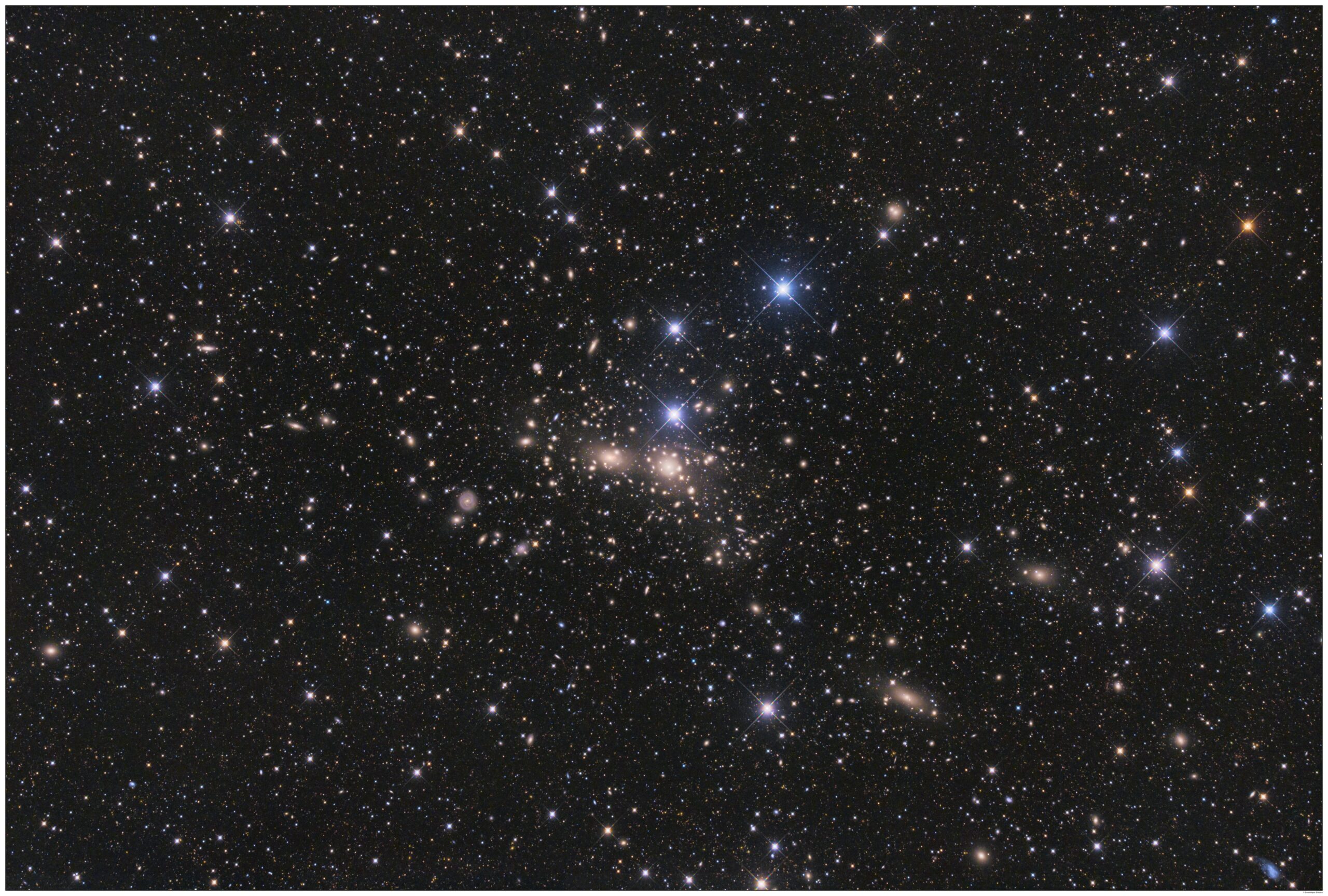
Tonight we’re after the Coma Cluster of galaxies, also cataloged as Abell 1656. This massive conglomeration sits some 330 million light-years away and contains thousands of galaxies. It’s a target for large scopes: 12 inches or more. If you’ve got one at your disposal, point it first to magnitude 4.2 Beta (β) Comae Berenices, then slide just under 3° west to find the cluster’s core, which covers about half a degree (the entire cluster spans about 4° on the sky).
The Coma’s brightest galaxies are NGC 4889 (11.4), NGC 4793 (11.7), and NGC 4874 (11.9). NGC 4889 is a huge elliptical galaxy sometimes also cataloged as NGC 4884. NGC 4874 is a similarly large elliptical. These types of galaxies are older objects, largely devoid of gas and dust and no longer forming stars. By contrast, NGC 4793 is a spiral galaxy rife with star formation.
Sunrise: 6:40 A.M.
Sunset: 5:47 P.M.
Moonrise: 10:24 A.M.
Moonset: 1:17 A.M.
Moon Phase: Waxing gibbous (58%)
*Times for sunrise, sunset, moonrise, and moonset are given in local time from 40° N 90° W. The Moon’s illumination is given at 10 P.M. local time from the same location.