Looking for a sky event this week? Check out our full Sky This Week column.
February 21: A ghostly planetary nebula
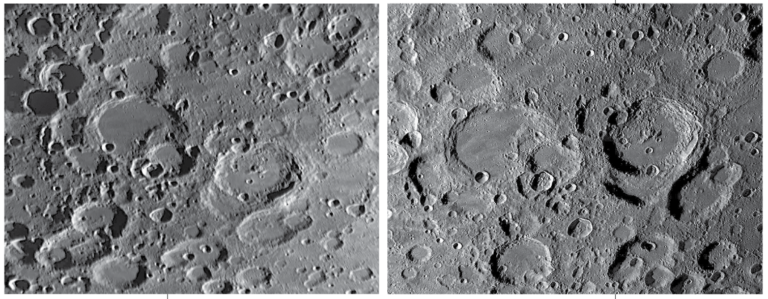
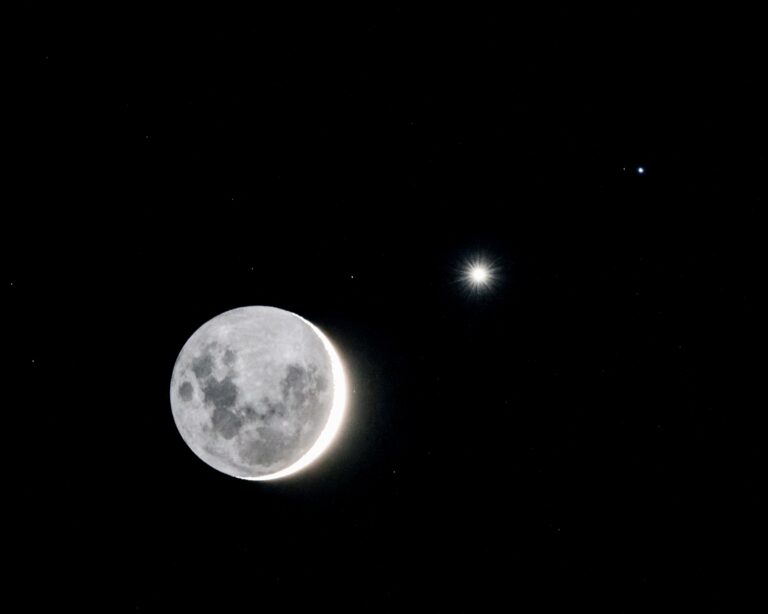
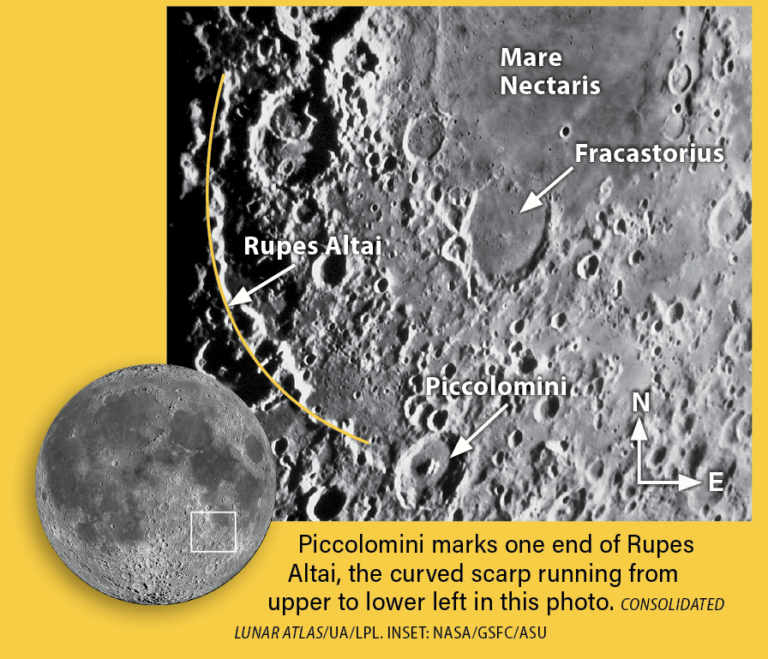
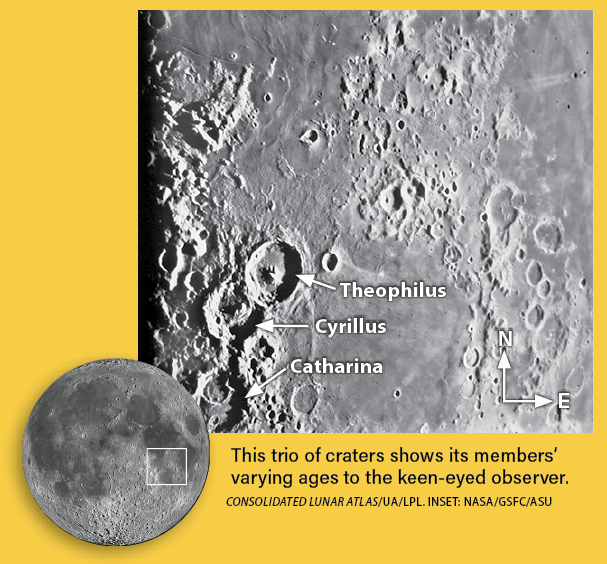
A lovely crescent Moon is visible nearly all evening, setting around local midnight. If you’ve got a telescope, tonight is a great opportunity to view a famous trio of craters just south of the lunar equator and a bit west of Mare Nectaris, whose round, dark floor lies near the terminator separating lunar night from day.
Using the chart here to guide you, look first for the sharp-walled, round crater Theophilus, whose clear central peak should give it away. This is the youngest of our trio, as evidenced by those sharp walls, which stand in stark comparison to the slumped rim of Cyrillus, immediately to Theophilus’ southwest. In fact, Theophilus clearly overlaps Cyrillus, another testament to the fact that the latter came first.
Cyrillus, too, has a central peak; compare it to the one within Theophilus. Then, finally, move south of Cyrillus to Catharina, the oldest crater of the three. Although it once had a central peak like the others, it has been worn away by impacts over time. Catharina’s walls, too, have suffered the same fate, appearing softer and more slumped than those of its companions.
Sunrise: 6:43 A.M.
Sunset: 5:44 P.M.
Moonrise: 9:05 A.M.
Moonset: —
Moon Phase: Waxing crescent (35%)
*Times for sunrise, sunset, moonrise, and moonset are given in local time from 40° N 90° W. The Moon’s illumination is given at 10 P.M. local time from the same location.