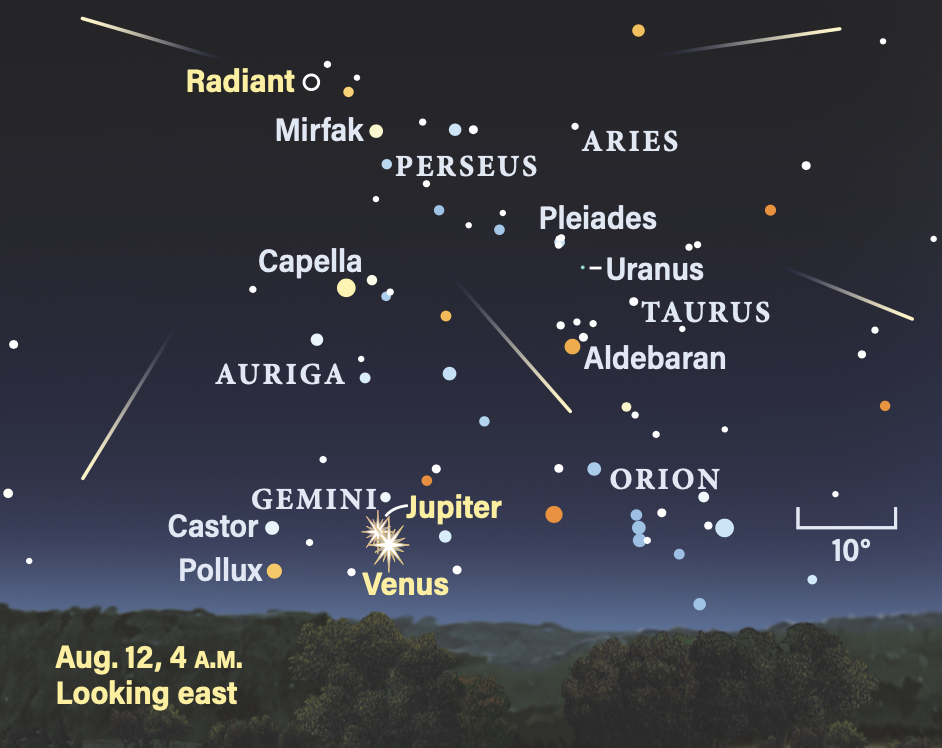
This morning is a busy one: Venus passes 0.9° south of Jupiter at 4 A.M. EDT, the two planets officially meeting in a conjunction as the Perseid meteor shower peaks.
Step outside at 4 A.M. local time to catch the show. At that time, Venus and Jupiter are some 7° high in the east, located centrally in Gemini the Twins. Venus is the brightest object in the sky, blazing at magnitude –4.0. Jupiter, which sits just to Venus’ upper left, is no slouch at magnitude –1.9. The two bright points of light will be unmissable in the early-morning sky, with the Twins’ brightest two stars, Castor and Pollux, shining to their left. Pollux, which sits closer to the horizon as Gemini rises, is just slightly brighter than Castor, which appears above it.
Through binoculars or a telescope, both planets should be visible in the same field of view. A telescope will reveal even more detail: Venus spans 13” and appears 79 percent lit. Jupiter stretches roughly twice that, at 33” across, with its four Galilean moons on display. By 4 A.M. EDT, Callisto lies alone to Jupiter’s east. Io is close to the planet’s western limb, having completed a transit of the planet’s disk roughly 20 minutes earlier. Farther west lie Europa and then Ganymede.
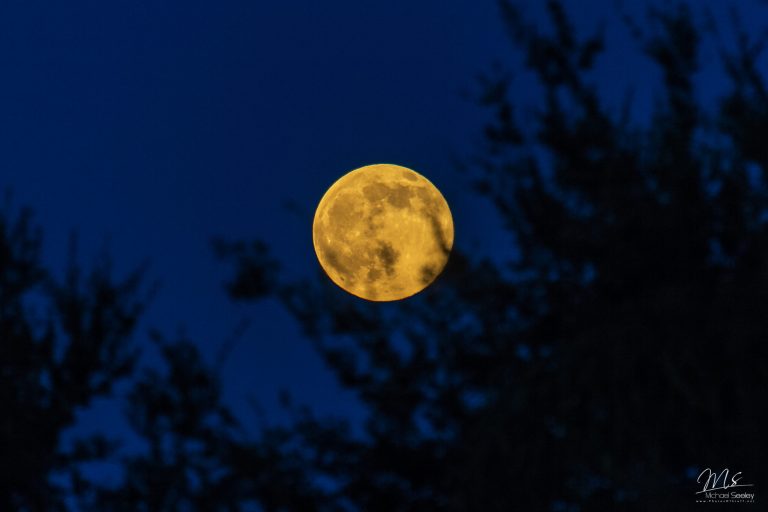
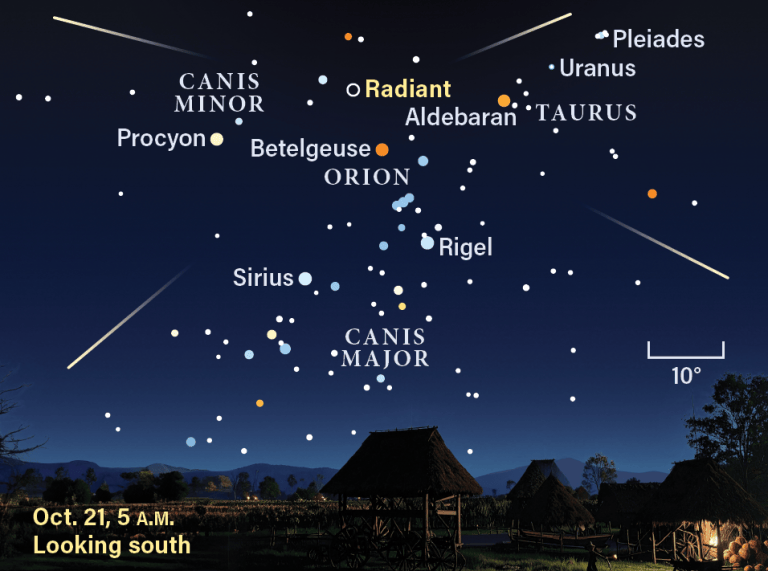
As you’re gazing at the planets, make sure to take some time to scan the sky for shooting stars, as the annual Perseid meteor shower peaks this morning. The bright Moon will unfortunately interfere, but the Perseids often produce bright meteors, meaning the best of what the shower has to offer should still be visible. By 4 A.M. local daylight time, the shower’s radiant is 50° high in the east, near the star Mirfak. Looking some ways away from this point will up your chances of spotting meteors with long, bright trains. You can expect to see about a dozen meteors per hour, given the sky conditions this morning.
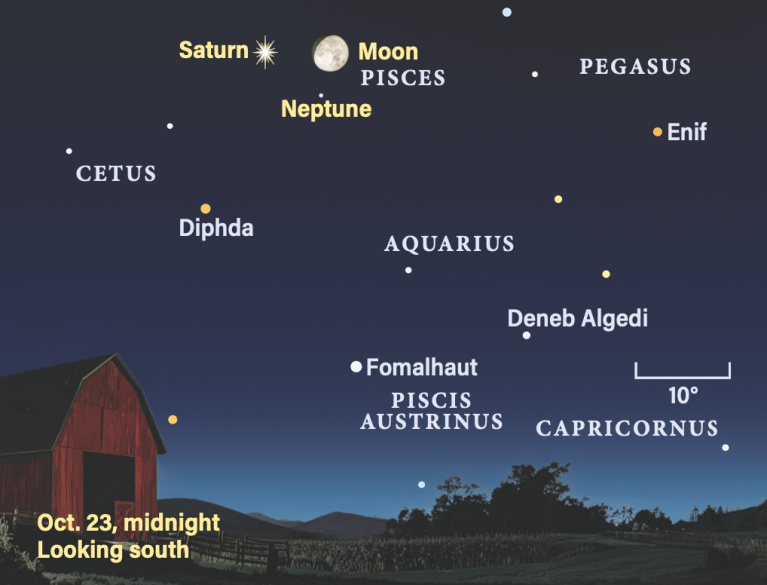
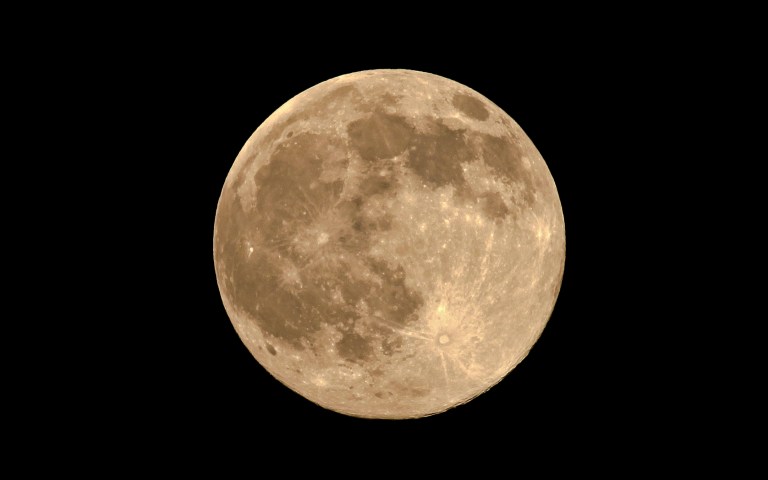
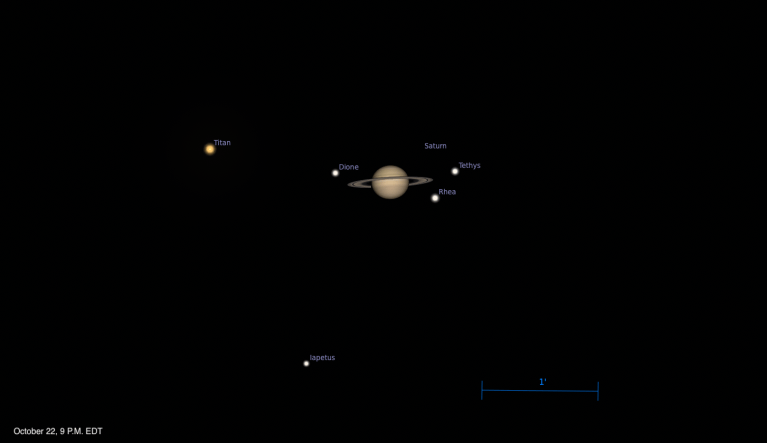
That bright Moon stands 3.5° northwest of Saturn in Pisces before dawn, high in the southern sky. Neptune — invisible without binoculars or a telescope, and even then difficult because of the moonlight — is 1.2° north of Saturn.
Sunrise: 6:09 A.M.
Sunset: 8:00 P.M.
Moonrise: 9:47 P.M.
Moonset: 9:49 A.M.
Moon Phase: Waning gibbous (86%)
*Times for sunrise, sunset, moonrise, and moonset are given in local time from 40° N 90° W. The Moon’s illumination is given at 12 P.M. local time from the same location.
For a look ahead at more upcoming sky events, check out our full Sky This Week column.