Looking for a sky event this week? Check out our full Sky This Week column.
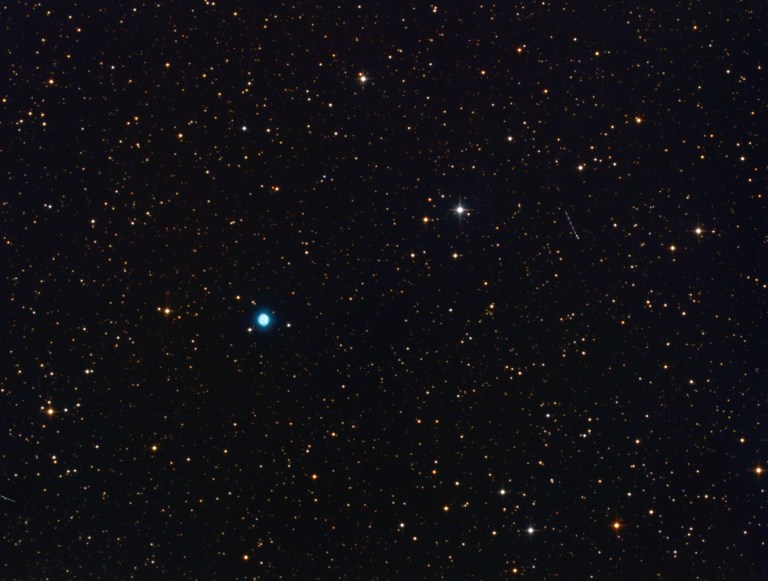
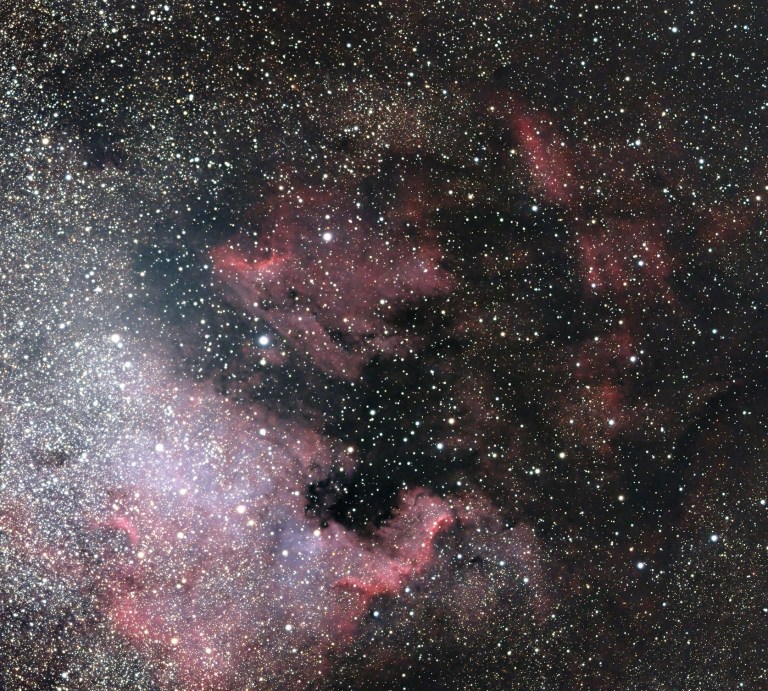
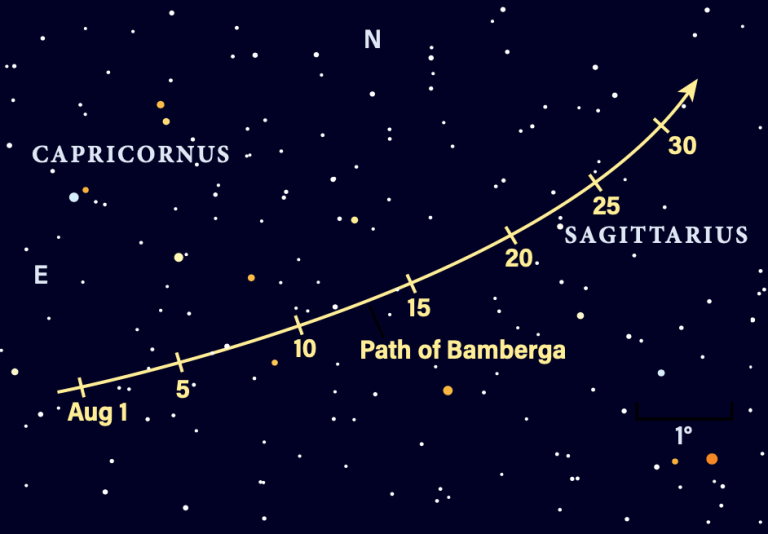
August 8: Sagittarius’ Little Gem
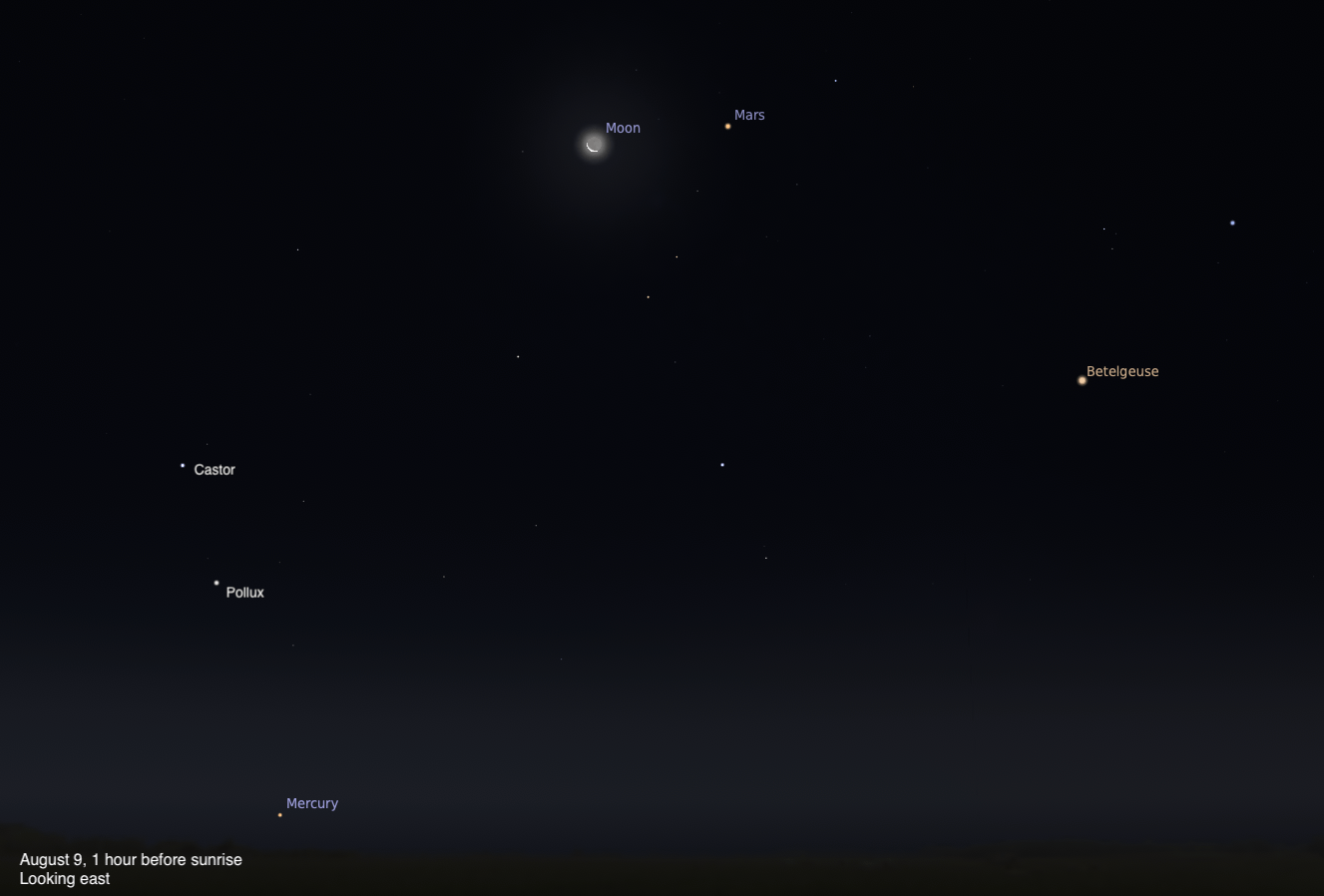
The Moon passes 4° north of Mars at 2 A.M. EDT; the pair is visible together in the early-morning sky, some 30° high in the east an hour before sunrise. They straddle the border of Gemini and Taurus, to the upper left of the familiar hourglass-shaped figure of Orion the Hunter, bisected by his famous belt.
Mars is magnitude 1.3, a bright reddish point of light in this region of the sky, just to the right of the delicate waning crescent Moon. Higher in the sky and to the right of the pair is the red giant Aldebaran, brighter than Mars at magnitude 0.9 but shining with a similar hue, thanks to this star’s advanced age, which has cooled its temperature. Compare both Mars and Aldebaran to Betelgeuse, the magnitude 0.5 red giant shoulder of Orion, which also shines orangey-red.
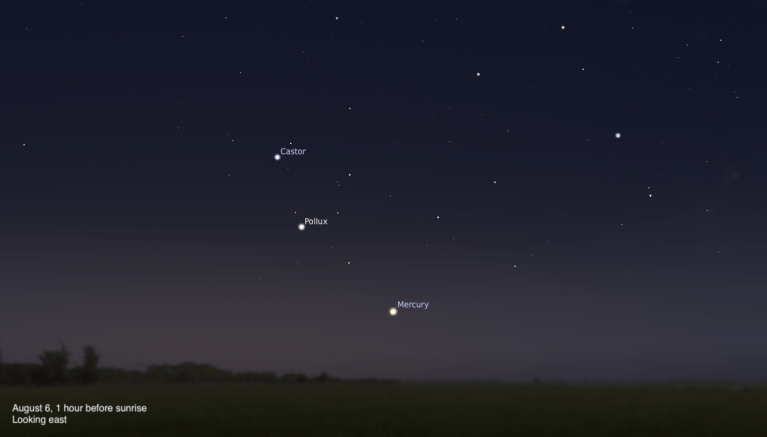
Far below and to the left is Mercury, just 4° above the eastern horizon an hour before sunrise. Despite its low altitude, it’s shining brightly at magnitude –0.6, making it easy to spot as long as your horizon is clear. Through a telescope, Mercury spans 6” and is 65% lit. Compare that with Mars, whose phase is 93% but appears just a bit smaller, 5”. This is because although Mercury is physically smaller than Mars, the latter now lies farther from Earth, which diminishes its apparent size in our sky.
As always, make sure to put away any optics well before sunrise from your location, which may differ from the time given below.
Sunrise: 6:06 A.M.
Sunset: 8:04 P.M.
Moonrise: 2:01 A.M.
Moonset: 6:09 P.M.
Moon Phase: Waning crescent (10%)
*Times for sunrise, sunset, moonrise, and moonset are given in local time from 40° N 90° W. The Moon’s illumination is given at 10 P.M. local time from the same location.
Alison Klesman is senior editor of Astronomy magazine. She holds a Ph.D. in astronomy and has studied a variety of topics, from minor planets to supermassive black holes.