Looking for a sky event this week? Check out our full Sky This Week column.
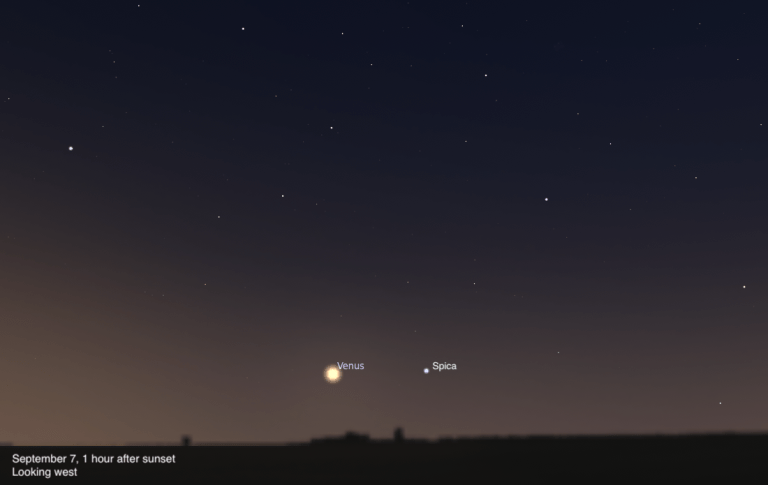
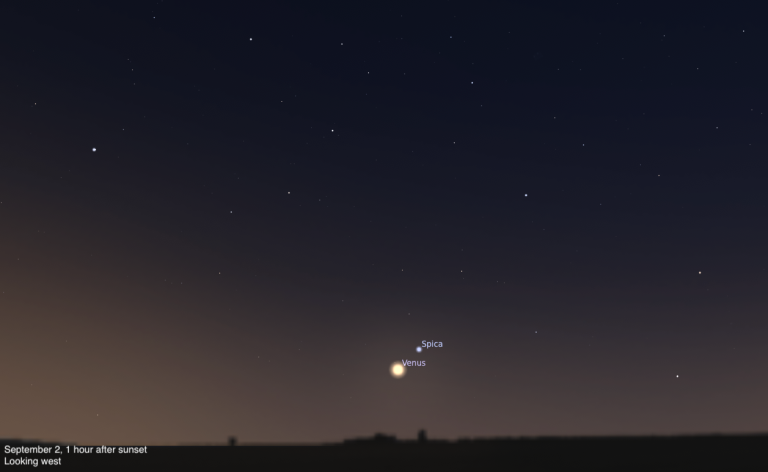
September 7: Venus and Spica, side by side
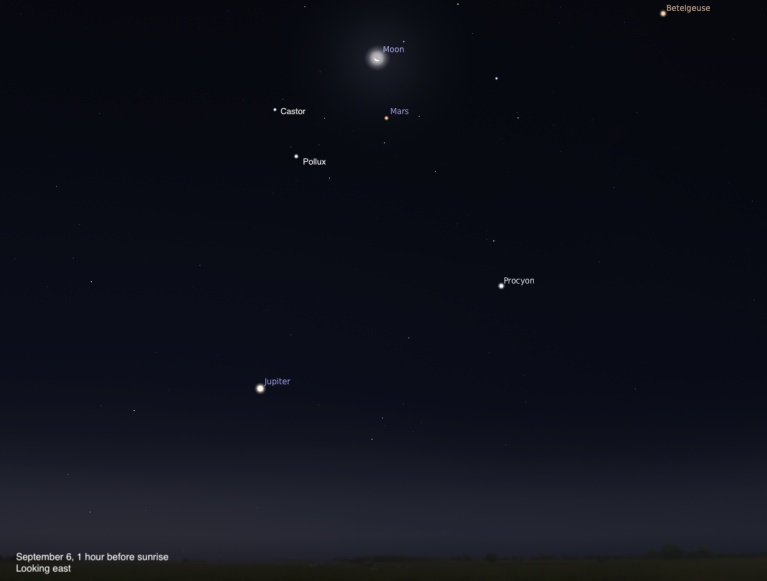
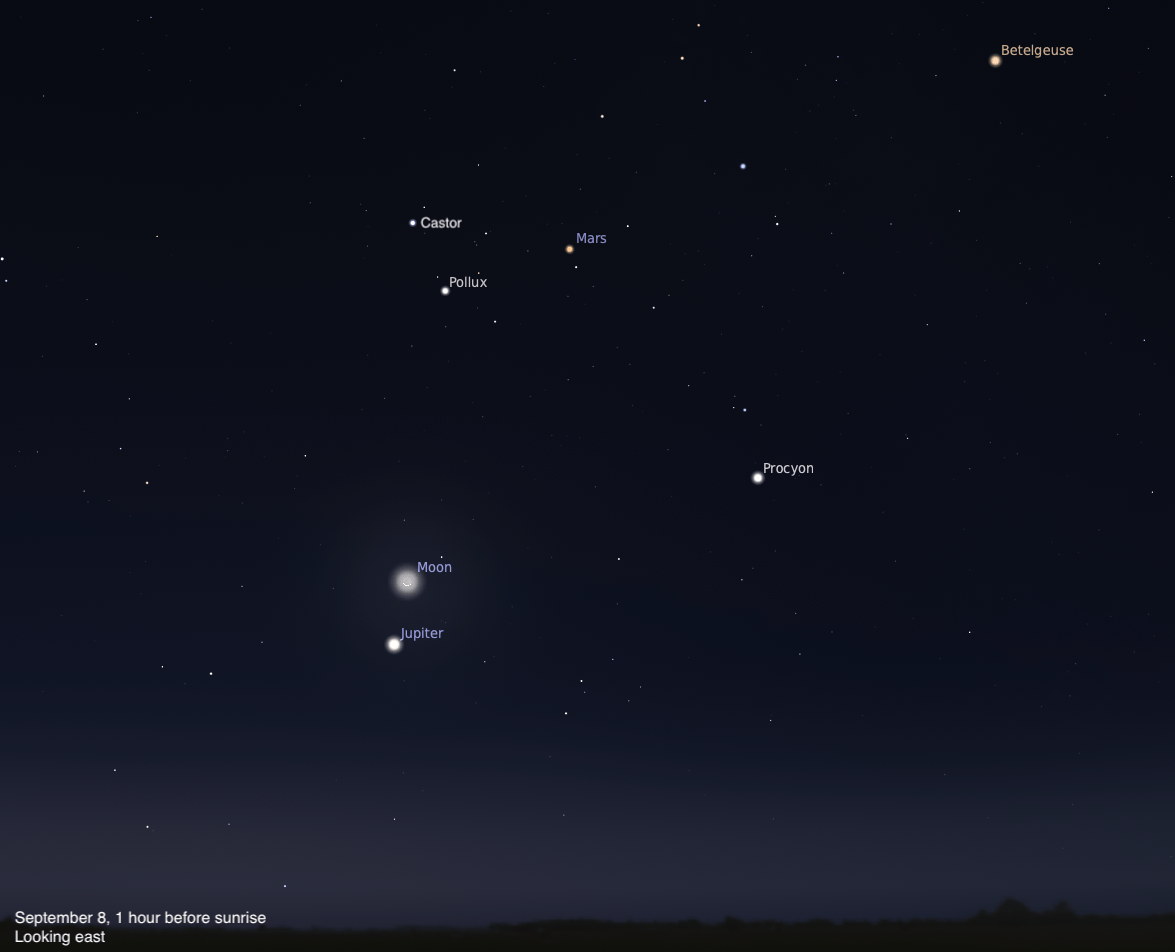
The Moon has now skimmed through the morning sky over to Cancer, where it checks in on Jupiter — and you can check in on them both before dawn.
The Moon rises around 3:30 A.M. local daylight time, with Jupiter following half an hour later. An hour before sunrise, the Moon is 20° high in the east, to the upper right of bright Jupiter in eastern Cancer. About 3.8° to the Moon’s right (west) is the Beehive Cluster, a lovely open cluster in central Cancer. Before the sky grows light, you might be able to make out its brighter stars with the naked eye, as the slim crescent Moon shouldn’t throw out too much light. Binoculars or any small scope will certainly show its many members.
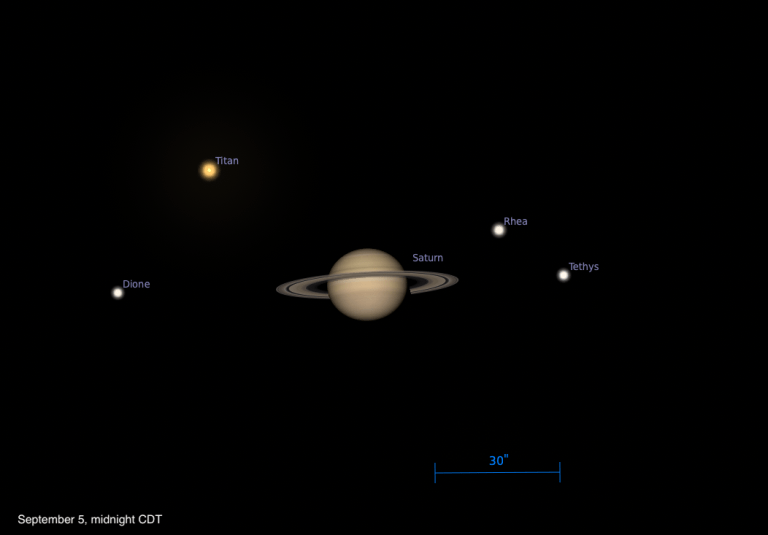
Jupiter shows off a wealth of detail in a telescope, including a light-and-dark banded atmosphere and four large, bright moons. Io is alone to the planet’s east, while Europa, Ganymede, and Callisto stretch out to the west.
The Moon will pass 0.8° north of Jupiter at 2 P.M. EDT, during daylight across the U.S.
Sunrise: 6:34 A.M.
Sunset: 7:20 P.M.
Moonrise: 3:30 A.M.
Moonset: 6:08 P.M.
Moon Phase: Waning crescent (5%)
*Times for sunrise, sunset, moonrise, and moonset are given in local time from 40° N 90° W. The Moon’s illumination is given at 10 P.M. local time from the same location.
By the morning of September 9, the waning Moon has moved from Cancer to Leo and is nearing the bright star Regulus, which marks the Lion’s heart.
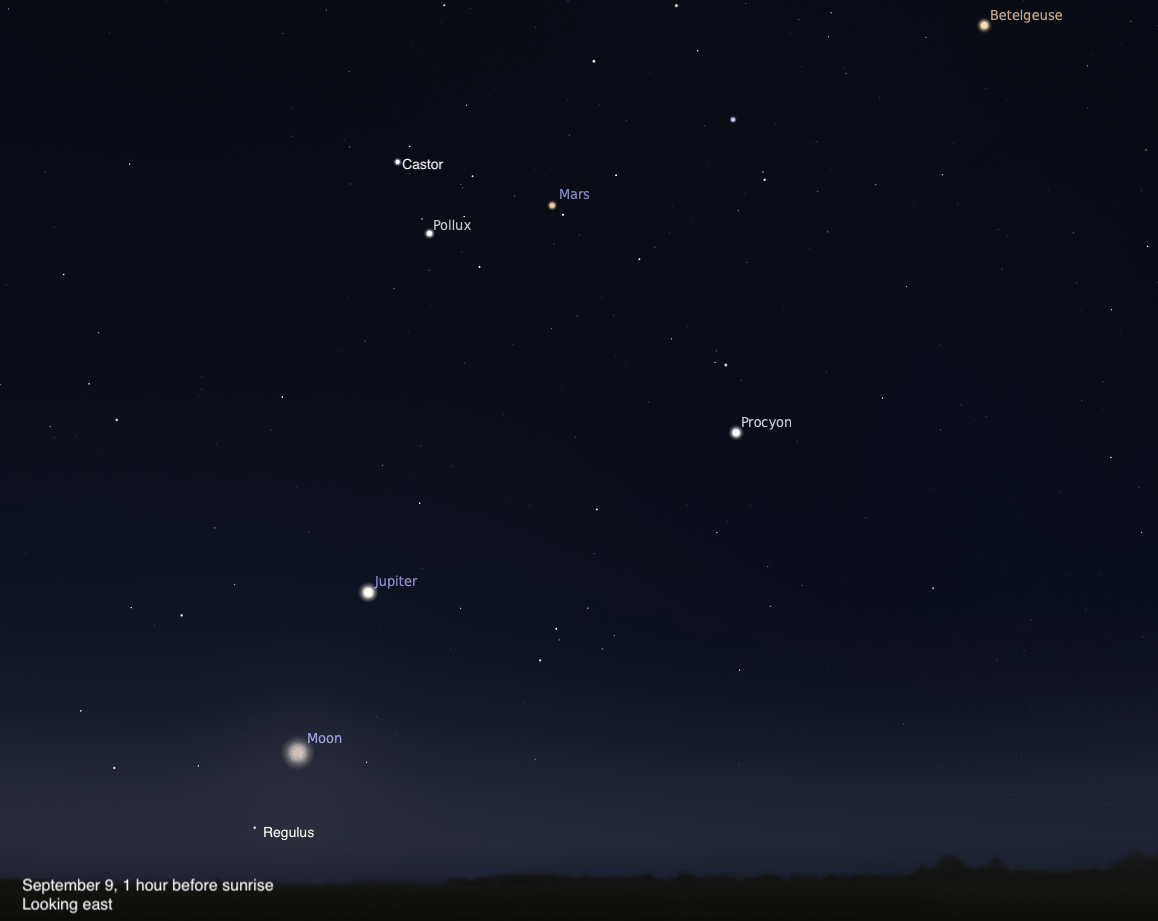
An hour before sunrise on the 9th, Regulus is just 4° above the eastern horizon, with the Moon —just 4% lit as sunset quickly sweeps across the lunar nearside — still 4.5° to its west (upper right). In fact, this morning offers an excellent opportunity to trace out the line of the ecliptic in the sky. The ecliptic is defined as the plane of Earth’s orbit around the Sun. But because all the major planets in our solar system orbit close to the same plane, they appear to sit along a line in our sky: the ecliptic. The Moon’s orbit, while tilted some 5° to this plane, still largely carries our satellite mostly along this line, and several stars in the sky also happen to sit along the ecliptic as well.
This morning, you can visualize the ecliptic by starting at Regulus, low in the eastern sky, and moving your gaze to the upper right. Along the way, you’ll encounter the Moon, Jupiter, and then Mars, all of which lie along the ecliptic and show off its orientation in the morning sky.
Alison Klesman is senior editor of Astronomy magazine. She holds a Ph.D. in astronomy and has studied a variety of topics, from minor planets to supermassive black holes.