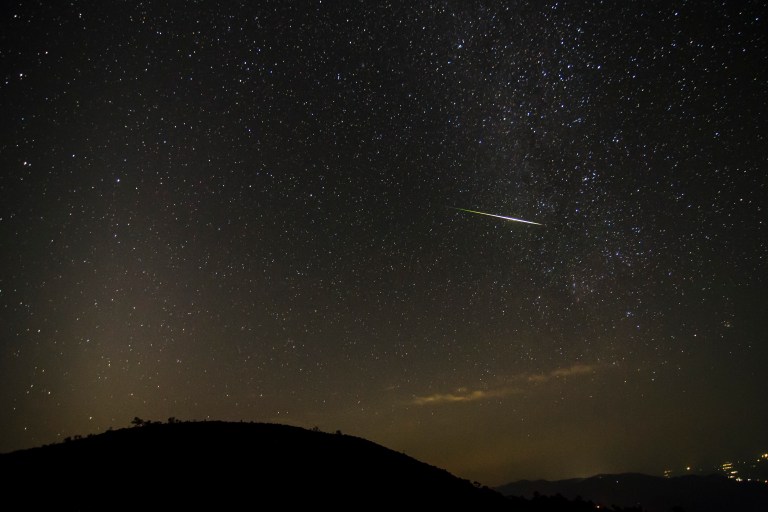
The arrival of August marks the beginning of the end of summer in the Northern Hemisphere, with steadily lengthening nights bringing joy to astronomers. Sky-watchers have another reason to celebrate this month: the Perseid meteor shower!
The Perseids are the flashy result of Earth sweeping through the debris field left by Comet 109P/Swift-Tuttle as it swings around its 133-year orbit. This year, it’s predicted to peak Aug. 12/13. The radiant, or the shower’s apparent point of origin, is on the border between the constellations Perseus and Cassiopeia, which climb higher in the sky after midnight. Since the radiant will be highest just before dawn, the wee hours are the best time to see the show at its peak.
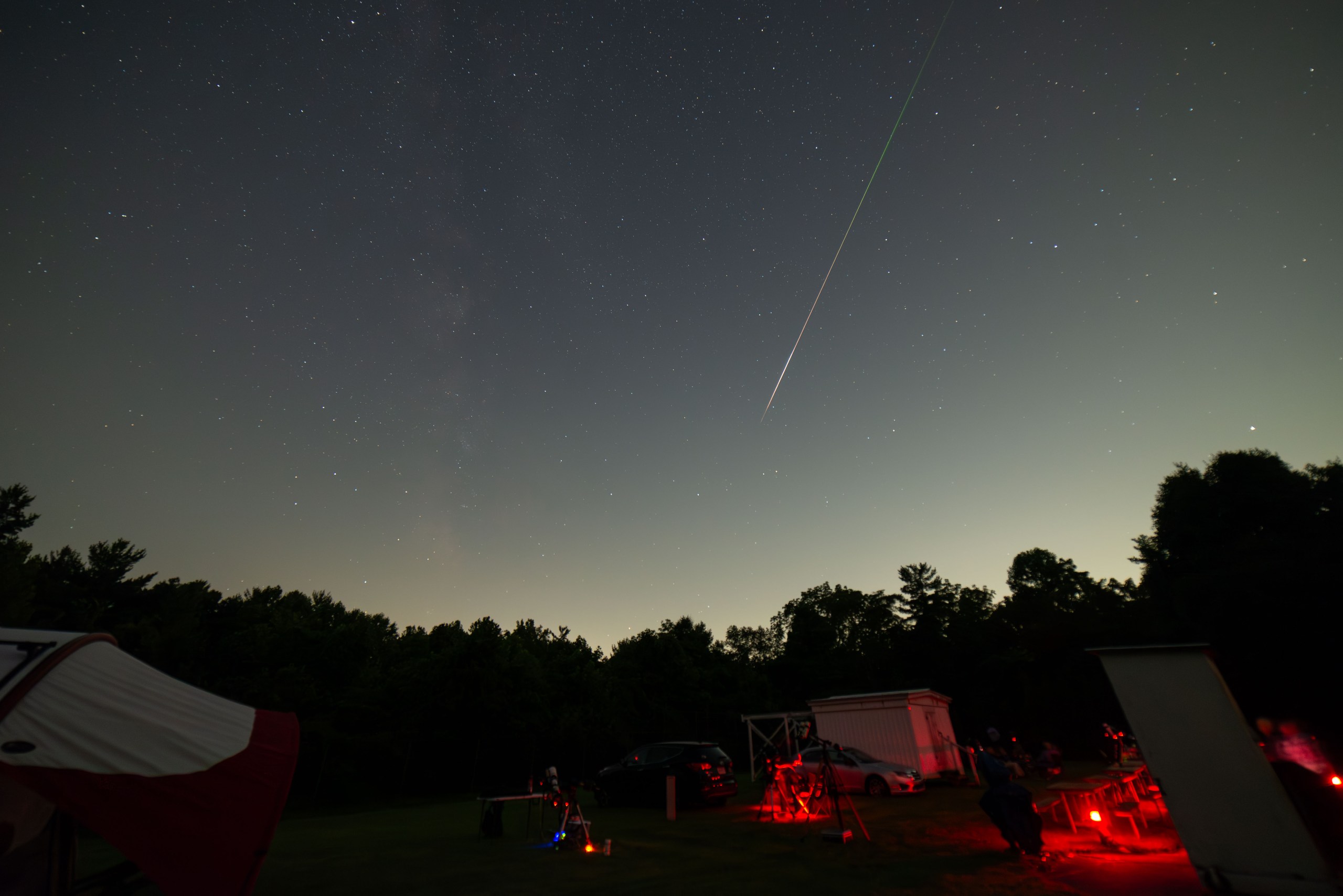
This year, you stand a good chance of witnessing a dazzling display because the New Moon occurs Aug. 12, making the skies especially dark. The darker and less obstructed the sky, the more meteors you will see, so try to get out of town for the night. Be sure to allow your eyes to adapt to the darkness and try to avoid looking at your phone. You may see as many as 90 meteors per hour or more! They tend to come in spurts, so be patient. And pay attention, as the Perseids can yield some colorful streaks.
Your to-bring list
You don’t need any special equipment to watch a meteor shower; in fact, leave your telescope at home. Simply lie back on a blanket or in a reclining chair and open your eyes. While the meteors will trace back to a common point, you can spot them all across the sky. Even though it’s August, you may want to bring warm clothes and blankets to stay warm as the ground and air cool. I also recommend snacks, and perhaps ethereal music on a portable speaker. Bring friends to enjoy the night together!
If you’re like me and want to take pictures, I recommend using a short focal length lens (around the 14–24mm range) at a fast focal ratio. Boost your ISO to see fainter meteors and to capture some foreground. (I use 3200 or even 6400 on my Nikon DSLRs.) Use the manual mode to leave the shutter open for 10 to 15 seconds — long enough to capture more light, but short enough to avoid the stars trailing too much. Be sure to use a tripod and an intervalometer or interval mode. You can also use your smartphone if it has a night or astrophotography mode, but you will need a tripod or something to rest your phone on. Shoot in RAW mode and see what you can get! Be sure to bring extra batteries. Hand warmers with rubber bands make great field-expedient dew heaters, a must for early-morning hours in many parts of the world.
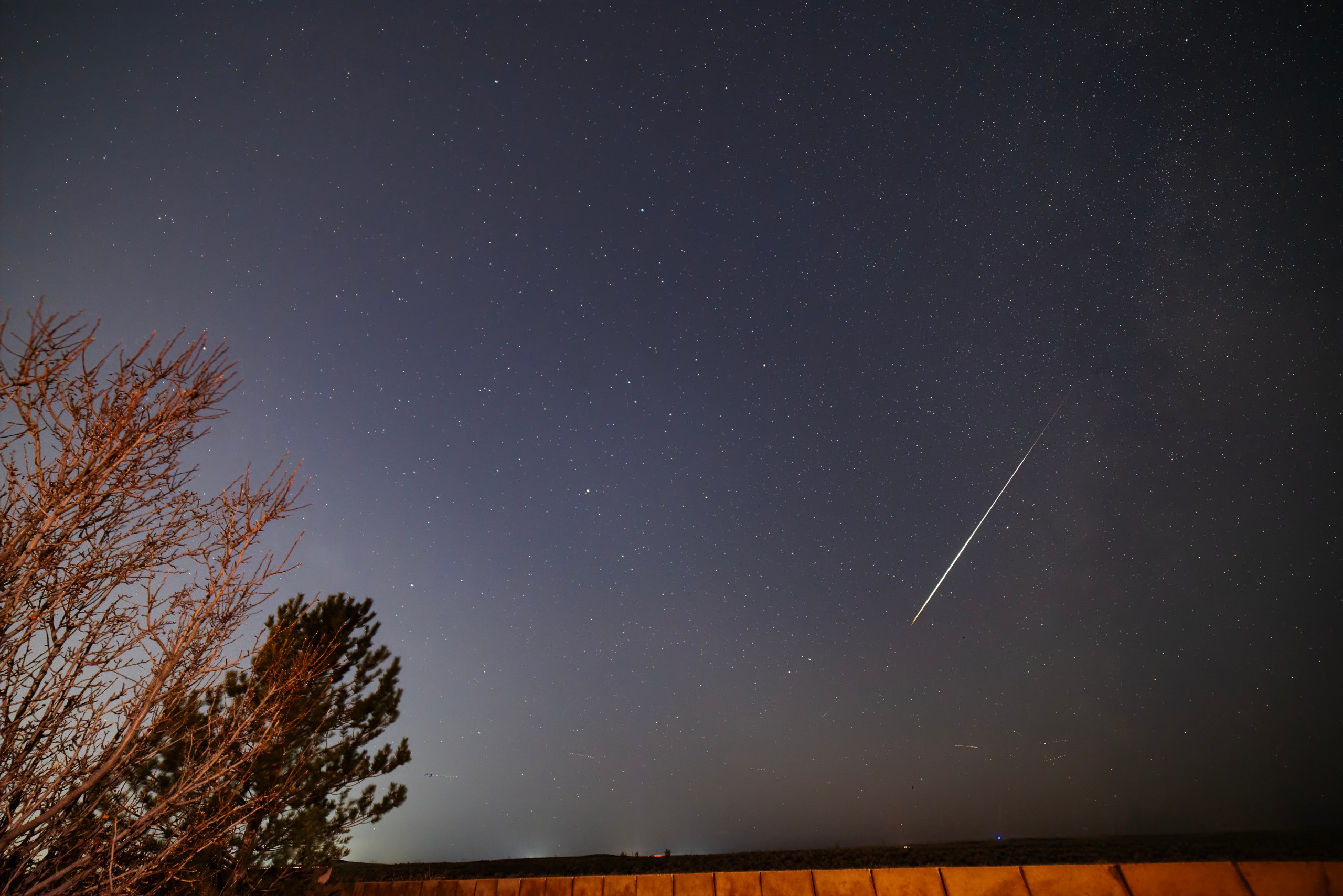
If you miss the Perseids or you want to catch more meteor showers, watch for the Orionids around Oct. 21, the Leonids around Nov. 17, and the Geminids around Dec. 14. The Orionids and Leonids will have far fewer meteors than the Perseids, but the Geminids — timed with a waxing crescent Moon that sets early — should be another dazzling show, sporting some 150 meteors per hour.
Meteor showers are a treat for experienced astronomers and the uninitiated alike. Even if there are fewer meteors than you hoped, remember: If you stay home, you won’t see any! So grab a blanket and some friends and head out into the night to catch a glimpse of nature’s fireworks.
Molly Wakeling is an avid astrophotographer active in STEM outreach. She has a Ph.D. in nuclear engineering.
Browse the Observing basics archive at www.Astronomy.com/author/molly-wakeling