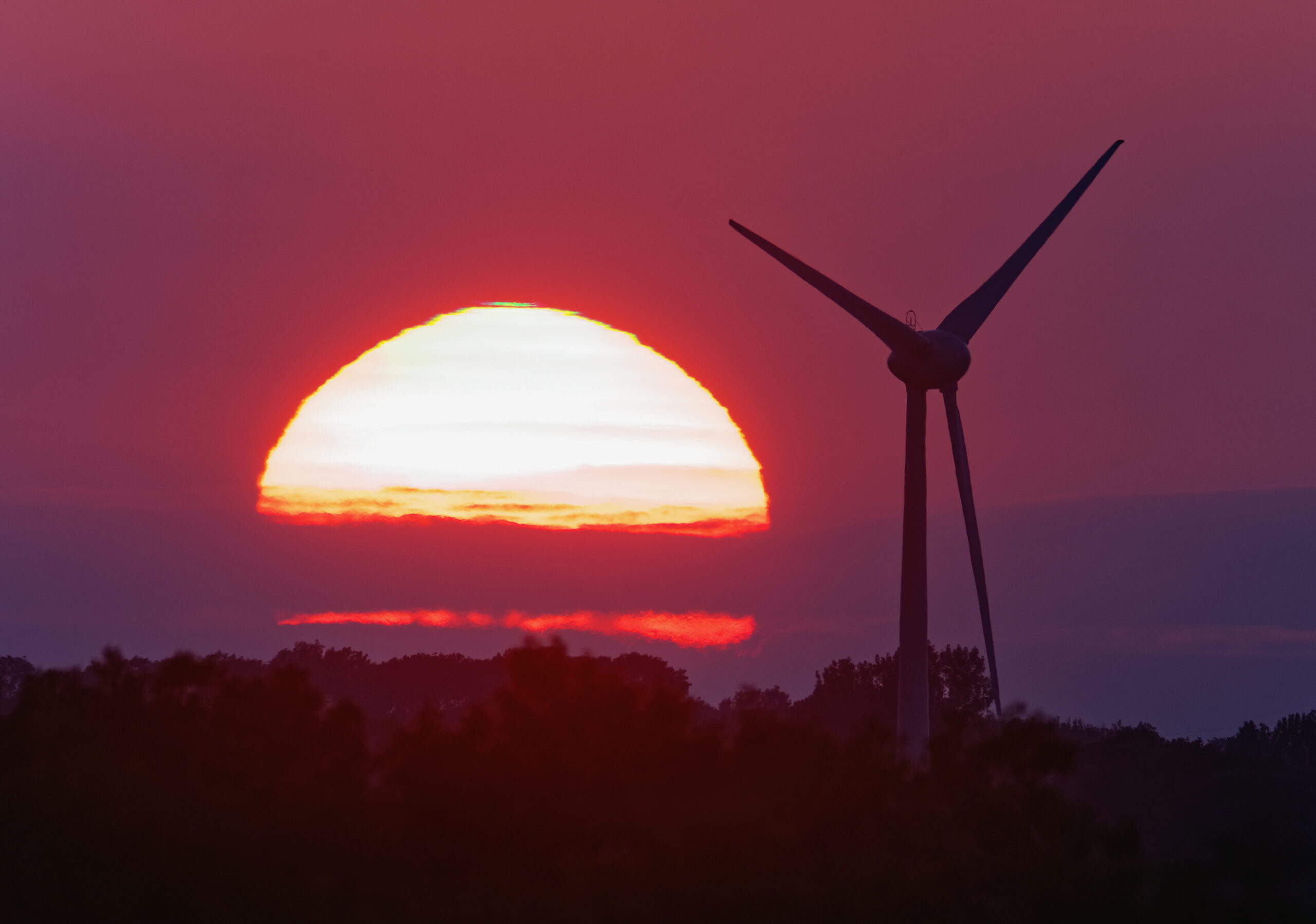
Credit: Jamie Cooper
In each of two previous posts, here and here, I listed 10 great facts about our daytime star. Well, if that wasn’t enough Sun-stuff for you, here are 10 more. Enjoy!
21. The Sun does rotate, but different parts of it spin at different speeds. It takes 25.6 days for the equatorial regions to rotate once, and 33.5 days for the polar regions to do so.
22. The Sun is mainly hydrogen and helium. Hydrogen makes up 73.46 percent of the Sun’s mass, and helium accounts for 24.85 percent. That leaves just 1.59 percent for everything else. The next three elements by mass are oxygen (0.63 percent), carbon (0.22 percent), and neon (0.17 percent).
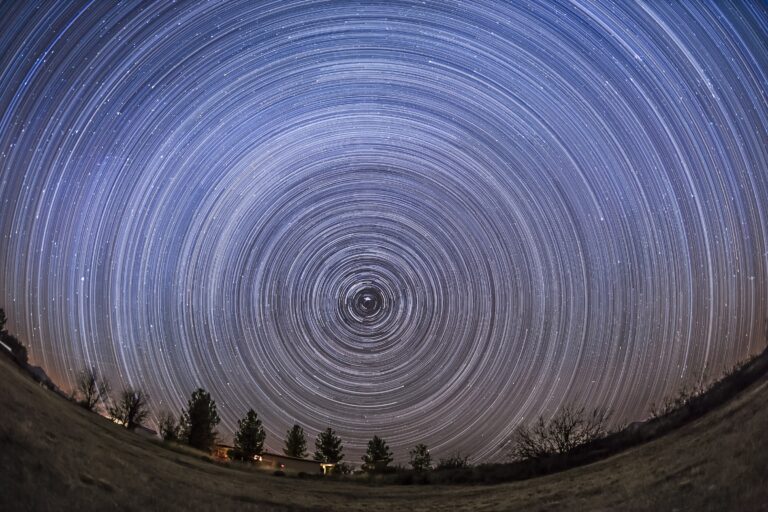
23. Because Earth rotates from west to east, the Sun appears to rise in the east in the morning and set in the west at night. By the way, this doesn’t reverse in the Southern Hemisphere. The Sun still rises in the east and sets in the west there.
24. The Sun’s surface gravity is 28 times that of Earth’s.
25. Each 11 years, the Sun’s magnetic polarity reverses. This ties in directly with the 11-year sunspot cycle.
26. Astronomers have figured out the Sun’s movement through our galaxy and you can see the point toward which we’re moving. If you go out on a clear night in the Northern Hemisphere’s summer, look toward the magnitude 4.4 star Nu Herculis, which lies near 18 hours right ascension and 30° north declination. This star lies approximately 12° southwest of 1st-magnitude Vega in the constellation Lyra the Harp.
27. The first solar flare ever observed, on September 1, 1859, by British astronomer Richard Carrington, was also the most powerful seen so far.
28. From Earth, the Sun appears 30 times larger and 900 times brighter than from Neptune.
29. The outer corona of the Sun extends 12 times our star’s radius from its surface.
30. The Sun travels along an imaginary line in our sky called the ecliptic. It’s called that because it’s the only place eclipses can occur. The group of constellations surrounding the ecliptic is known as the zodiac.