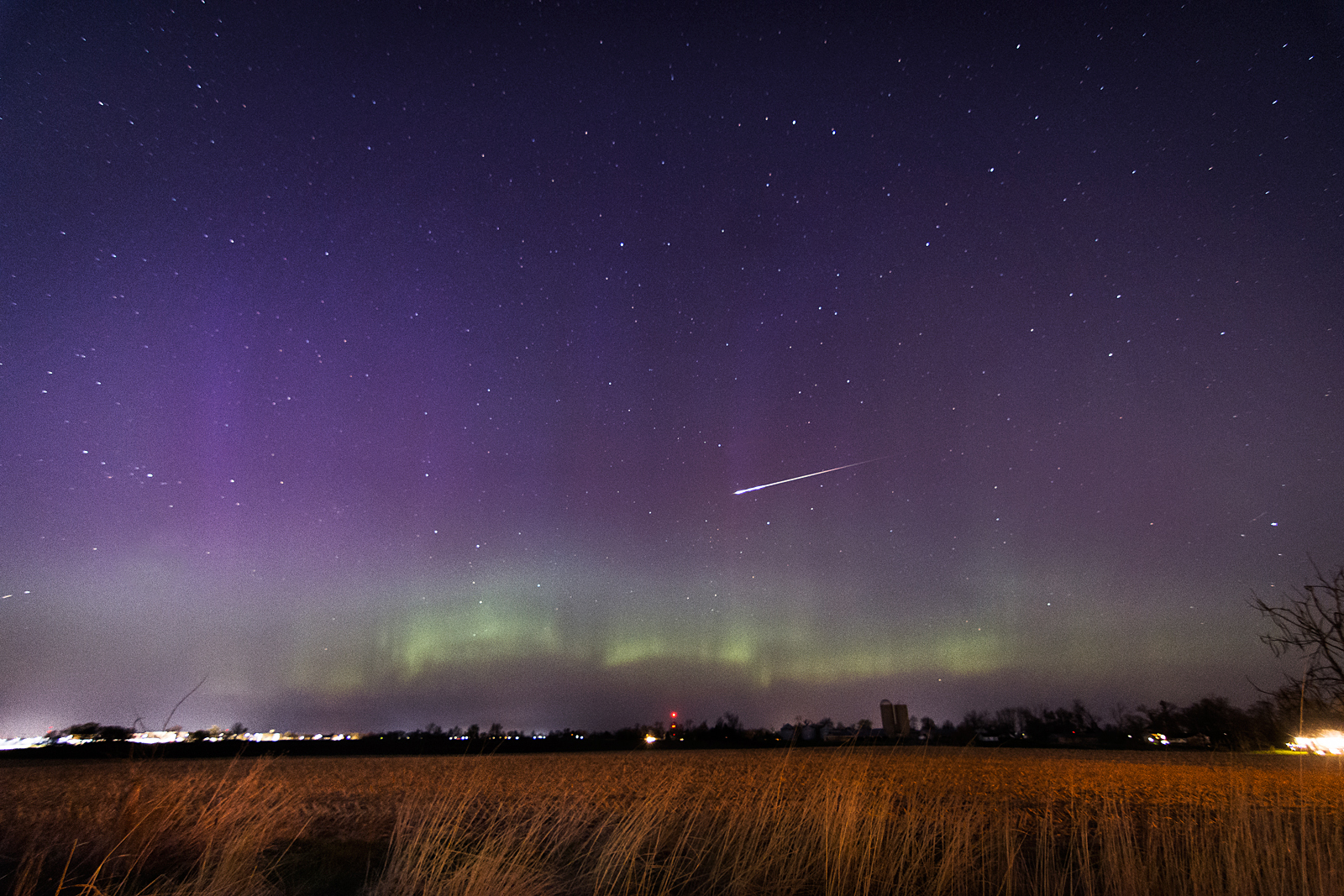
This week, Astronomy magazine Editor Emeritus Dave Eicher invites you to get outside to catch the Lyrid meteors, which peak around April 23. With the Moon mostly out of the way this year, you might see as many as 20 meteors per hour. Good luck!
Video transcript:
Welcome to This Week in Astronomy, brought to you by Celestron, the world’s leading manufacturer of telescopes. I’m Dave Eicher, editor emeritus of Astronomy magazine.
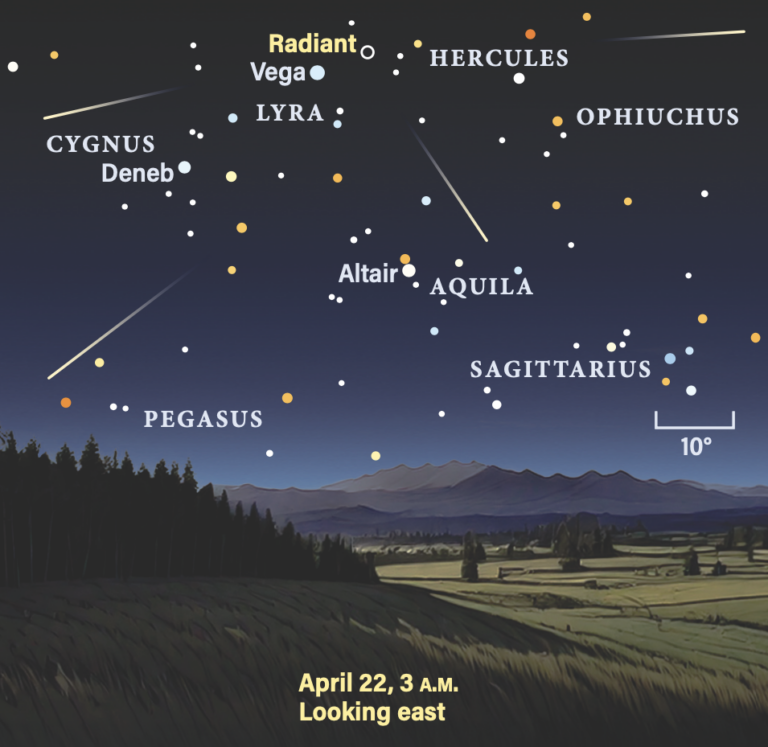
You know, some of the most fun events that we have under the heavens come with a good meteor shower, on a good night, never knowing quite what to expect, watching out for the streaks that may appear across the sky. It’s really fun and it’s exhilarating. Well, we have a good meteor shower that occurs this month with its greatest activity from about April 15th to the 29th and a peak, really, around April 23rd.
This is the April Lyrid meteor shower, so named because the meteors appear to originate from the constellation Lyra. Simply head out under a dark sky to see a meteor shower — any meteor shower — and look straight up to see the most meteors. You don’t need any optical aid whatsoever. The Moon is out of the way of this shower this year, being New Moon on the 16th.
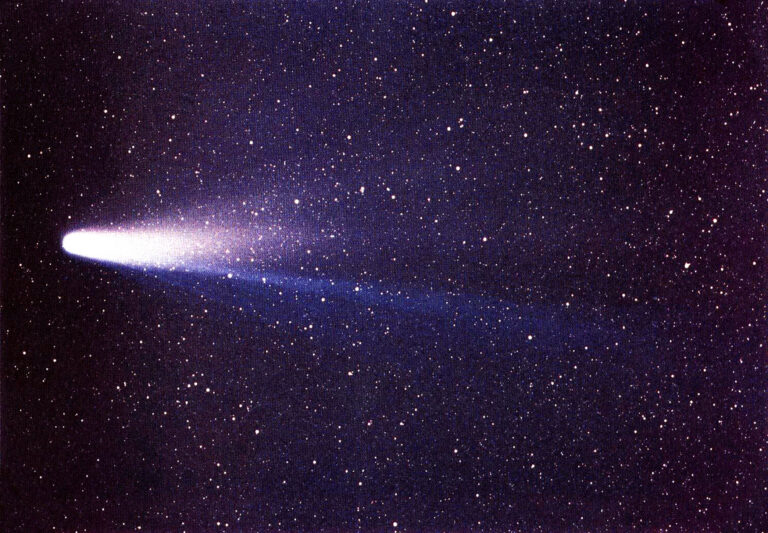
You may see as many as about 20 meteors per hour in this shower, and the best time to look is between midnight and about 4 a.m., when Earth’s leading edge turns into the oncoming meteor stream. The source of this shower is Comet 1861 G1 (Thatcher). So get out there under a dark sky. I hope you have a clear sky. Take a look for the April Lyrid meteor shower. It’s going to be a lot of fun this spring under the stars for all of us. I’ll see you next time.