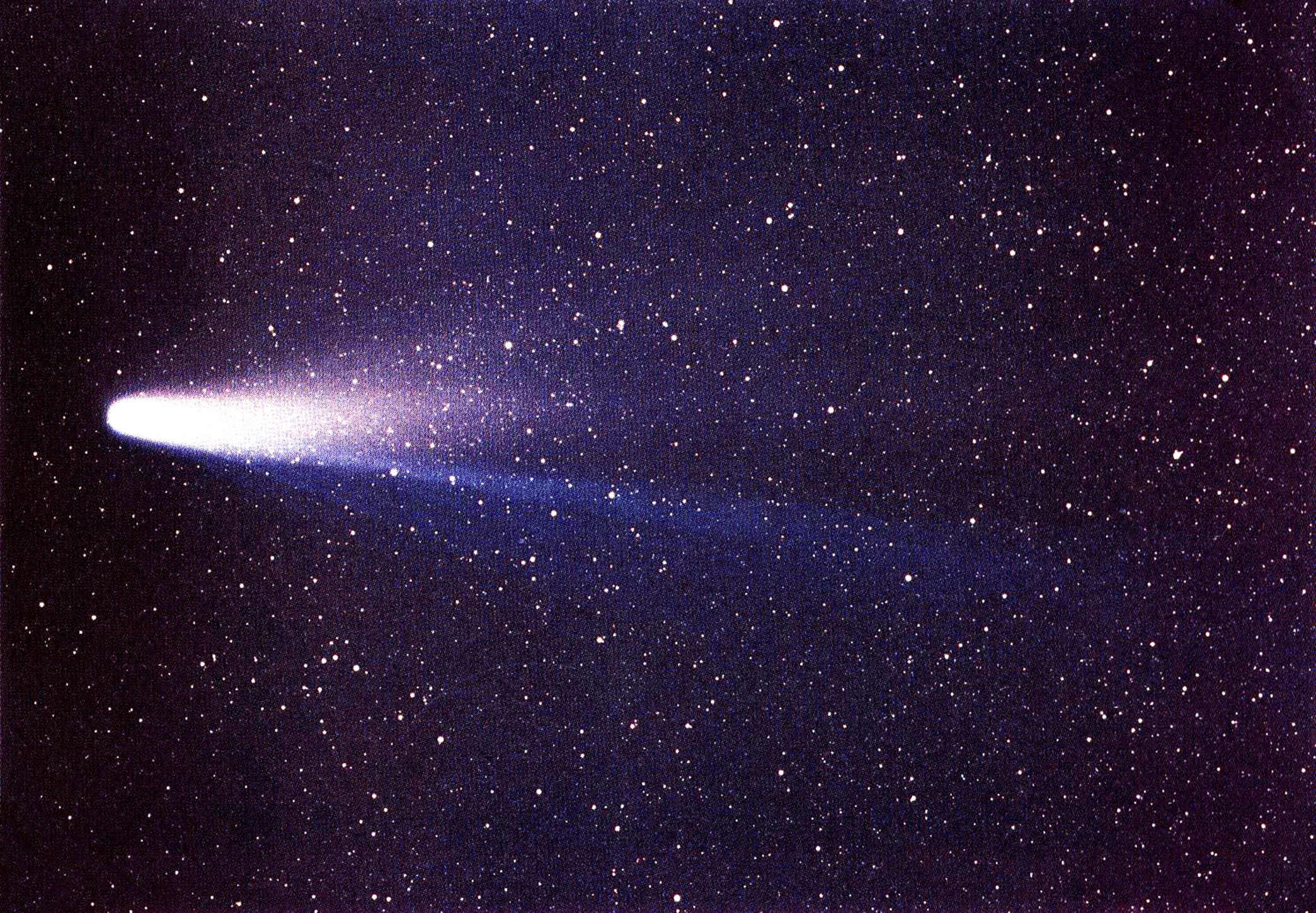
Early in 1986, a visitor from deep space graced Earth’s skies, and for a few breathless weeks human eyes were snatched from their daily labors and fixated on the heavens. The object of this transitory public veneration was Halley’s Comet — the most famous, easily recognizable, and beloved of celestial wanderers. This icy interloper, officially known as 1P/Halley, revisits the inner solar system every 72 to 80 years.
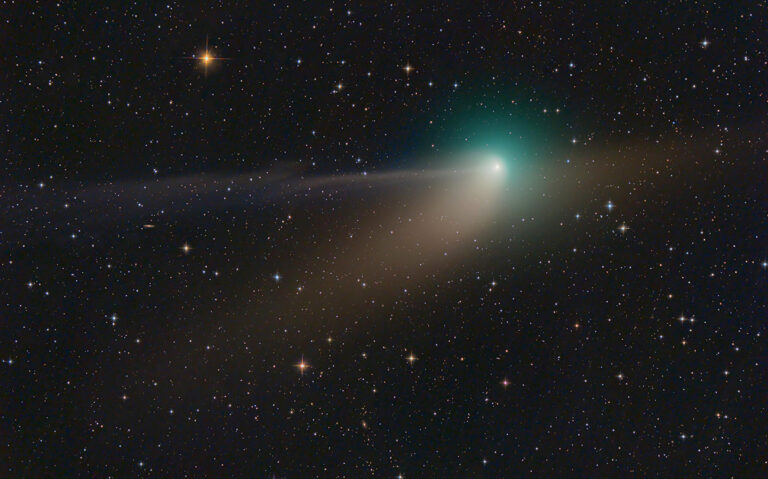
Aggregated lumps of frozen water and gases mixed with smaller amounts of rock and dust, comets originated in the solar nebula, from which the Sun and its planetary retinue formed, some 4.5 billion years ago. Their highly eccentric orbits periodically carry them to the outer solar system and back toward the Sun. There they undergo drastic heating and outgas chemical volatiles, which produce a short-lived extended atmosphere around the comet’s nucleus and sometimes a spectacular, shimmering tail of gas and dust in its wake.
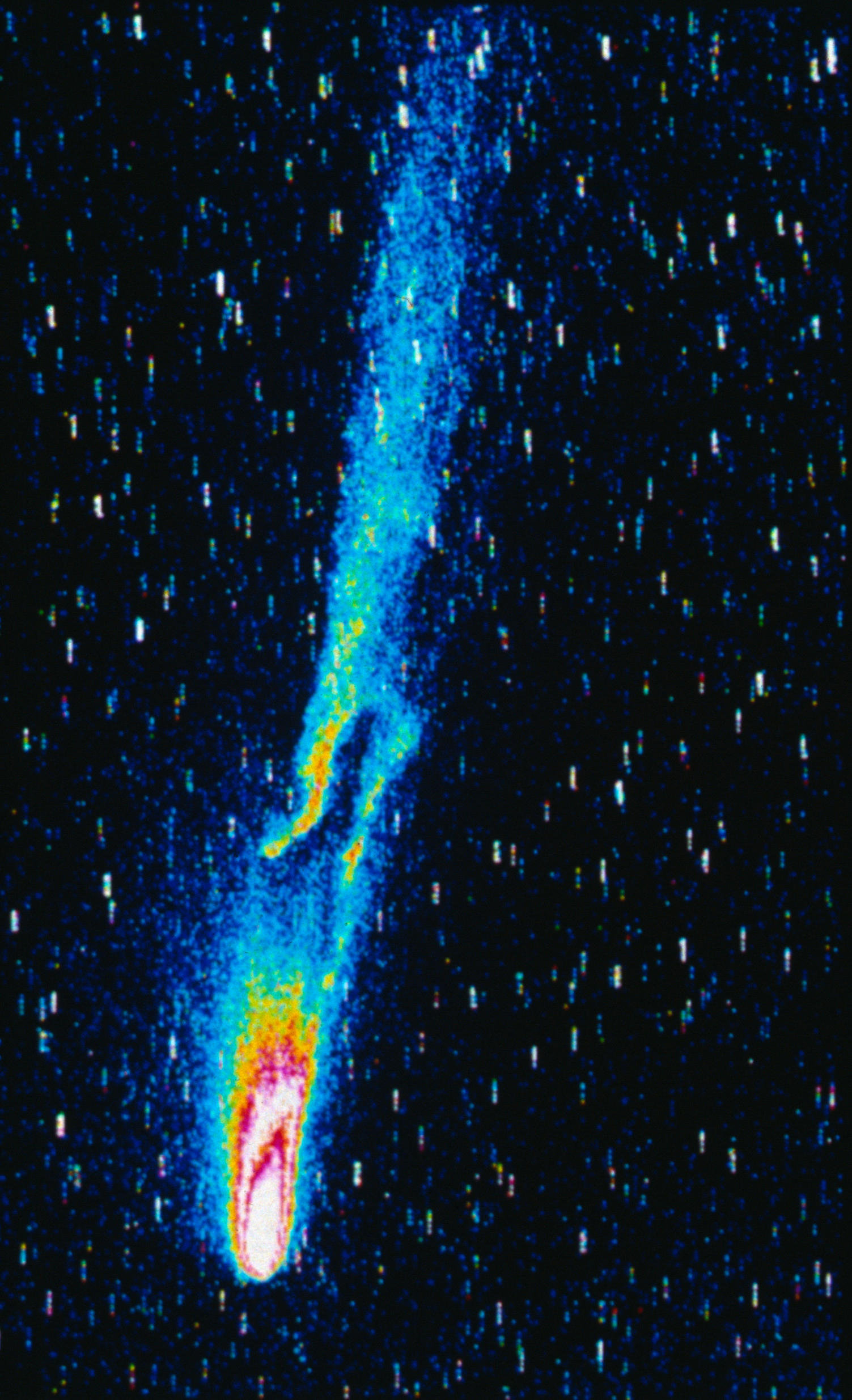
Long-period comets, thought to originate in the Oort Cloud at the solar system’s ragged extremity, require thousands or even millions of years to circle the Sun. But short-period comets, like Halley, are believed to arise in the Kuiper Belt, just beyond the orbit of Neptune. Their orbital periods span a few years to a few centuries.
Comets’ inherent smallness, iciness, and extreme distance from the Sun make them unique in the solar system. They suffered none of the volcanic tumult, tectonic upheaval, or violent collisions that blighted the Sun’s inner planets or their moons. Comets remain geochemically unaltered relics from the solar nebula — pristine looking-glasses, snapshots back to the dawn of time.
But until a few centuries ago, they were regarded quite differently, feared and revered through history as harbingers of doom. For millennia, our forebears recorded Halley’s visitations on baked clay tablets, on wax-coated wooden boards, on papyrus, on parchment — and with their own terrified eyes.
Previous visits
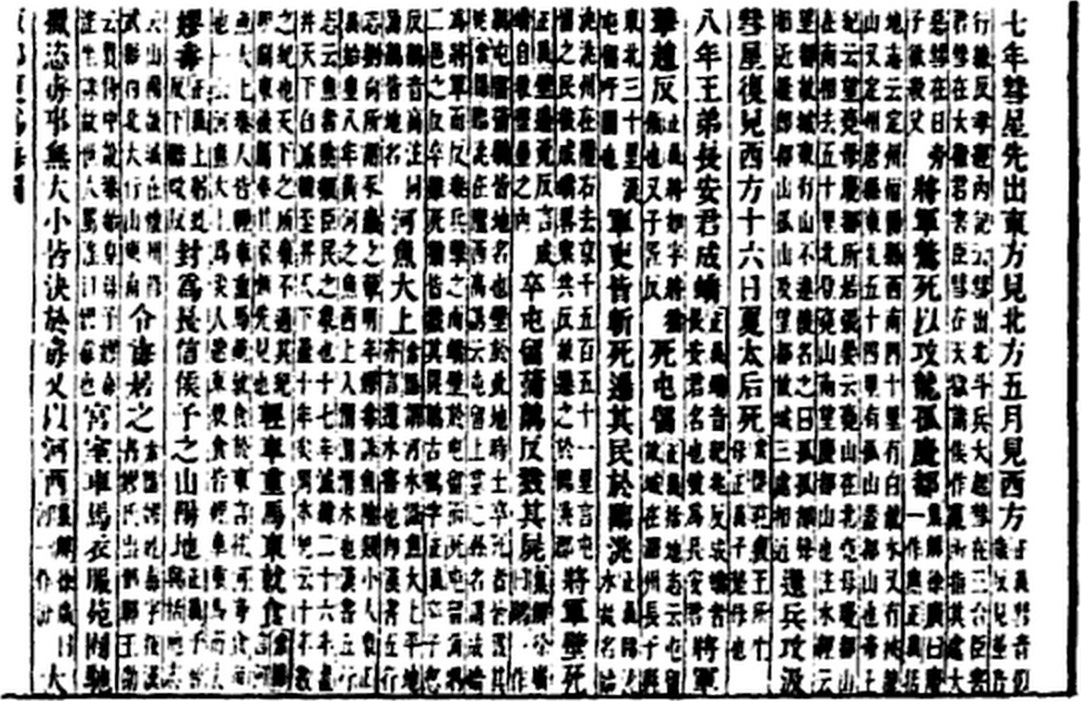
Halley’s Comet was first mentioned by the Chinese in 240 b.c.e., appearing in the east, then progressing northward. In other apparitions it was visible “day beyond day” for weeks. Variously described as sparkling, bluish-white in color, and with flaming red rays, one annalist compared its nucleus to the eye of an ox, its fan-shaped tail “like that of a peacock.”
To our ancestors, comets presaged calamity. The Chinese — assiduous keepers of records — omitted mentioning one visitation, lest it inadvertently cast the “good” reign of Emperor Wen of Han in a dim light. Halley later appeared “like a sword” over Rome in 11 b.c.e., portending the death of the great general Marcus Vipsanius Agrippa. And the Jewish historian Josephus saw Halley’s appearance in 66 c.e. as heralding the destruction of Jerusalem four years later.
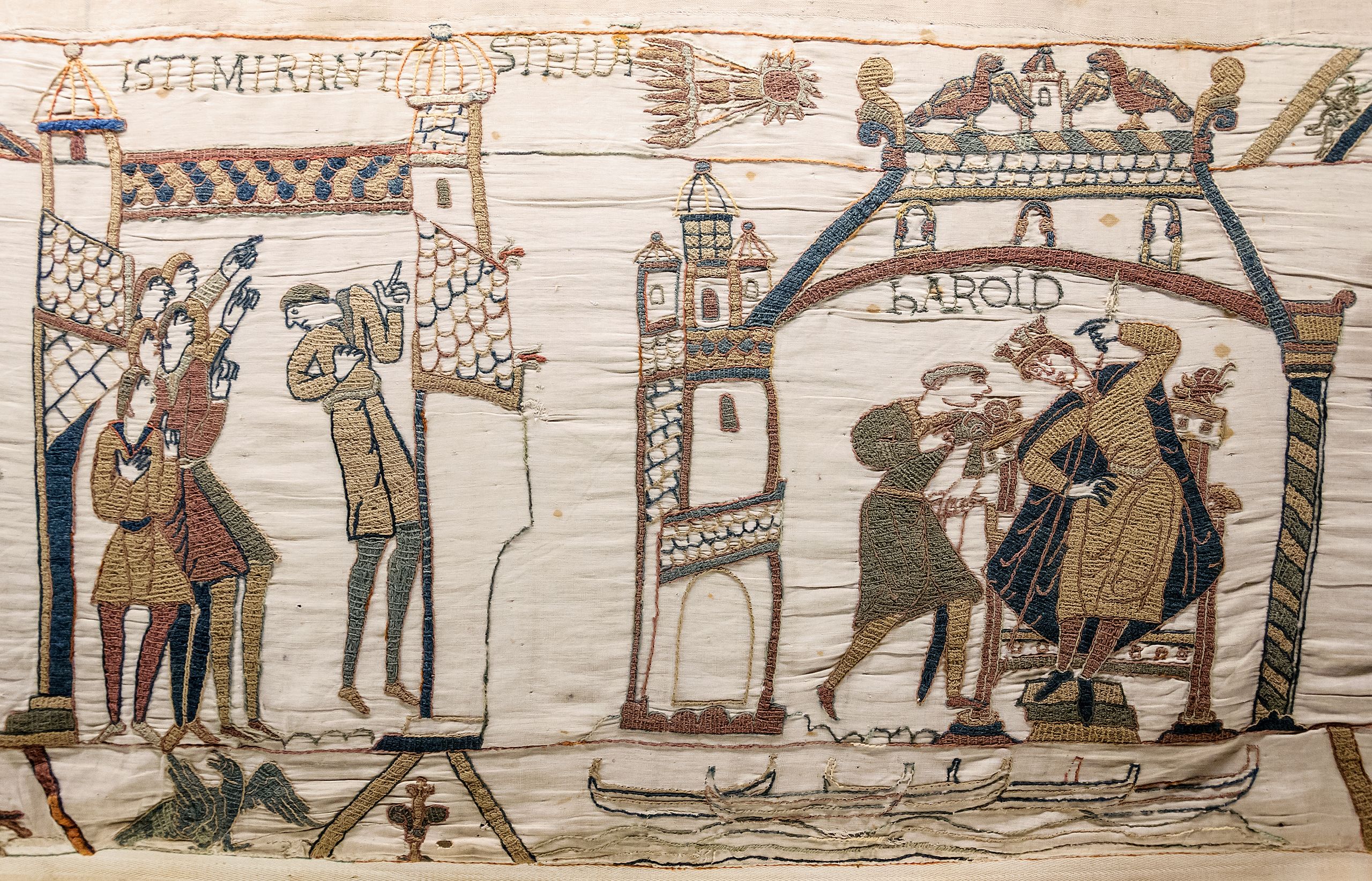
Another apparition, “a very fearful star,” wrote historian Dio Cassius, prophesied the murder of the Roman emperor Macrinus in 218 c.e. Its closest recorded approach to Earth, just 3 million miles (5 million km) in 837 c.e., brought Louis the Pious, king of the Franks, to his knees in fearful penance. Halley’s tail stretched halfway across the sky and at magnitude –3.5, its visual brilliance rivaled Venus for six weeks — a truly awe-inspiring spectacle. Halley also appeared before the defeat of Attila the Hun in 451 c.e. Ireland’s Annals of Ulster noted its 989 c.e. visitation propitiously came during “a dark and rainy year.” And Halley pops up memorably in the Bayeux Tapestry, foreshadowing William the Conqueror’s 1066 invasion of England.
As recently as 1910, people left doors unopened and refused to drink water when Halley was in the sky, fearing the comet’s “pestilential vapors” might pour down to Earth. In the West, spectroscopy had revealed the toxic gas cyanogen in the comet — inducing terror that it might snuff out life on Earth. People panic-bought gas masks and “anti-comet pills” to protect themselves.
Conversely, others regarded Halley as symbol of divine approval. It may have inspired the Mongol warrior Genghis Khan’s conquests and precipitated the Ottoman Empire’s invasion of Hungary. In 1456, Emperor Zara Yaqob of Ethiopia was sufficiently inspired by the comet to found Debre Berhan, the City of Light, as his imperial capital.
The U.S. satirist Mark Twain, born two weeks before Halley’s 1835 visitation, caustically noted in 1909: “Now here are these two unaccountable freaks; they came in together, they must go out together.” His self-prophecy proved accurate: Twain died in 1910, one day after Halley reached perihelion, its closest point to the Sun.
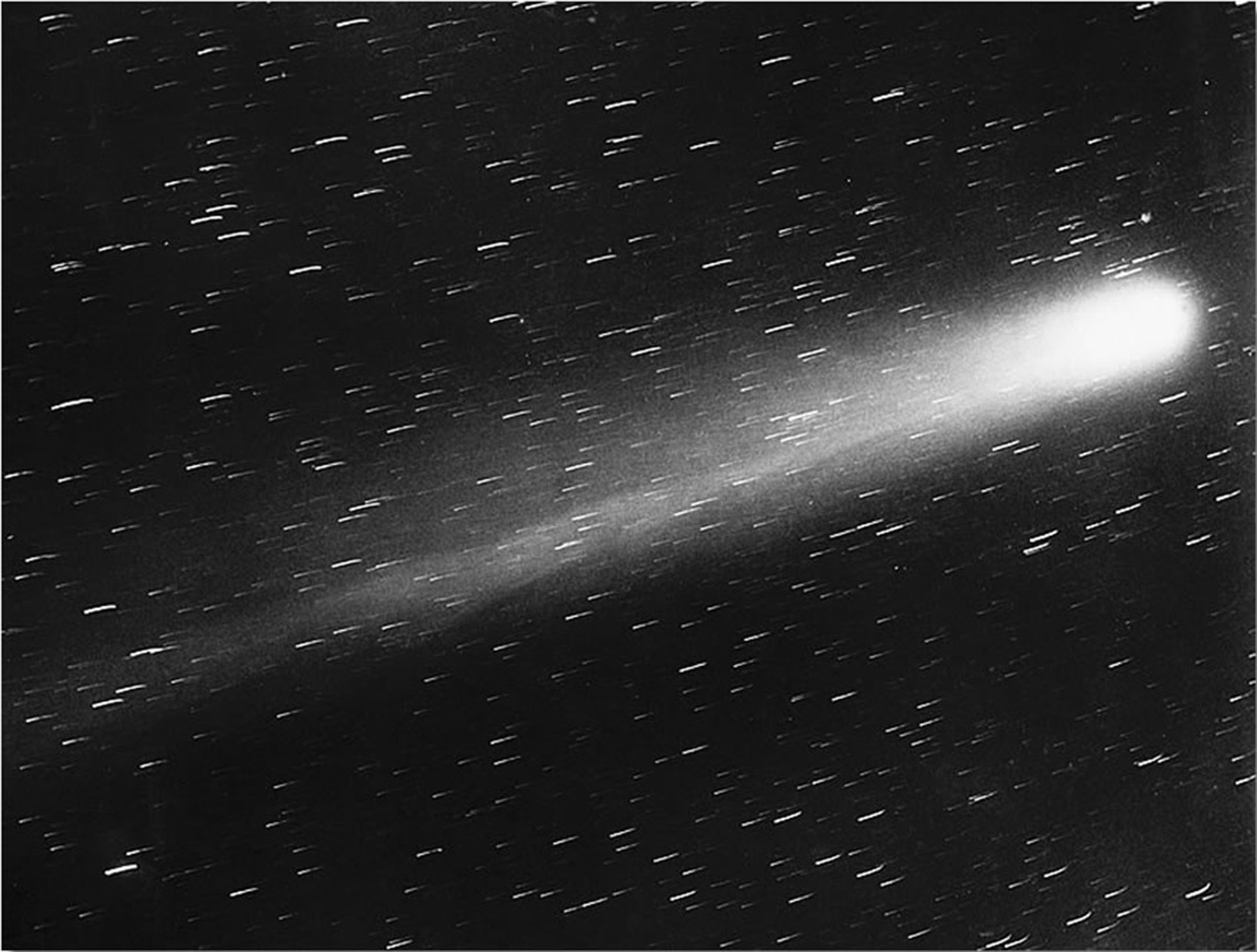
The great one
Before the 17th century, it was assumed comets made singular passes through the solar system. But after observing Halley’s 1682 visitation, English astronomer Edmond Halley computed data from comets seen in 1531 and 1607 and found all three moved in virtually identical orbits, separated by intervals of about 75 years. Halley concluded the three observed comets were one and the same.
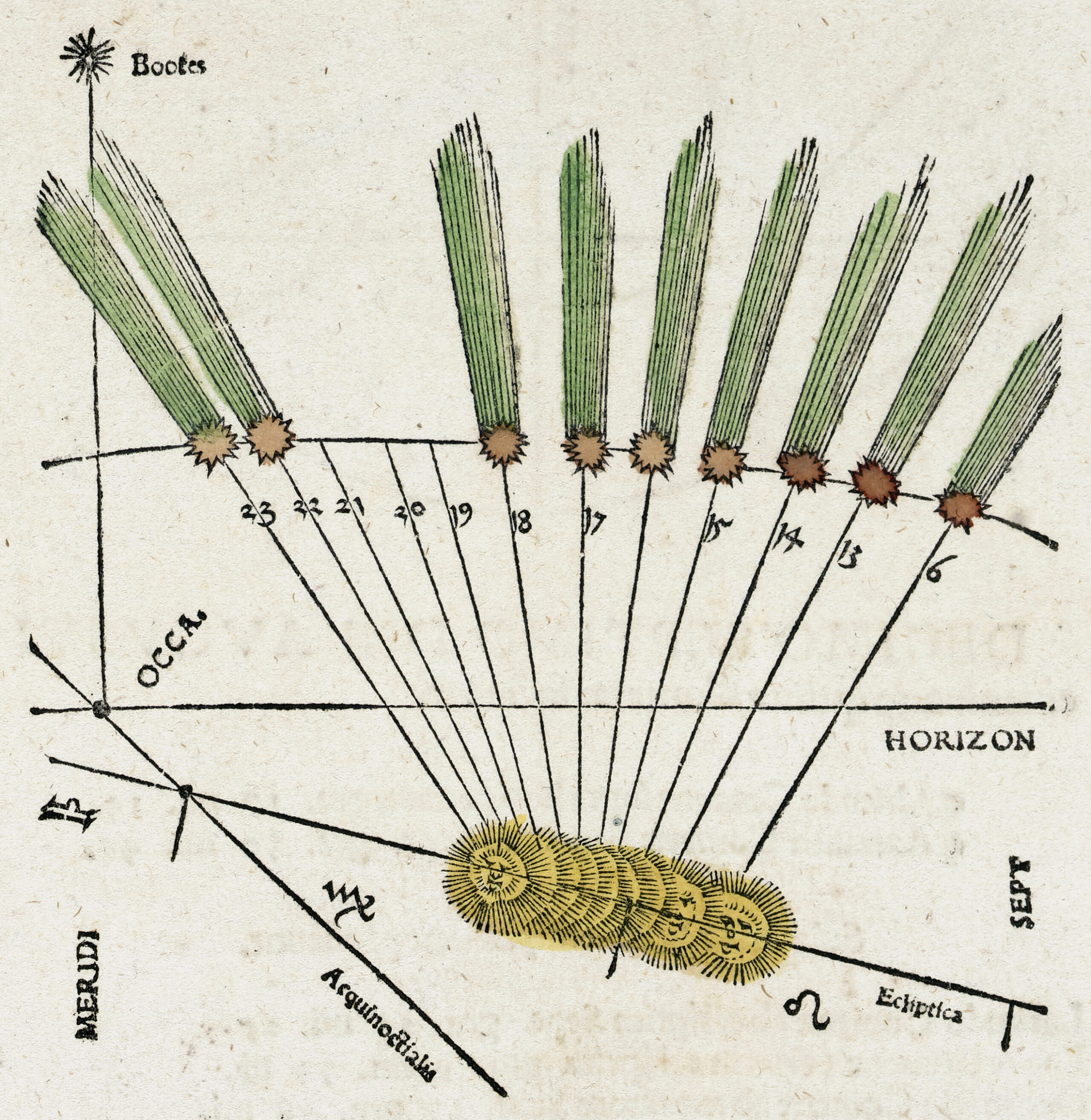
Although he correctly predicted it would return in 1758, Halley didn’t live to see it, dying in 1742. The comet was first seen by German amateur astronomer Johann Palitzsch on Christmas Day 1758, and a year later was named in Halley’s honor, designated 1P/Halley — the first-known periodic comet.
In 1910, Halley was photographed for the first time. Then, in 1986, its most recent visitation saw a concerted international campaign to explore the comet.
It was first seen on its approach to the inner solar system in October 1982, using the 200-inch Hale Telescope on Mount Palomar. The first visual observations came in January 1985, and Halley was dimly visible to the naked eye the following November. It achieved perihelion on Feb. 9, 1986, and reached its closest point to Earth on April 10.
But despite much media hype, Halley proved dismally unspectacular. Observers with hopes of seeing a great ball of flame traversing the sky instead beheld a tiny, uninspiring pinprick of light. Urban light pollution did not aid matters, although binocular observations near the horizon at dawn or dusk achieved some success.
Halley approached no closer than 39 million miles (63 million km) from our planet, almost half the distance between Earth and the Sun, and its magnitude peaked no higher than 2.6. It scored among the comet’s most visually unfavorable showings in recorded history.
But one person who did see Halley that spring was Japan’s emperor, Hirohito, who observed the comet as a young boy in 1910 and again, aged 84, from the roof of his imperial villa. “I am fortunate that I could see it twice in my life,” the emperor said at the time. “I’m very happy that I could see clearly the comet with its gas tail.”

The Halley Armada
Halley’s lackluster display was compensated by the success of the Halley Armada: a close-range reconnaissance by five space probes from the Soviet Union, Japan, and the European Space Agency (ESA). Three U.S. probes viewed Halley from afar. But hopes to observe the comet from the space shuttle were curtailed by the January 1986 Space Shuttle Challenger tragedy.
First to reach the comet was the Soviet Vega 1. Launched in December 1984, it delivered an atmospheric balloon and lander to Venus in June 1985, then headed to intercept Halley. On March 6, 1986, Vega 1 flew within 5,523 miles (8,889 km) of the nucleus.
It found two bright regions in what was initially suspected to be a double nucleus, but which turned out to be a pair of active jets outgassing cometary material into space. The results proved surprising: with an albedo of 4 percent — meaning it reflected 4 percent of incident sunlight — the nucleus was significantly darker than anticipated: blacker, in fact, than coal.
Infrared data pegged its temperature at 300 to 400 kelvins (80 to 260 degrees Fahrenheit [27 to 127 degrees Celsius]), far warmer than expected for such an icy object. This had the effect of shifting opinions of Halley’s nature from a “dirty snowball” to a “snowy dirtball.” Ten percent of the nucleus was highly active, with icy regions thickly coated in dust. It measured Halley’s nucleus at 8.7 miles (14 km) long.
But Vega 1 was savagely pummeled by dust particles — some 4,000 impacts per second — during its 177,000 mph (285,000 km/h) flyby, disabling two scientific instruments and reducing solar array capability.
Two days later, Japan’s Suisei (“Comet”) probe swept within 93,830 miles (151,000 km) of the nucleus. Its ultraviolet imager refined the nucleus’ rotation rate and measured interactions between Halley and the solar wind.
Eighteen hours after Suisei, on March 9, Russia’s Vega 2 passed within 4,990 miles (8,030 km) of Halley and took 700 photographs. It achieved better resolution than Vega 1 thanks to reduced dust concentrations. And on March 11, Japan’s Sakigake (“Pioneer”) sped past the comet at a distance of 4.34 million miles (6.99 million km).
Giotto’s triumph
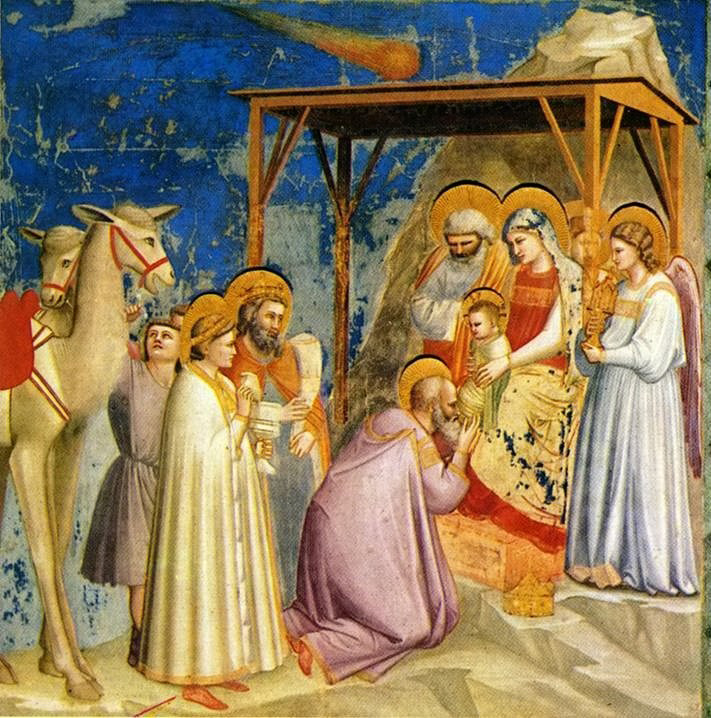
But it was ESA’s Giotto that achieved the closest-ever flyby of the comet: just 370 miles (596 km) on March 14, 1986. (The spacecraft was named for the Florentine Renaissance artist Giotto di Bondone, who observed Halley in 1301 and used it as inspiration to paint the Star of Bethlehem in his masterpiece, The Adoration of the Magi.)
To achieve such close distances, Giotto relied heavily on the Vegas. Without their data, it likely could not have approached Halley much nearer than 2,500 miles (4,000 km). “The Vegas were our pathfinders,” said Giotto deputy project scientist Gerhard Schwehm in a retrospective interview with ESA. “Images from their cameras allowed us to determine very accurately the position of the comet and the trajectory we wanted Giotto to follow.”
That Giotto survived was no small miracle: It sustained 12,000 dust impacts, yet returned 2,112 images of the nucleus — the clearest Halley pictures ever taken. Seconds before closest approach, a particle tinier than a half-grain of rice hit the spacecraft, knocking its Earth-facing antenna out of alignment and crippling Giotto’s multicolor camera.
Hearts on the ground fluttered and computer screens went ominously blank. But after 32 tense minutes, Giotto stabilized itself and contact resumed. “We thought something might happen, because of the dust environment,” Schwehm told ESA. “The frequency of dust impacts was building up and we knew that this could cause us to lose contact.”
Giotto revealed the elongated nucleus, not unlike a peanut or an avocado, dotted with hills and depressions. Multiple jets on Halley’s sunlit side copiously outgassed water, carbon monoxide, methane, ammonia, and other hydrocarbons at a rate of 3 tons per second. Dust sizes approximated cigarette-smoke particles. The fluffy, porous nucleus was a third less dense than water.
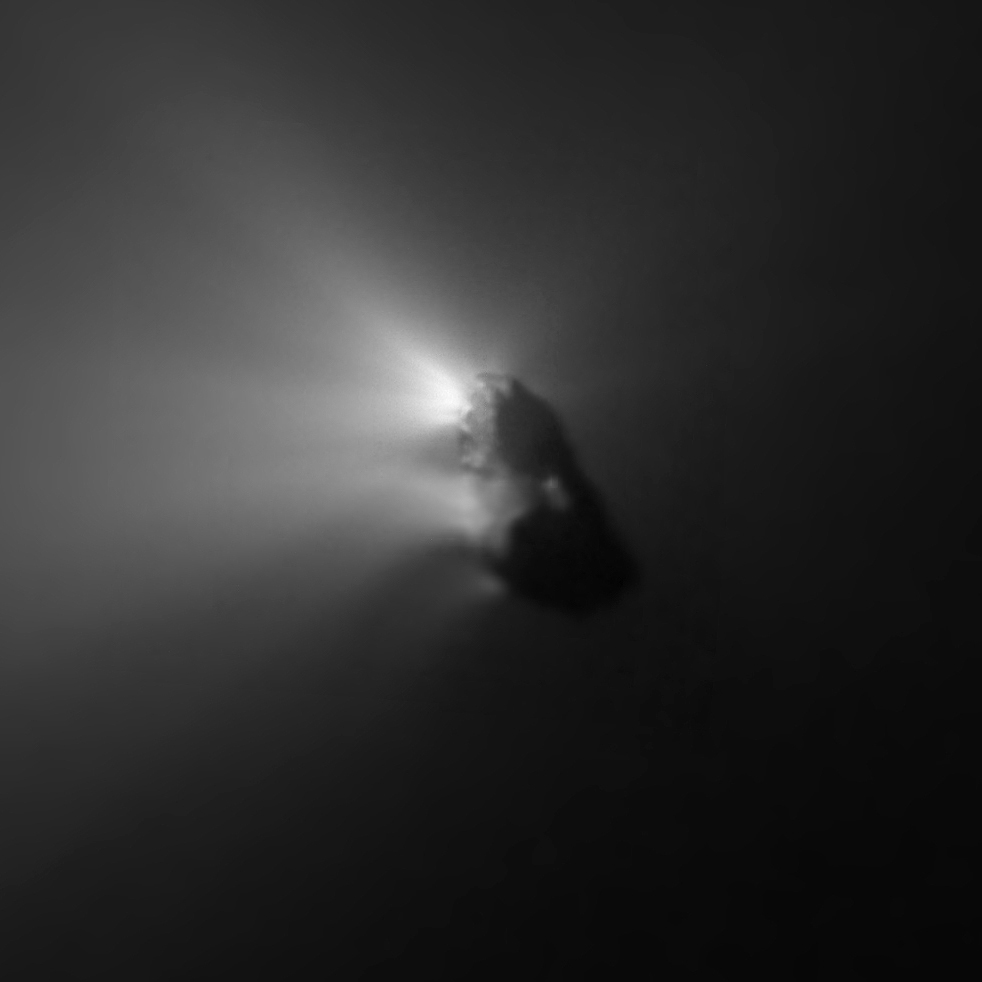
The ESA team celebrated that night, eating Giotto-shaped chocolates from a local baker. But the Halley Armada was not yet done. NASA’s International Cometary Explorer (ICE) flew directly through Halley’s tail, gathering solar wind data. Pioneer 7 measured interactions between the tail and the solar wind. And the Pioneer Venus Orbiter, which had circled Venus since 1978, observed that Halley outgassed 270 million tons of water during its 1986 perihelion passage.
With each visitation to the inner solar system and each new perihelion, Halley will continue losing material. It has been in its present orbit for at least 16,000 years. In December 2023, it reached the furthest point in its solar orbit, about 3.3 billion miles (5.3 billion km) from the Sun. It now has begun the long, lonely inbound journey toward its next perihelion in July 2061.
What new discoveries will it bring with it? Only time will tell.
Ben Evans, a space and astronomy writer, was fascinated to see Halley’s Comet in 1985–86 when he was nine years old.