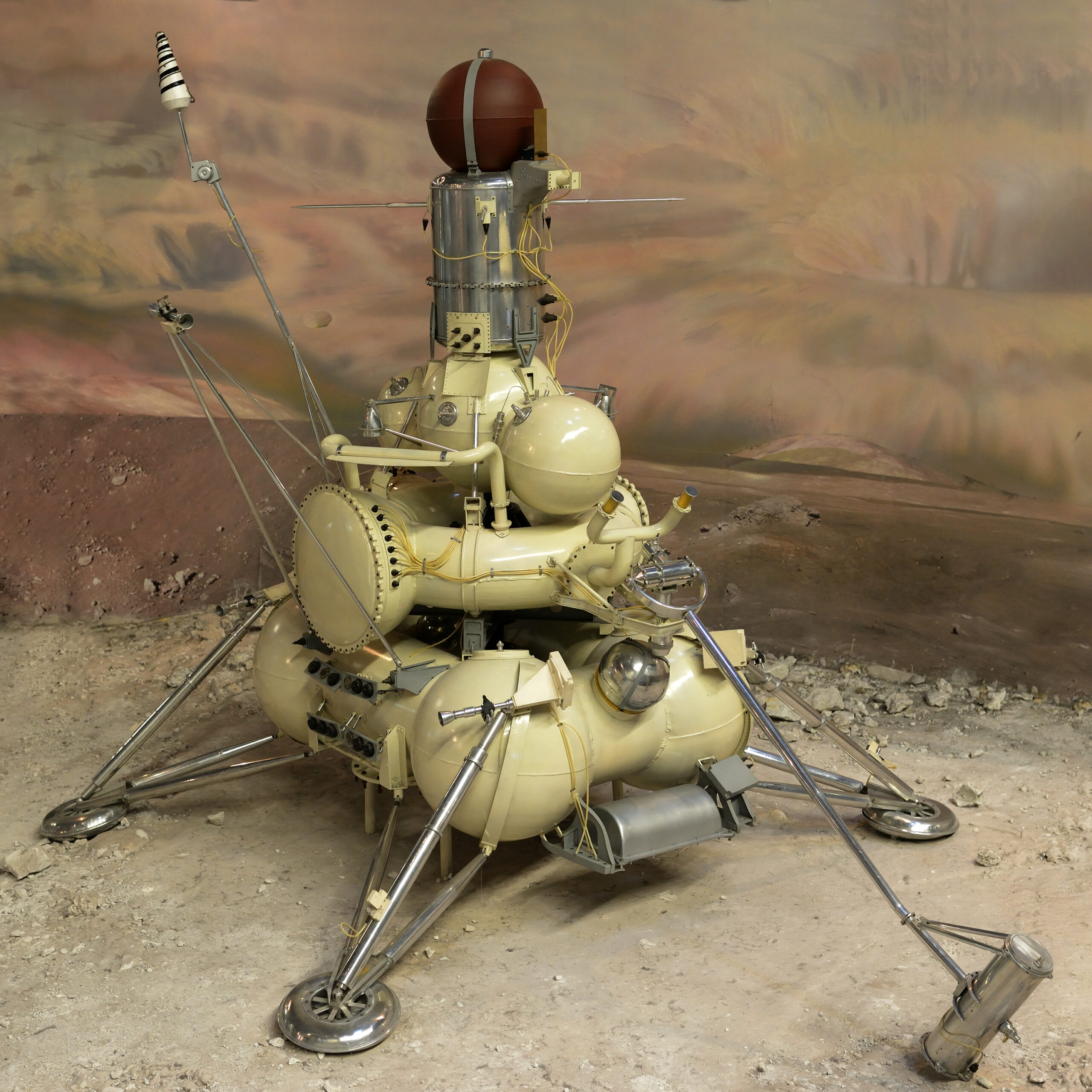
On Sept. 24, 1970, Luna 16 blazed a new trail in lunar sample collection – one traversed by robots. Although the Apollo astronauts had collected lunar samples on their missions, Luna 16 was the first instance of samples being gathered and returned to Earth fully robotically, with no astronauts (or cosmonauts) involved. After blasting off on Sept. 12, 1970, the spacecraft landed in Mare Fecunditatis (the Sea of Fertility) on Sept. 20, and used a 35-inch (90 centimeters) extendable arm to drill into the surface. The drill was able to penetrate about 14 inches (35 cm), and just under a quarter-pound (101 grams) of regolith was collected. After 26 hours on the lunar surface, Luna 16 set off for home, its descent stage for the Moon landing also having been designed as a launchpad for the upper portion of the spacecraft. The hermetically sealed sample container was stored in a return capsule on the top of craft. This re-entry capsule safely returned to Earth, landing in the USSR on Sept. 24.