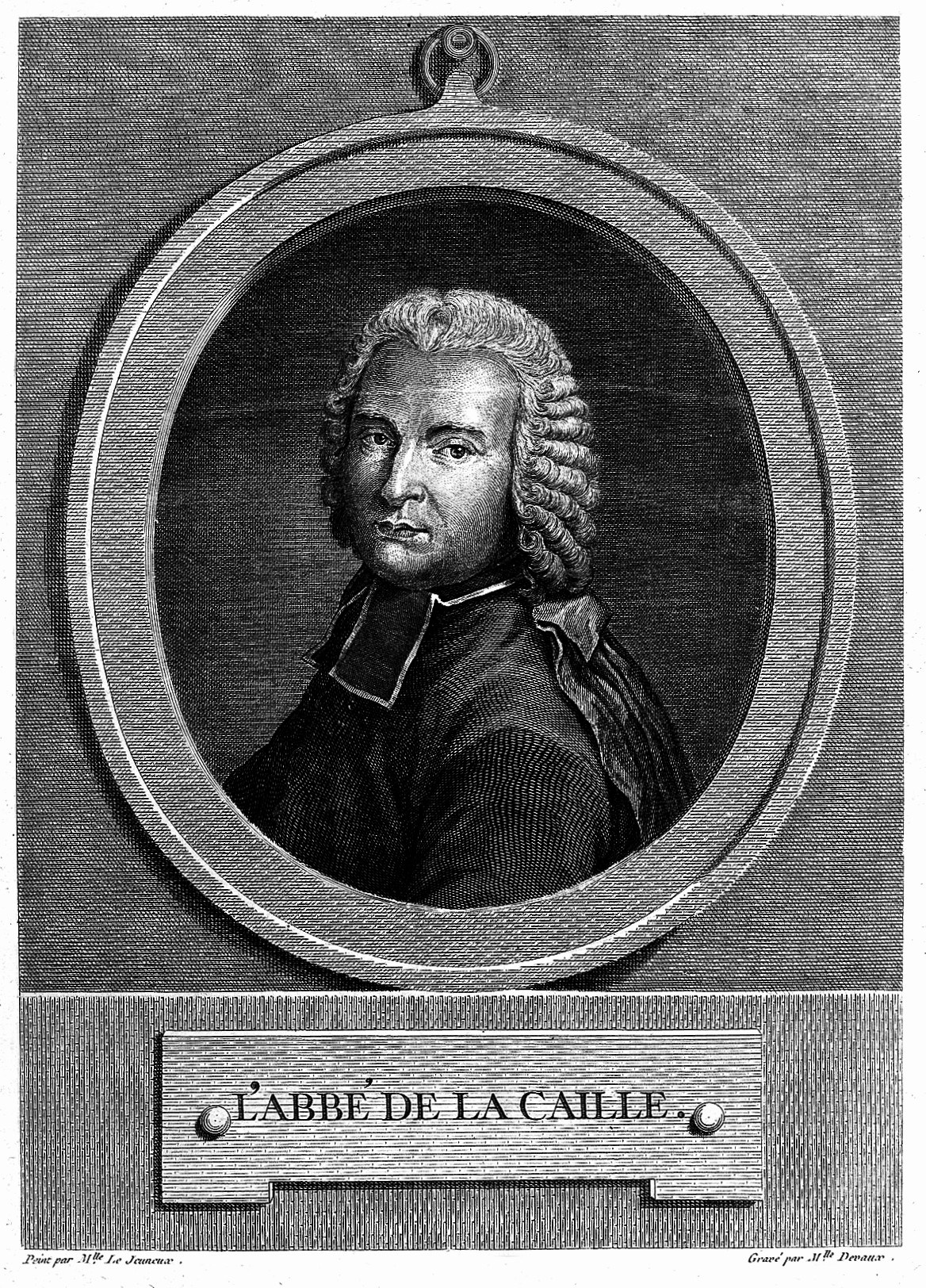
After training in theology and becoming a deacon, Nicolas-Louis de La Caille (born March 15, 1713) turned his focus to geometry and astronomy. He studied at the Paris Observatory, and by 1739 had become professor of mathematics at Paris’ College Marzarin.
Though he constructed a rooftop observatory, published multiple textbooks, and took part in a three-year project to measure the French meridian, he is perhaps most famous for his 1751-1753 trip to South Africa’s Cape of Good Hope. There he used a ½-inch refractor to map the southern sky and recorded the positions of over 10,000 southern stars. He also created 14 new southern constellations, choosing to design and name them after scientific tools like the clock (Horologium), the chisel (Caelum), the compass (Circinus), the furnace (Fornax), the air pump (Antlia), the octant (Octans), the telescope (Telescopium), and the microscope (Microscopium).
After returning to France, La Caille published his star catalog, Astronomiae Fundamenta, in 1757, and died only a few years later, at age 49, from overwork and gout.