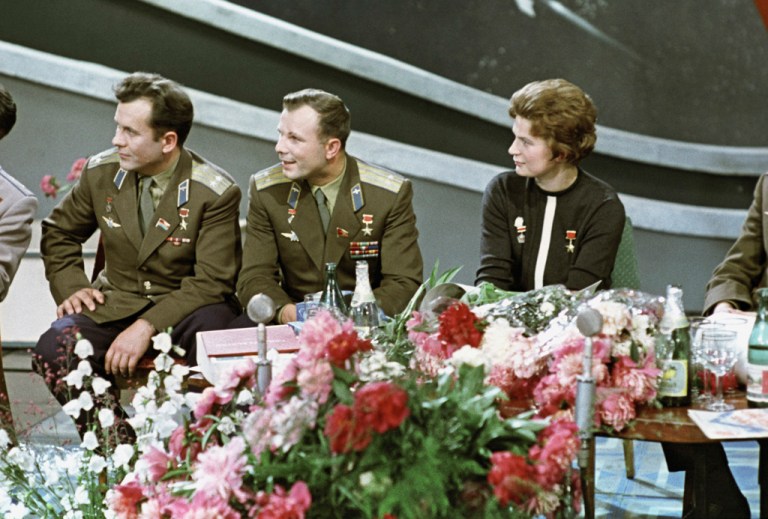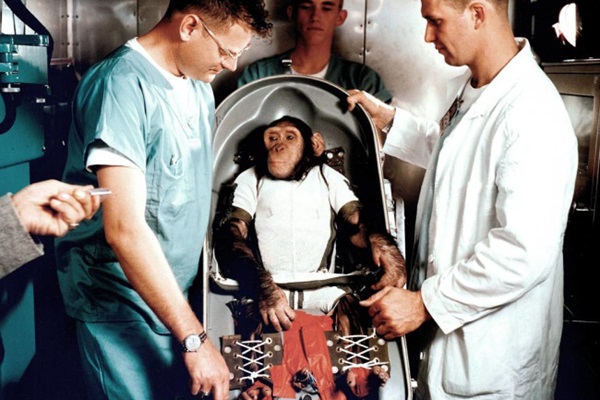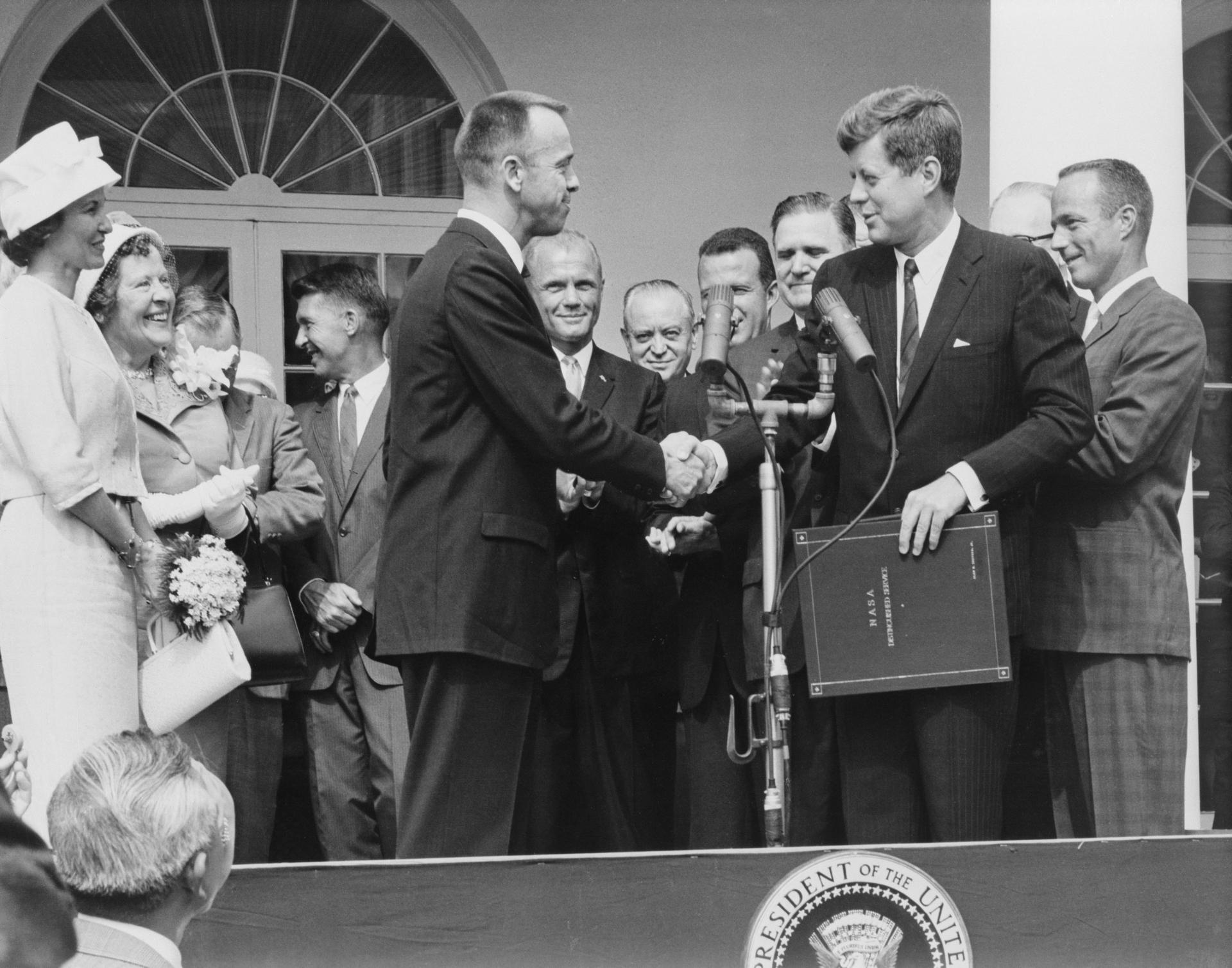
In 1961, amidst the tensions of the Space Race, NASA made an unpopular choice: Concerned with booster issues during a January test flight with a chimpanzee, the agency chose to run additional tests without human astronauts. Project Mercury, the American push for space success in the face of strong competition from the Soviets, had been underway for over two years, and NASA had already selected the Mercury 7 – the first class of American astronauts. The delay in the name of astronaut safety allowed the Soviets to score another win in the Space Race, achieving the first human flight to space with Yuri Gagarin’s mission on April 12, 1961.
Alan Shepard’s flight on May 5, as the second human and first American in space, remained monumental, however. Project Mercury’s goal of proving the viability of sending humans to space was fulfilled, and the U.S. notched an additional triumph by broadcasting the flight live to the world. (The Soviets were far more secretive with their missions.) Shepard’s capsule was named Freedom 7 in a salute to the seven Mercury astronauts, and it was launched on an Army Redstone missile from Cape Canaveral. After delays caused by weather and technical issues – leading to Shepard telling the launch staff to “fix your little problem and light this candle” – the rocket blasted off at 9:34 AM EST. It reached an altitude of 116.5 miles (187.5 kilometers) and traveled 5,180 mph (8,336 km/h) at its peak velocity. The flight was a little over 15 minutes long, and despite intense G forces during reentry and a jarring impact with the ocean surface, Shepard emerged from the capsule in good condition, making his journey as the first American in space a success.