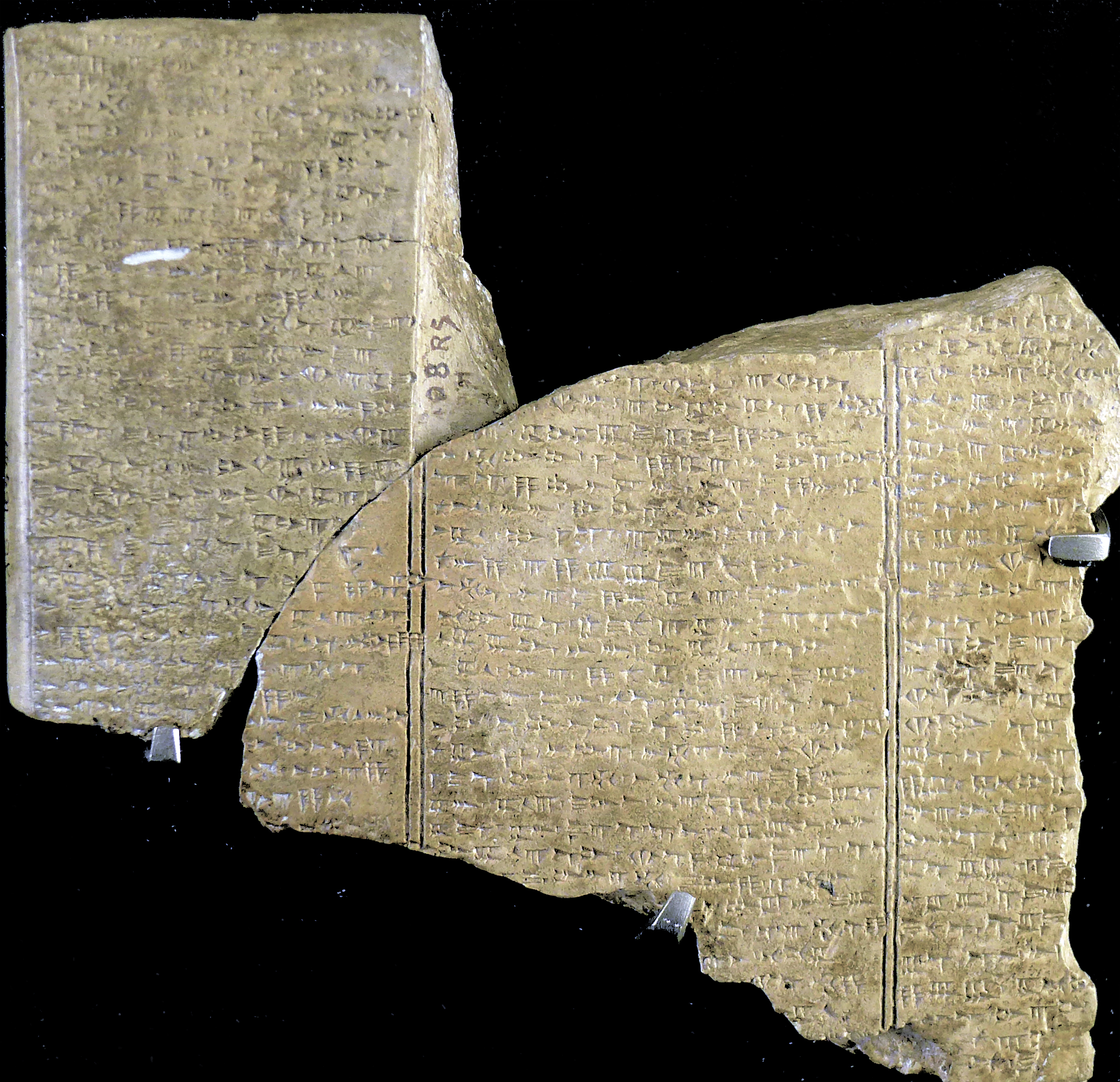
In 1948, a clay tablet was unearthed in the ruins of the ancient city of Ugarit, in modern Syria. On the tablet was inscribed an account of a solar eclipse, describing the Sun going down in the sixth hour of the day; today, it is among the oldest known records of an eclipse. For many decades, that eclipse was dated to May 3, 1375 B.C.E.
In 1989, however, researchers reanalyzed the clay tablet and used details from the inscription to redate the eclipse. A mention of the time of year suggests the event took place in February or March, and a description of the Sun’s “gatekeeper,” Rashap, hints that Mars was visible near the eclipse. These clues pointed towards March 5, 1223 B.C.E. Both possible dates are plausible and referenced, but many institutions today favor the March option.