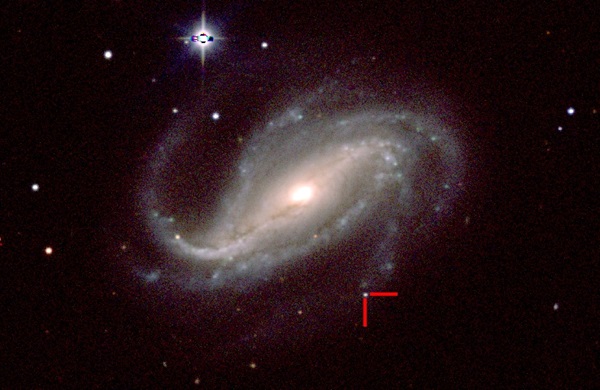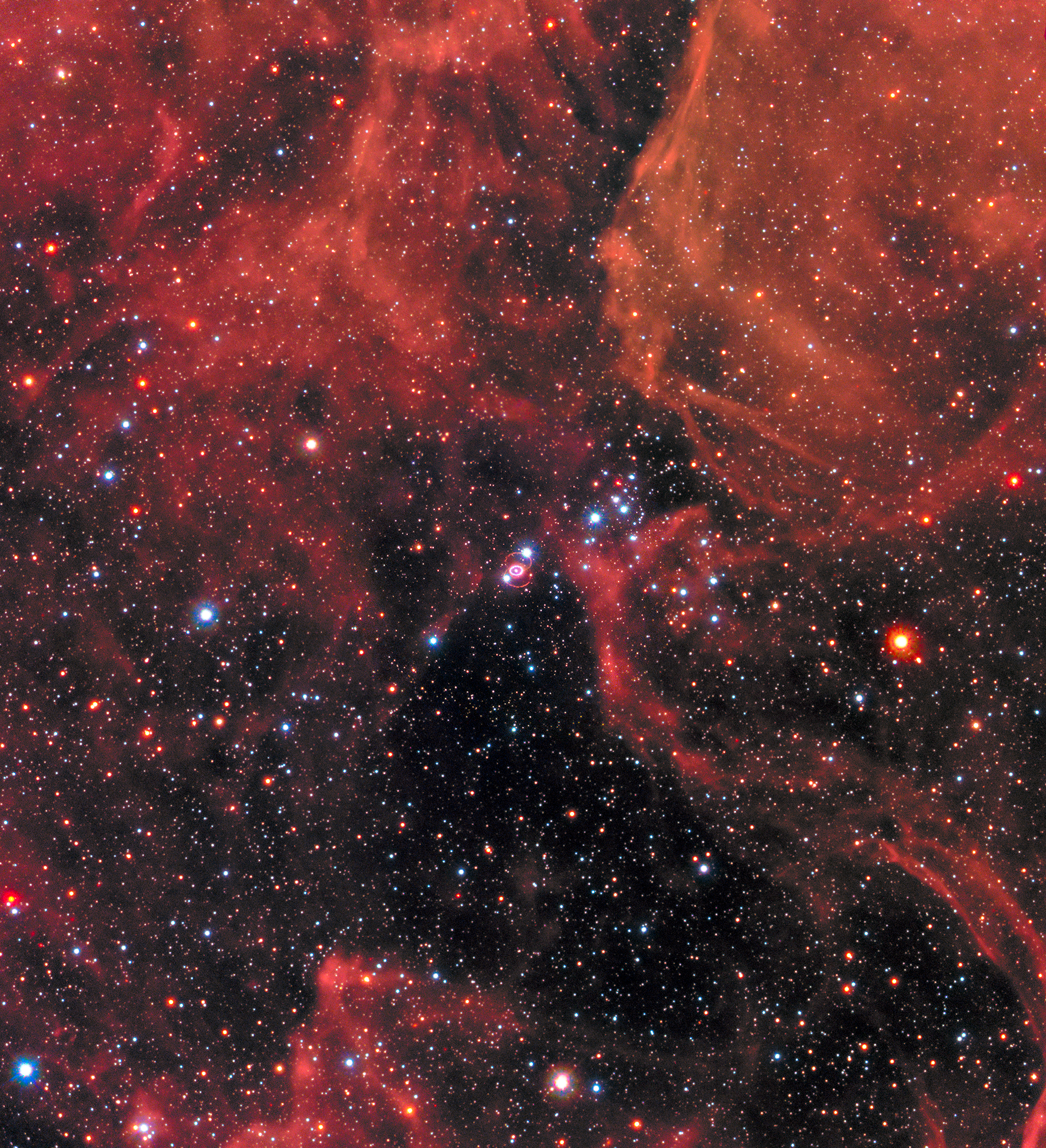
That evening, Canadian astronomer Ian Shelton made a three-hour exposure from Las Campanas Observatory in Chile. The developed photographic plate revealed a new 5th-magnitude star in the Large Magellanic Cloud. Walking outside, Shelton confirmed the bright star visually. Telescope operator Oscar Duhalde, also at Las Campanas, independently sighted the star at the same time, as did New Zealand amateur astronomer Albert Jones.
A Type II supernova, Supernova 1987A brightened over a period of 80 days, peaking at a magnitude of 2.9 on May 20, 1987. It’s the nearest supernova to explode in recent memory, surrounded by three rings of circumstellar gas that were formed by material ejected 10,000-20,000 years before the explosion. Observations by the Hubble Space Telescope, the James Webb Space Telescope, and other telescopes over the following decades continued to reveal more details about the structure of the explosion.