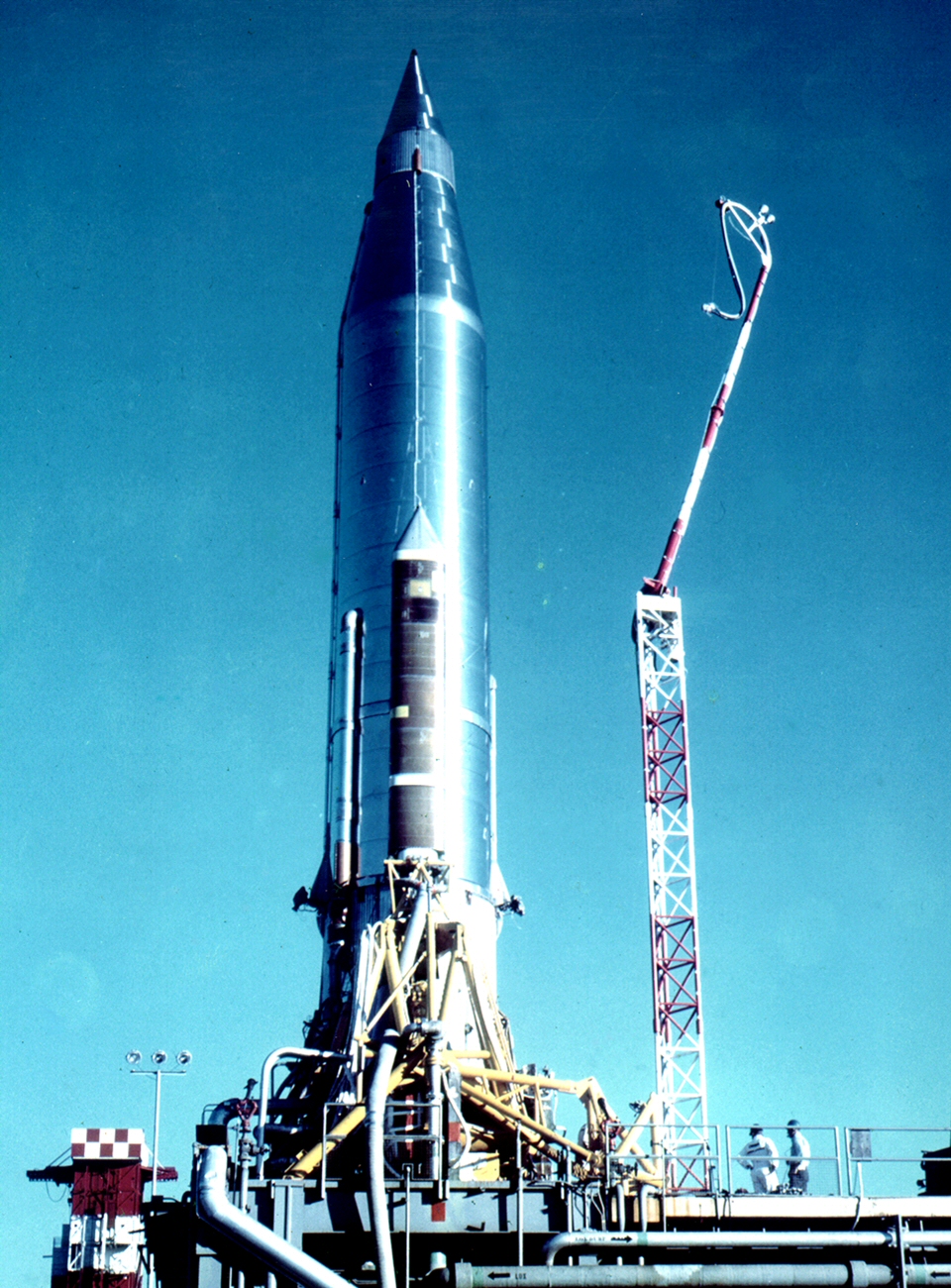
Lagging behind the Soviets in the Space Race, the U.S. was in need of a win when the Advanced Research Projects Agency in 1958 commissioned the U.S. Signal Research and Development Laboratory (SRDL) to create the world’s first communications satellite. In six months, the SRDL team had created a battery-powered system made up of a receiver, transmitter, and tape recorder. Built into an Atlas missile, the whole rocket body would remain in orbit after launch; it could weigh no more than 150 pounds and had to be able to stand up to the extremes of space.
The Signal Communications by Orbital Relay Equipment (SCORE) satellite was kept incredibly secret, and only 35 people knew what was actually launching when the Atlas 10B took off on Dec. 18, 1958. The satellite achieved orbit, becoming the heaviest object – at 8,750 pounds (3,969 kilograms) – put into space at that time. The initial test of the communications system was a failure when the tape recorder jammed, but on Dec. 19, during its 13th orbit, the back-up system broadcast a pre-recorded Christmas message by President Dwight Eisenhower. The successful demonstration of communications capability proved the U.S. was still a contender in the Space Race, and provided some relief for Americans’ anxiety and damaged pride.