NASA is reshuffling the Artemis program’s mission architecture, adding an intermediate test flight in 2027 and committing to annual lunar landings starting in 2028 as the agency pushes to accelerate its return to the Moon.
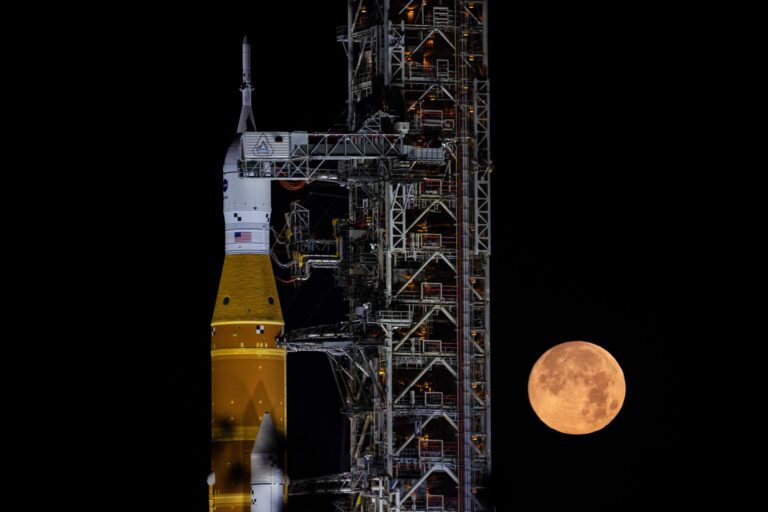
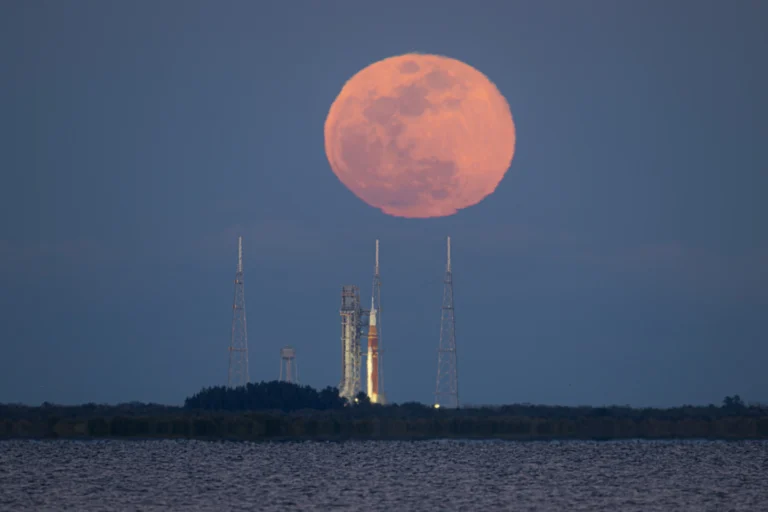
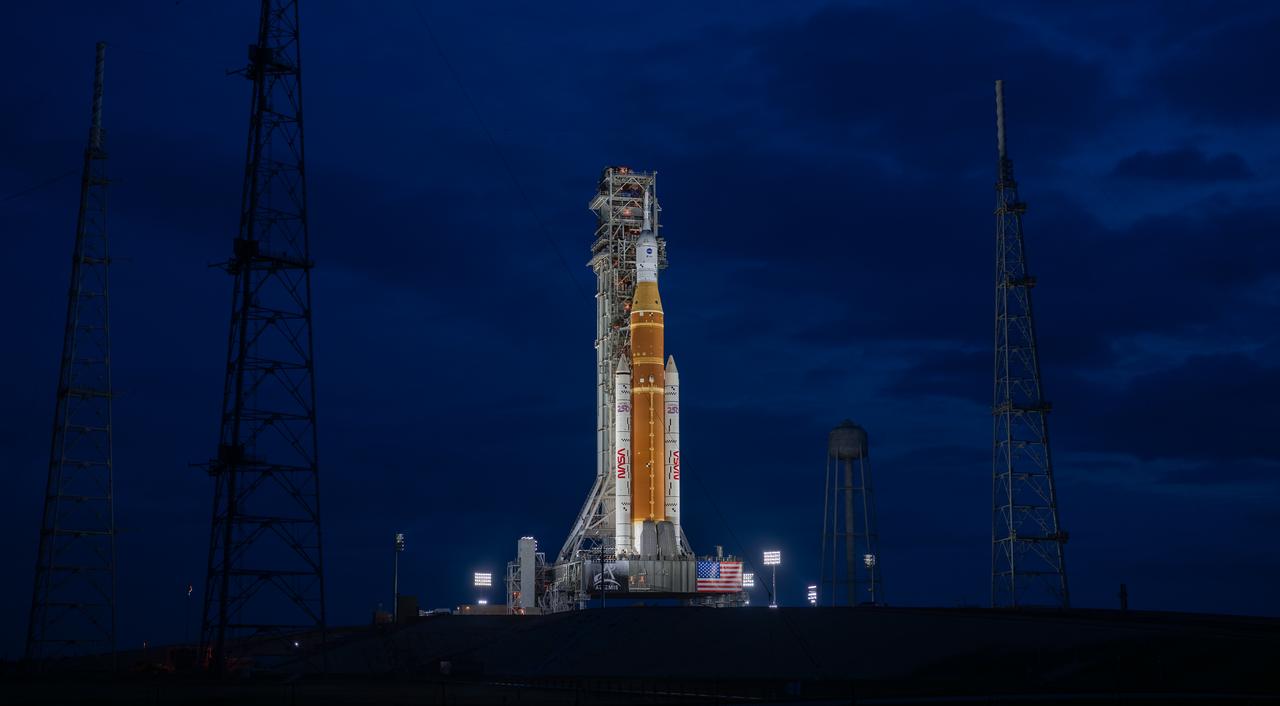
Artemis 2 is currently set to launch in April, assuming engineers can resolve a helium flow issue that cropped up in the SLS after the mission’s second dress rehearsal earlier this month. That mission will send astronauts on a 10-day trip around the Moon. But Artemis 3 — originally planned as the first crewed lunar landing in over 50 years — has now been reborn as a low Earth orbit (LEO) systems test flight, pushing the first landing back to Artemis 4 in 2028.
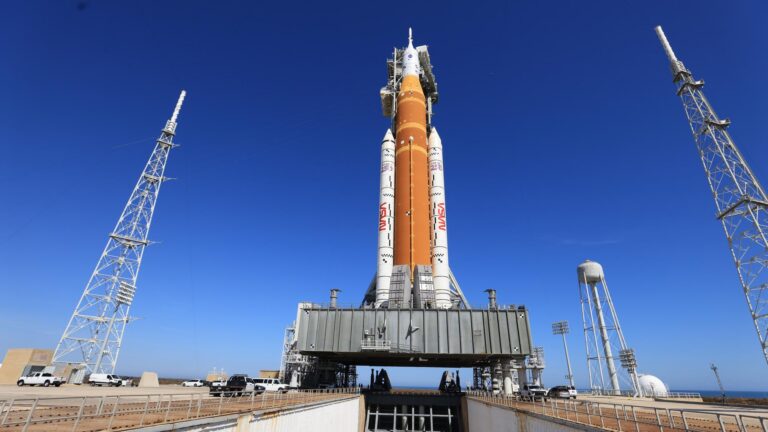
Beyond that, the agency is committing to a landing every year, a more aggressive cadence than originally planned. Central to that acceleration is a standardization of vehicle configuration, with NASA committing to fly future missions as close to the existing Block 1 Space Launch System’s (SLS) setup as possible, rather than transitioning to a heavier Block 2 variant. All of this echoes the recent directive from NASA Administrator Jared Isaacman to restore NASA’s core competencies: rebuilding in-house engineering expertise and working side by side with contractors to meet the lunar timeline set by President Trump’s national space policy.
“Standardizing vehicle configuration, increasing flight rate, and progressing through objectives in a logical, phased approach, is how we achieved the near-impossible in 1969, and it is how we will do it again,” Isaacman said Feb. 27 at a news conference at Kennedy Space Center.
The new plan appears to serve as a course correction for a program that has struggled to maintain momentum, and the changes are a notable shift from Isaacman’s previously leaked Project Athena plan, which had envisioned transitioning away from the SLS entirely and toward more commercial launch partnerships.
Artemis 3 moves to low Earth orbit
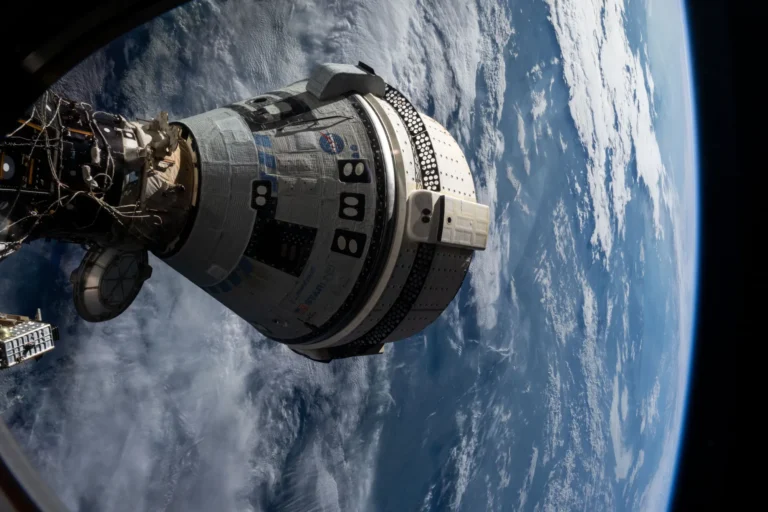
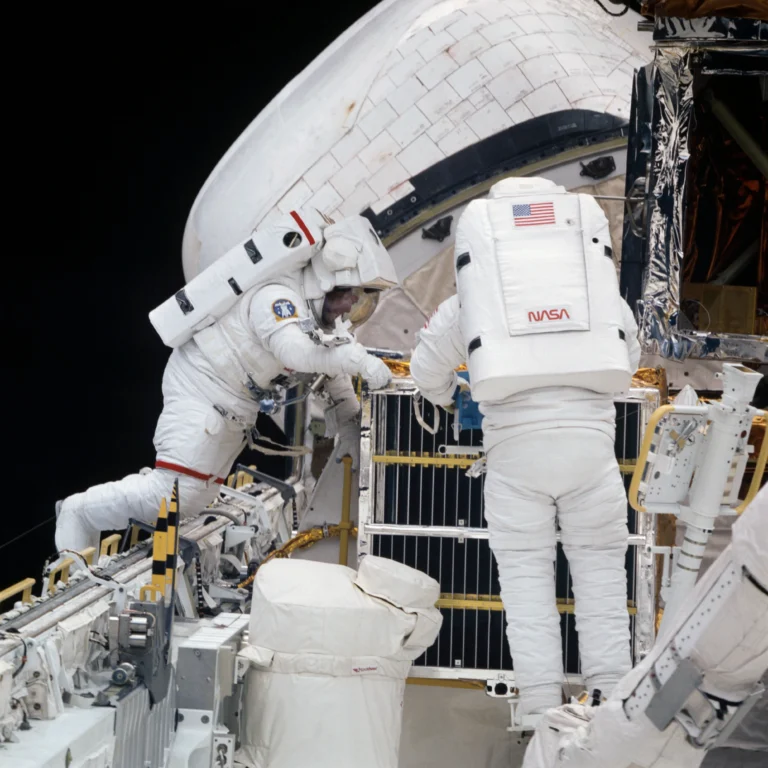
Artemis 3 was originally slated as a lunar landing sometime in 2028. Now, Isaacman has moved up its timeline while significantly reducing its scope. The thinking is that each mission should build incrementally on the last, advancing capability without taking on more risk than necessary. Rather than putting boots on the Moon’s south pole, Artemis 3 will now serve as an LEO test flight, rendezvousing and docking with the SpaceX Starship Human Landing System (HLS) and potentially Blue Origin’s Blue Moon lander. (Neither lander has yet been fully completed or tested.) Once docked, the crew will test EVA suits, life support systems, and spacecraft propulsion.
The dual-lander docking would be a notable first — and a signal of where things stand contractually. SpaceX was the sole holder of the HLS contract since 2023 when interim NASA administrator Sean Duffy reopened it late last year amid concerns about the company’s readiness. Blue Origin, which already held a separate HLS contract for Artemis 5, quickly submitted a revised landing architecture — and today’s announcement suggests NASA is actively weighing both vehicles for the newly reinvisioned Artemis 3 and beyond. Whether one or both will ultimately be selected to fly remains unclear. NASA says it will announce specific objectives for the redesigned Artemis 3 in the near future.
Taking it step by step
The lander is just one piece of a broader rethinking of how NASA will reach the lunar surface — and stay there.
“After successful completion of the Artemis 1 flight test, the upcoming Artemis 2 flight test, and the new, more robust test approach to Artemis 3, it is needlessly complicated to alter the configuration of the SLS and Orion stack to undertake subsequent Artemis missions,” said NASA Associate Administrator Amit Kshatriya. “The entire sequence of Artemis flights needs to represent a step-by-step build-up of capability, with each step bringing us closer to our ability to perform the landing missions.”
As part of that plan, NASA is also streamlining the vehicle configuration for upcoming missions. The original Artemis plan called for increasingly powerful SLS variants — Block 1 for Artemis 1 and 2, with the Block 1B configuration swapping the Interim Cryogenic Propulsion Stage for the more powerful four-engine Exploration Upper Stage beginning with Artemis 4. After that, a final Block 2 variant was to take over, with upgraded liquid-fueled boosters. Each iteration was meant to deliver more payload capacity to the Moon than the last.
Instead, “[W]e want to fly the landing missions in as close to the same Earth ascent configuration as possible — this means using an upper stage and pad systems in as close to the ‘Block 1’ configuration as possible,” Kshatriya said. “We will work with our partners that have been developing the evolved block configuration of these systems to take proper actions to align their efforts towards this goal and announce the details of those changes once they are finalized.”
What precisely that means for the Block 1B and Block 2 development programs remains unclear. NASA has not yet detailed what changes, if any, will be made to those efforts — only that the agency intends to fly landing missions in a configuration consistent with what has already proven itself in flight.
An increased cadence
The architecture changes are ultimately in service of a more ambitious launch cadence. Achieving that cadence, Isaacman argued, will first require NASA to rebuild institutional expertise he believes has eroded over years of slow launch cycles.
After visiting every NASA center and holding a dozen town halls in his first 50 days on the job, Isaacman issued a workforce directive concluding that the agency needed to “regain its core competencies in technical, engineering, and operational excellence.” He has been blunt about the current state of affairs, writing on X that Artemis’ “flight rate is the lowest of any NASA-designed vehicle, and that should be a topic of discussion.”
For Isaacman, increasing launch cadence isn’t just an administrative goal — it’s a crew safety imperative. Launching every three years, he argues, isn’t just unsustainable; it allows critical skills to atrophy in ways that put crews at risk. “When you regain these core competencies, and you start exercising your muscles, your skills do not atrophy,” he said during the Feb. 27 news conference.
Artemis 2 remains on track for an April launch, pending the outcome of repairs currently underway in the Vehicle Assembly Building. After that, NASA will turn its attention to finalizing the objectives for the redesigned Artemis 3, with a formal announcement expected in the near future. And if all goes to plan, American astronauts will be back on the lunar south pole by 2028.