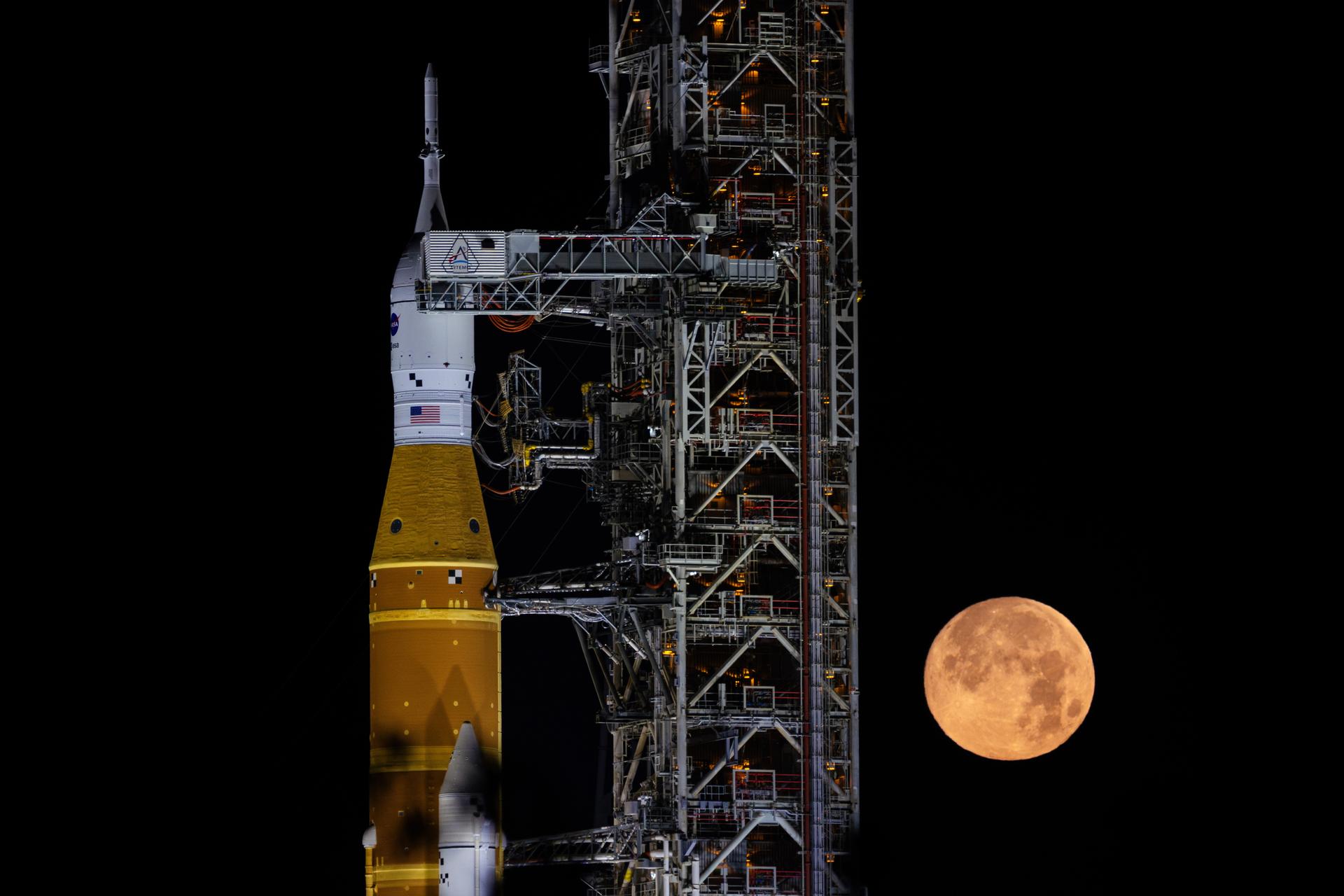
In the latest delay for the Artemis 2 mission, NASA announced on Saturday that it will roll the Space Launch System (SLS) rocket and Orion spacecraft back to the Vehicle Assembly Building (VAB) as soon as Feb. 24, pushing the first crewed lunar mission since Apollo 17 to April at the earliest.
Just a day earlier, NASA had announced it was prepared to launch Artemis 2 as early as March 6; that upbeat assessment came after the agency completed a second wet dress rehearsal — a fueling test and simulated launch countdown — on Feb. 19. But on Feb. 21, engineers detected an interruption in the flow of helium to the rocket’s upper stage. Helium is used to pressurize the stage’s liquid hydrogen and liquid oxygen tanks; without it, propellant can’t be fed to the engine responsible for sending Orion toward the Moon.
Notably, the helium system performed normally during the wet dress rehearsal itself. The interruption surfaced during routine monitoring afterward — meaning the issue eluded the test that had been designed to be the final validation before flight. Engineers are working to determine whether the problem lies in helium delivery lines, a valve in the upper stage, or a filter connecting the ground lines to the rocket. In the meantime, operators are using a backup method to maintain safe conditions for the upper stage and rocket.
The issue echoes a problem encountered during the Artemis 1 campaign in 2022, when a malfunctioning helium check valve in the same type of upper stage forced a rollback to the VAB. In that case, however, the problem was caught during the wet dress rehearsal.
Back to base
Regardless of where the current problem originates, the rocket must return to the VAB before engineers can fully troubleshoot it. The 525-foot-tall building — one of the largest structures in the world by volume and the only one ever used to assemble a rocket that carried humans to another world — gives engineers crane access and the controlled environment needed to service the vehicle’s upper stage.
To get there, the rocket will be transported down a 4.2-mile road at roughly 1 mph by NASA’s moving platform, called the crawler. The crawler itself weighs approximately 6.65 million pounds unloaded and can haul up to 18 million pounds — burning about 165 gallons of diesel per mile.
Pad access platforms installed on Feb. 20 for launch preparations had to be removed first — both to protect them from forecasted high winds and to clear the path for a potential rollback. That work is done, clearing the way for the trip back to the VAB as soon as Feb. 24.
Due to trajectory requirements, Artemis 2’s launch windows open for only a few days, roughly every four weeks. The helium leak and associated work means the mission will miss the March 6–11 window. The next opportunity runs April 1–6, which is what NASA is working toward — but if teams can’t resolve the issue and ready the vehicle in time, the mission would slip further. The agency plans to hold a media briefing in the coming days.
The Artemis 2 crew — Commander Reid Wiseman, Pilot Victor Glover, and Mission Specialist Christina Koch of NASA, along with Canadian Space Agency Mission Specialist Jeremy Hansen — was released from quarantine and returned to Houston for a second time. The crew first entered the standard 14-day pre-launch quarantine on Jan. 23 but was released in early February when the launch slipped from its original February window to March.