Credit: Jaydyn Isiminger/Penn State
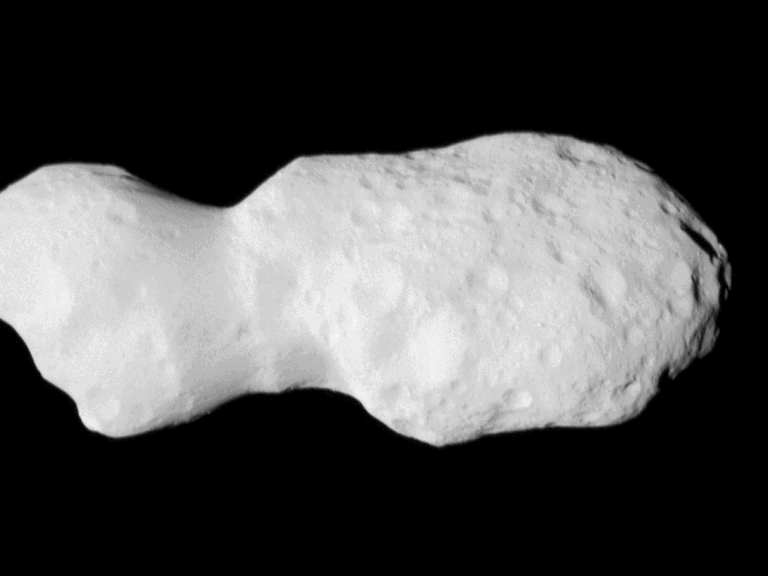
When NASA’s OSIRIS-REx mission brought back samples from asteroid 101955 Bennu, researchers found that they contained amino acids, the building blocks necessary for life. Amino acids are the molecules that create proteins and peptides in DNA. A big question was, “How did amino acids form in space?” New research in the Proceedings of the National Academy of Sciences led by Penn State scientists may have answered it. Results show they could have originated in an icy-cold, radioactive environment as the solar system was forming.
“Our results flip the script on how we have typically thought amino acids formed in asteroids,” said Allison Baczynski, assistant research professor of geosciences at Penn State and co-lead author on the paper. “It now looks like there are many conditions where these building blocks of life can form, not just when there’s warm liquid water. Our analysis showed that there’s much more diversity in the pathways and conditions in which these amino acids can be formed.”
How they did it
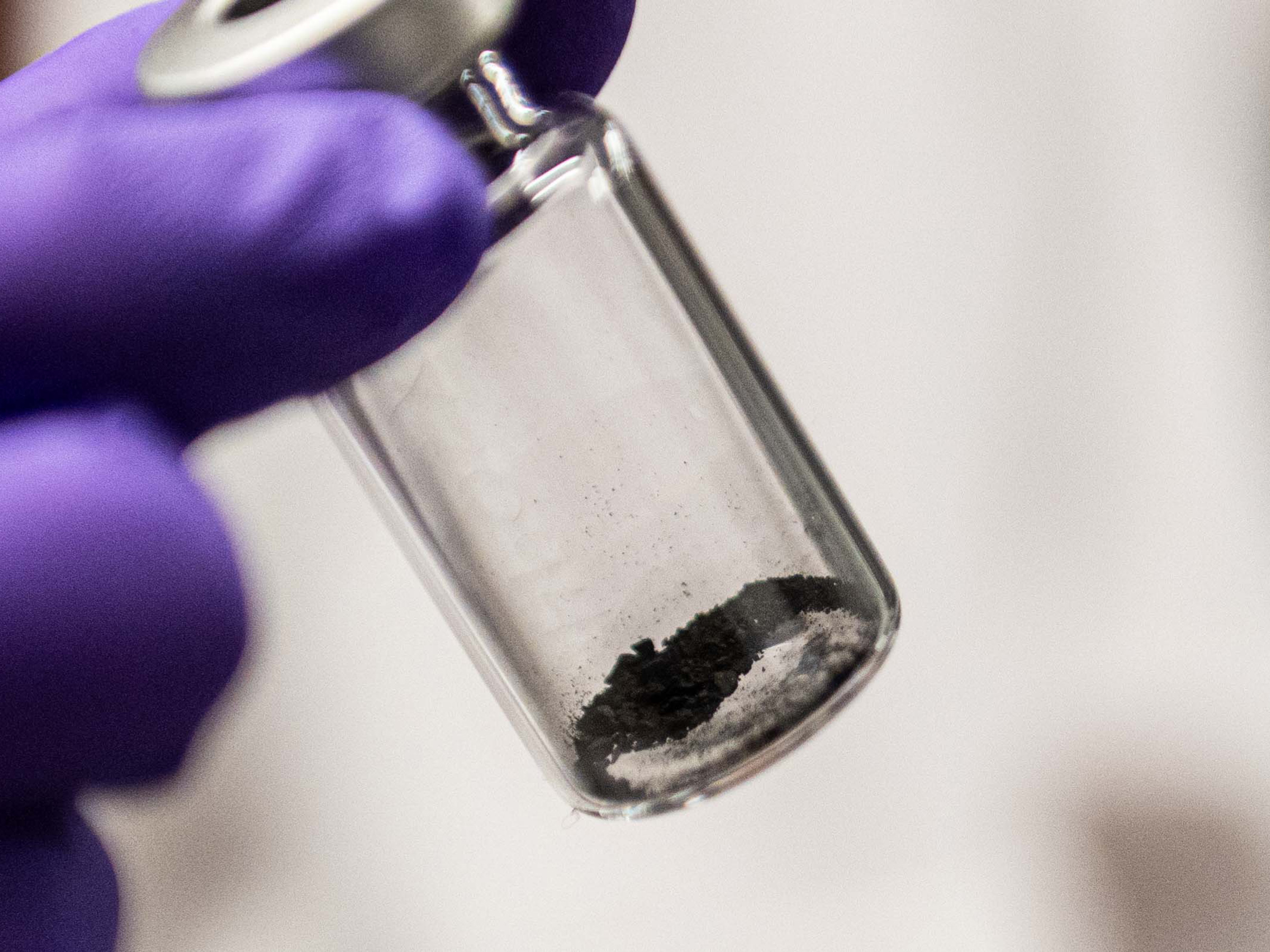
NASA sent the team an amount of dust from Bennu that would fit into a teaspoon. The scientists analyzed it using specialized spectrographs that enabled them to determine the types and percentages of isotopes in the sample. Isotopes are atoms of an element that contain different numbers of neutrons than the standard element does. For example, deuterium is an isotope of hydrogen. Hydrogen contains one proton and one electron. Deuterium adds a neutron to that mix.
In studying Bennu, the researchers focused on glycine, the simplest amino acid. This molecule, whose formula is C2H5NO2, serves as one of life’s basic building blocks. Glycine can form under a wide range of chemical conditions, Baczynski explained. Finding glycine in asteroids or comets suggests that some ingredients necessary for life may have formed in space and came to Earth early in its history.
Until now, scientists thought glycine formed when hydrogen cyanide, ammonia, and other ingredients react in the presence of liquid water. The new results, however, reveal that Bennu’s glycine may not have formed in water at all, but in ice exposed to radiation in the outer reaches of the early solar system, Baczynski explained.
Another example
For decades, scientists have examined amino acids in carbon-rich meteorites like the Murchison meteorite, which landed in Australia in 1969. The Penn State team compared its results from Bennu to those obtained during studies of the Murchison meteorite. Formation of the latter’s molecules required liquid water and mild temperatures.
“One of the reasons why amino acids are so important is because we think that they played a big role in how life started on Earth,” said Ophélie McIntosh, postdoctoral researcher in Penn State’s Department of Geosciences and co-lead author on the paper. “What’s a real surprise is that the amino acids in Bennu show a much different isotopic pattern than those in Murchison, and these results suggest that Bennu and Murchison’s parent bodies likely originated in chemically distinct regions of the solar system.”
More questions
The results also bring up new questions. For example, amino acids come in two mirror-image forms, like left and right hands. Scientists thought these pairs should have the same isotopes. But in Bennu, the two forms show drastically different nitrogen values. The team will be working to find out why.
“We have more questions now than answers,” Baczynski said. “We hope that we can continue to analyze a range of different meteorites to look at their amino acids. We want to know if they continue to look like Murchison and Bennu, or maybe there is even more diversity in the conditions and pathways that can create the building blocks of life.”