Looking for a sky event this week? Check out our full Sky This Week column.
September 2: Venus south of Spica
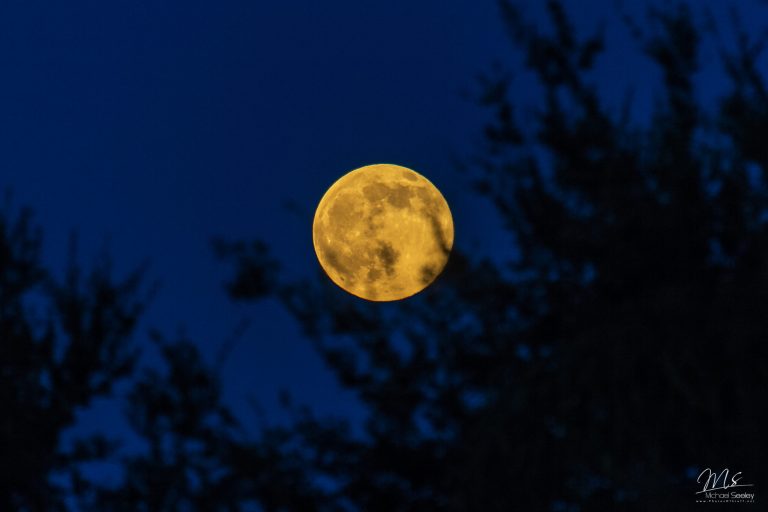
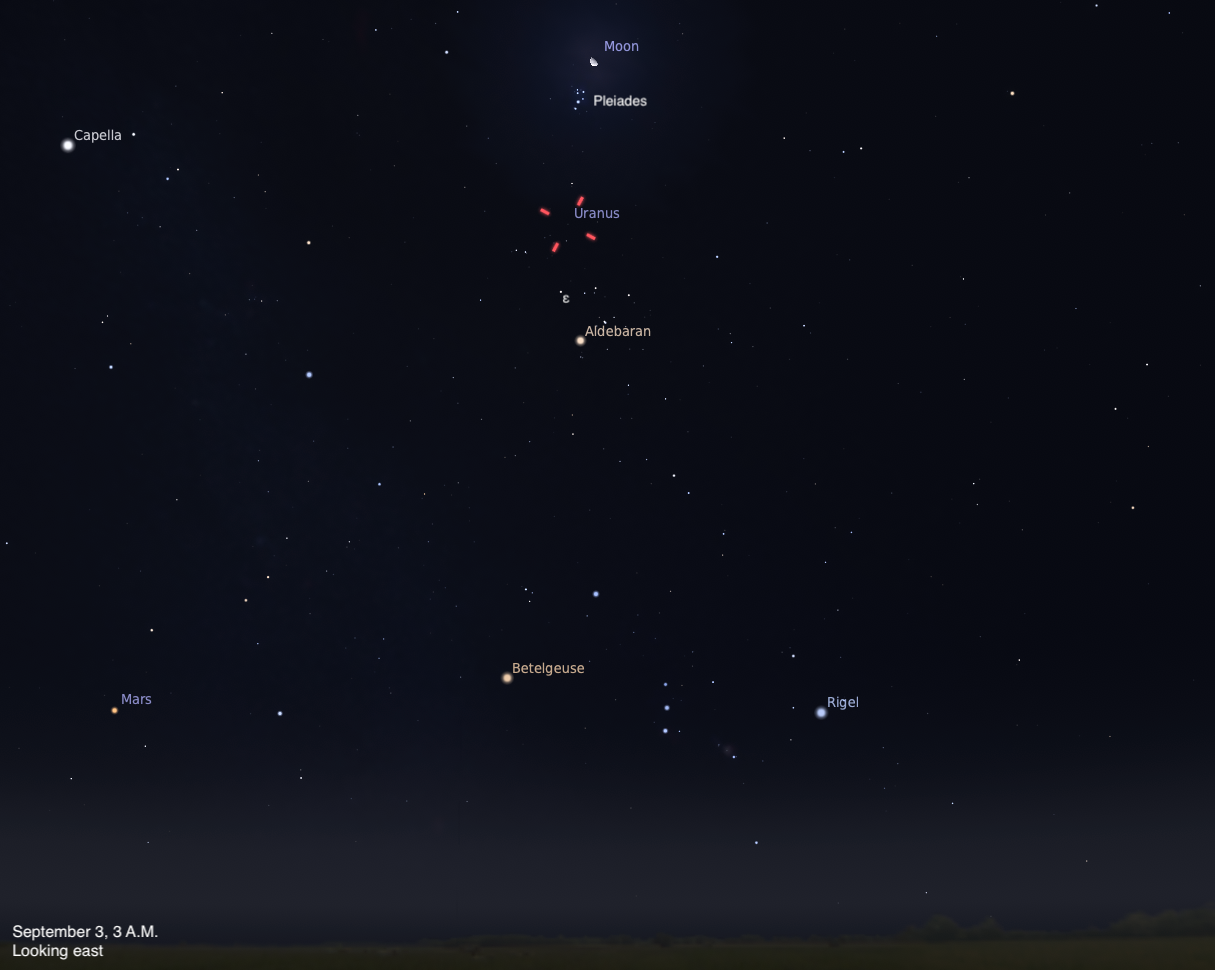
The Moon passes 5° north of Uranus at 7 P.M. EDT. However, you’ll want to check out the pair in the early-morning sky, now located in Taurus the Bull.
Rising about an hour before midnight, Uranus is well above the eastern horizon by about 3 A.M. local daylight time. Early on September 3, the waning Moon is approaching the Pleiades star cluster (M45) in northwestern Taurus. Starting around 5 A.M. CDT, our satellite will skim the northern regions of the Pleiades, taking about 2 hours to cross. From some locations, it will occult 6th-magnitude 18 Tauri — the observability and timing will depend heavily on your location, and is only visible in darkness for the western U.S. From southern California, the star disappears behind the bright leading lunar limb just before 3:45 A.M. PDT and reappears just over an hour later. The reappearance from behind the darker trailing limb will be easier to catch.
Regardless of whether you can catch the occultation, Uranus is visible across the U.S. this morning. About 6.8° southeast of the Pleiades, the magnitude 5.7 planet is about 4° northwest of 4th-magnitude Epsilon (ε) Tau. If you draw a line from the Pleiades down to this star, you’ll find the ice giant about two-thirds of the way along it (farther from the Pleiades and closer to Epsilon Tau). Especially with the Moon nearby, you’ll likely need binoculars or a telescope to spot the small, gray disk of Uranus, which spans just 4” on the sky.
Sunrise: 6:30 A.M.
Sunset: 7:28 P.M.
Moonrise: 10:54 P.M.
Moonset: 1:49 P.M.
Moon Phase: Waning gibbous (52%)
*Times for sunrise, sunset, moonrise, and moonset are given in local time from 40° N 90° W. The Moon’s illumination is given at 10 P.M. local time from the same location.
Alison Klesman is senior editor of Astronomy magazine. She holds a Ph.D. in astronomy and has studied a variety of topics, from minor planets to supermassive black holes.