Looking for a sky event this week? Check out our full Sky This Week column.
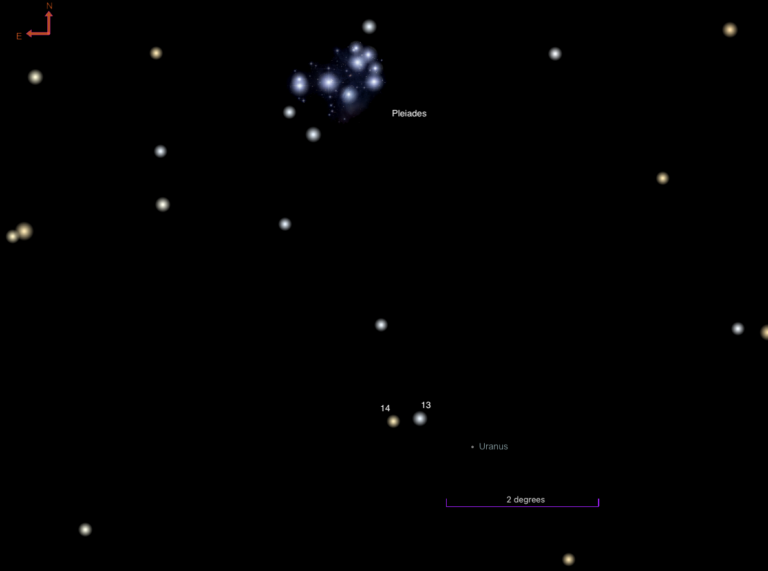
December 3: The Moon again blots out the Pleiades
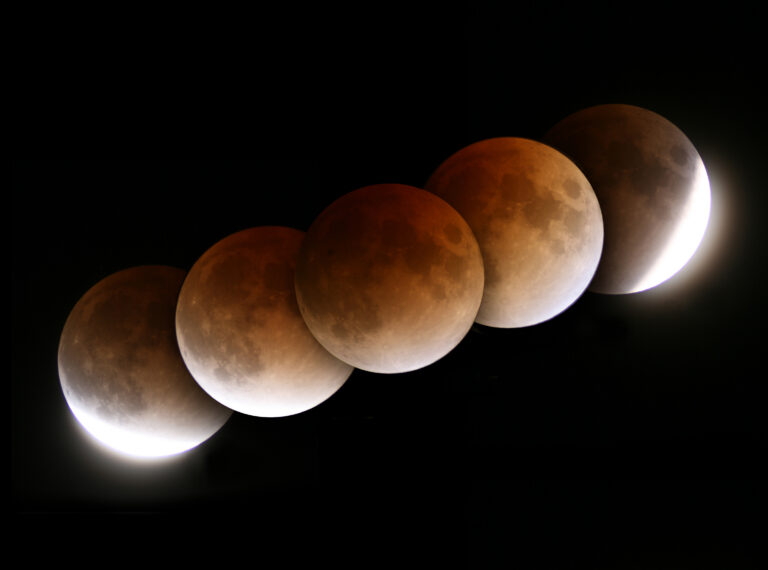
The Moon reaches perigee, the closest point to Earth in its orbit, at 6:07 A.M. EST, when it stands 221,806 miles (356,962 kilometers) away. Some 12 hours later, Full Moon occurs at 6:14 P.M. EST, bringing us the December Cold Moon.

Because this Full Moon occurs when the Moon is near its closest point to Earth, it is classified as a Super Moon, closing out the year as the third in a series of four Super Moons that began in October. According to the late astronomer Fred Espenak’s AstroPixels website, the next Super Moon will be January 3, 2026, followed by a lull until November 2026. (Note, however, that the definition of Super Moon can differ between resources; for example, the Royal Observatories Greenwich doesn’t consider January or November 2026’s Full Moons close enough to Earth to be called Super Moons. Instead, this institution classifies December 2026’s Full Moon as the next Super Moon after today.)
With the Moon so big and bright in the sky, it makes for a prime target with a telescope. Look toward Luna’s western edge for the dark, round spot of the crater Grimaldi. Spanning some 107 miles (173 km) and sinking 1.7 miles (2.7 km) deep, Grimaldi appears at first glance to have a flat, dark floor of uniform gray. But look closer, and you’ll notice color variations in the shading, as well as streaks of lighter ejecta thrown across the crater by later impacts. Also compare Grimaldi’s smooth floor to that of Riccioli to its east. The latter’s floor is much rougher, as it is too far from Oceanus Procellarum to have been flooded with lava from this source.
Sunrise: 7:06 A.M.
Sunset: 4:34 P.M.
Moonrise: 4:03 P.M.
Moonset: 6:57 A.M.
Moon Phase: Full
*Times for sunrise, sunset, moonrise, and moonset are given in local time from 40° N 90° W. The Moon’s illumination is given at 10 P.M. local time from the same location.
Rising almost two hours before the Sun on December 5, Mercury appears 7° high an hour before sunrise in the east. It shines at magnitude –0.3, an easy-to-find naked-eye object in the slowly brightening sky. Through a telescope, its disk now appears 54 percent lit, a bigger chunk receiving sunlight compared to earlier in the week and a tidy explanation for its increase in brightness.

Mercury will reach its greatest elongation west of the Sun in just two days, when it will stand 21° from our star. High above it and slightly to the left is magnitude –0.1 Arcturus in Boötes, while magnitude 1.0 Spica sits to Mercury’s upper right. See how long you can follow these stars as well as the planet into the encroaching dawn.
Bright Venus (magnitude –3.9) chases Mercury up into the predawn sky, now rising about 30 minutes before the Sun. There’s a brief opportunity to view it, but only if your horizon is clear. Venus is still 99 percent lit and virtually indistinguishable from a full phase.