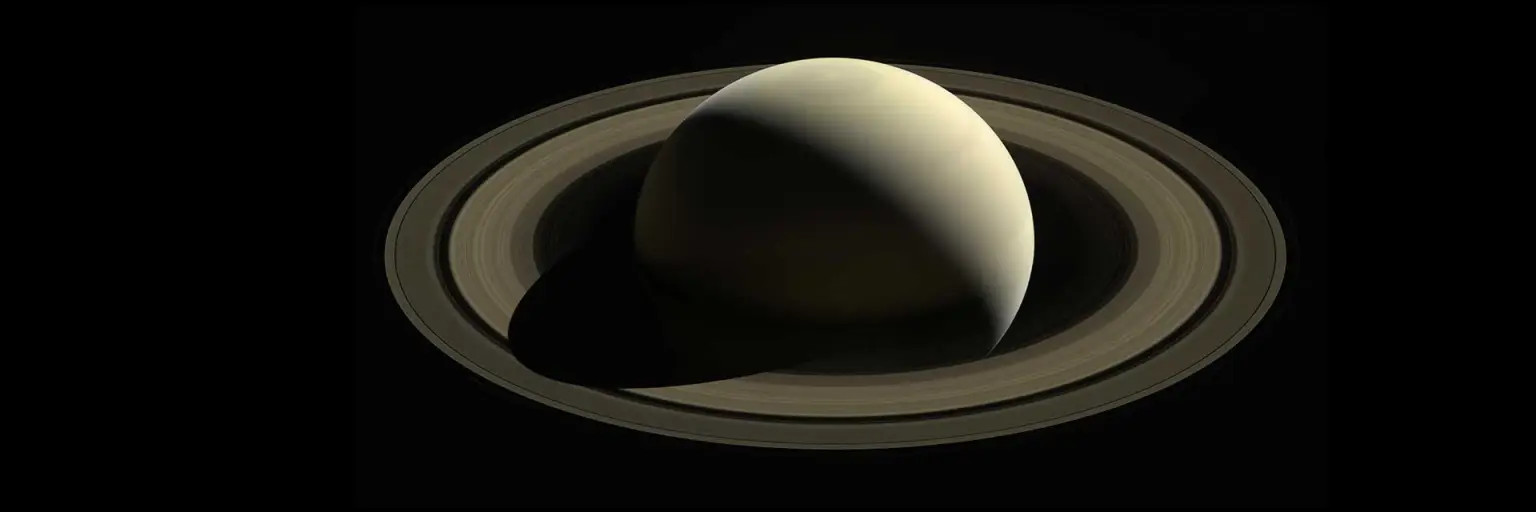
All amateur astronomers, both visual observers and imagers, want their views to display great contrast. Contrast is the difference in brightness between various parts of a telescopic image. When light is scattered in the field of view, for whatever reason, it reduces the difference between the dark and bright areas of the image. Contrast is calculated by this formula:
c = (b2 – b1) / b2
where:
c = contrast
b1 and b2 = brightness of each of two areas of the object measured in candlepower/m2, or some equivalent unit.
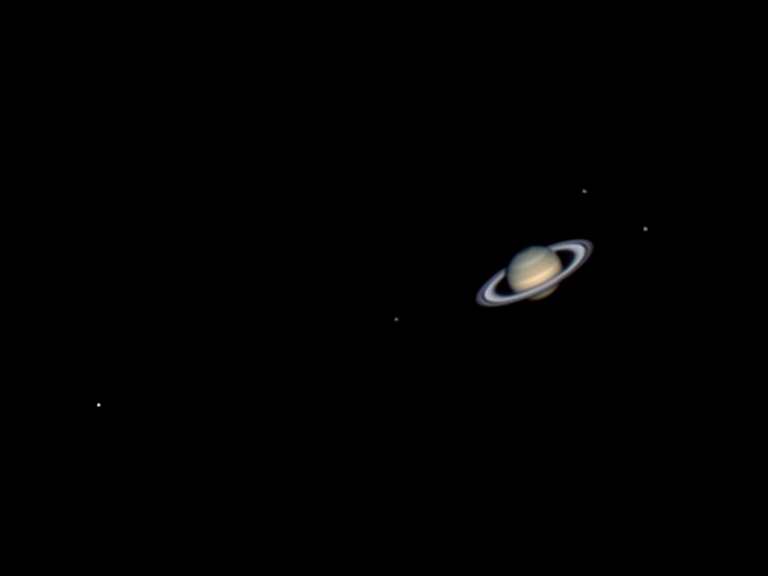
An example is the difference in brightnesses of Saturn’s various rings. Contrast efficiency of telescopes is important in this case because the planet’s surface, atmosphere, and rings are composed of various materials that reflect different levels of sunlight. So, if your scope provides a view with good contrast, it will be easier for you to notice differences between two regions, whether it’s on Saturn or any other celestial object.
Let’s see how scattered light affects the view. Consider two features on Mars, a light area with a brightness of 400 cd/m2 and a darker one half as bright. The formula becomes
c = (400 – 200) / 400 = 0.5
The contrast between the two areas is 50 percent. But what if we scatter just 10 percent of the light from the bright area into the dark area? Then the formula is
c = (360 – 240) / 360 = 0.33
The contrast has dropped to only 33 percent! So, be careful: a relatively small amount of scatter causes a big change in image contrast.