Monday, April 6, was Flight Day 6 for the Artemis 2 mission. In many ways it was the mission’s climax, containing the lunar flyby, the closest approach to the Moon, and the literal turning point as the crew is now headed back to Earth. Sunday night while the crew slept, Integrity slipped into the Moon’s gravitational sphere of influence. Monday morning, they received a special wake-up call from Apollo astronaut and hero, Jim Lovell.
“Hello, Artemis 2. This is Apollo astronaut Jim Lovell. Welcome to my old neighborhood.”
A message from Lovell
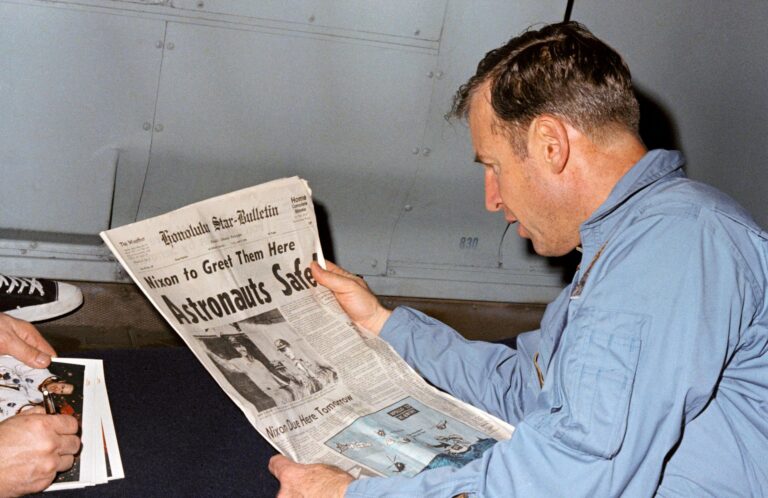
If the Moon is anyone’s neighborhood, it’s Lovell’s. He flew there twice. The first time was on Apollo 8 in December 1968, the first crewed mission to leave Earth’s gravity and orbit the Moon, and the first time human eyes glimpsed the farside. He returned for the second time on Apollo 13 in April 1970, when an oxygen tank explosion crippled the spacecraft and Lovell helped navigate his crew home using the lunar module as a lifeboat. It was during that mission that the crew also set the record for the farthest humans had ever traveled from Earth, which Artemis 2’s flyby finally broke.
Lovell passed away last August at 97, one of the last living voices of the Apollo era. The message that greeted the Artemis 2 astronauts Monday morning was recorded before his death.
RELATED: A farewell to Jim Lovell
His message continued: “When Frank Borman and Bill Anders and I orbited the Moon on Apollo 8, we got humanity’s first up-close look at the Moon and got a view of the home planet that inspired and united people around the world. I’m proud to pass that torch on to you as you swing around the moon and lay the groundwork for missions to Mars for the benefit of all. It’s a historic day, and I know how busy it will be, but don’t forget to enjoy the view. So, Reed, Victor, Christina, and Jeremy — and all the great teams supporting you — good luck and Godspeed from all of us here on the good Earth.”
The crew’s response came quickly over the radio: “What an awesome message from Jim Lovell. Very cool to hear him welcome us to the neighborhood.” They then reached for something special they had on board: a silk Apollo 8 mission patch, flown to the Moon in 1968 and sent to them by Lovell’s son ahead of their launch. “We have a pretty neat emblem up here. We have a patch that was flown on the Apollo 8 mission, and that patch is here on the Artemis 2 mission as well,” Victor Glover said. “It’s just a real honor to have that on board with us,” Reid Wiseman added.
An iconic image
Perhaps the most lasting impact of Apollo 8 was a photograph: Earthrise. On the third orbit, coming around from the farside, the crew spotted Earth rising above the lunar horizon. “Oh my god, look at that picture over there,” Anders can be heard saying in recordings from the flight. “There is the Earth coming up.” Nobody on the ground had told them this moment would happen.
RELATED: The historic flight of Apollo 8
Lovell told Astronomy in 2018 that he was actually the one who saw the composition and called out to Anders to take the photo. Regardless of who had the idea, Lovell scrambled to find color film and pass it to Anders across the cabin. As the excitement mounted, Anders told him to wait a minute and can be heard saying, “Calm down, Lovell.” Anders took the picture. The resulting photo became one of the most reproduced images of the 20th century.
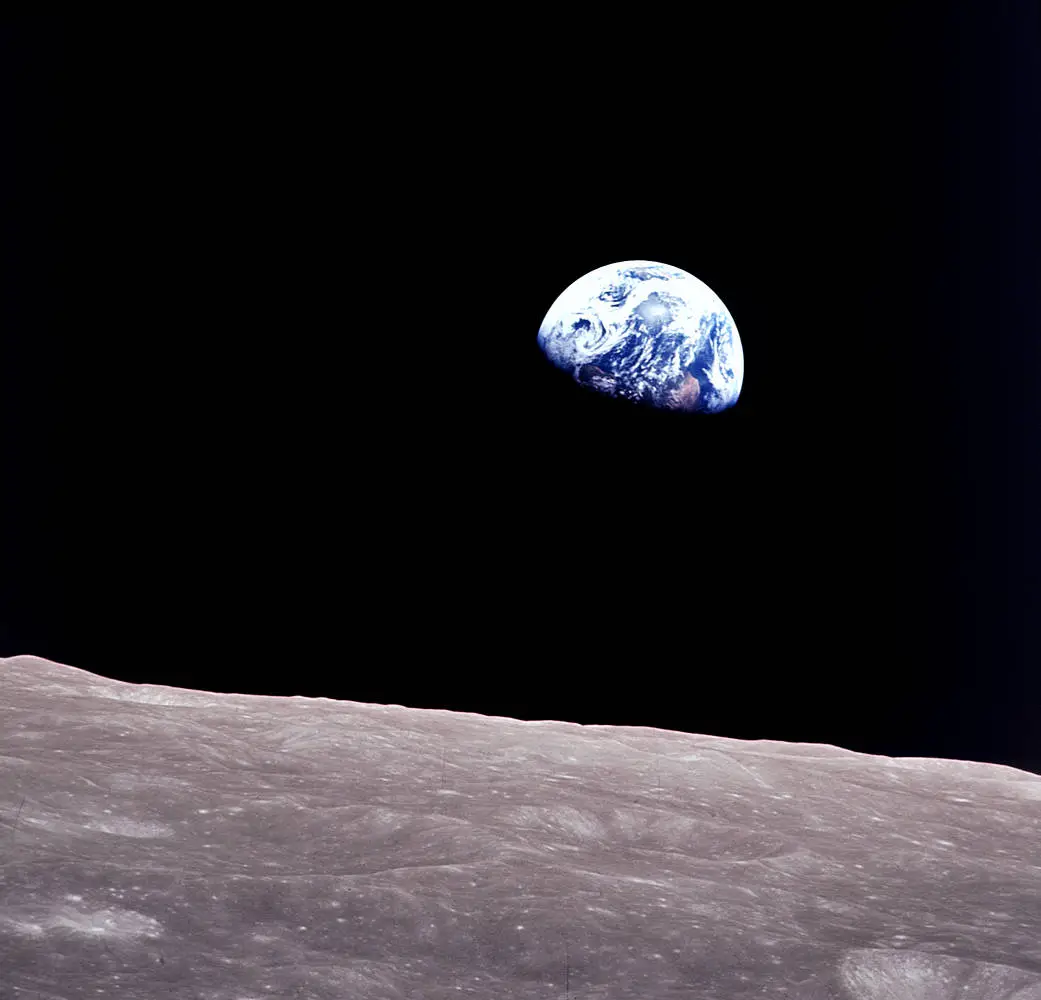
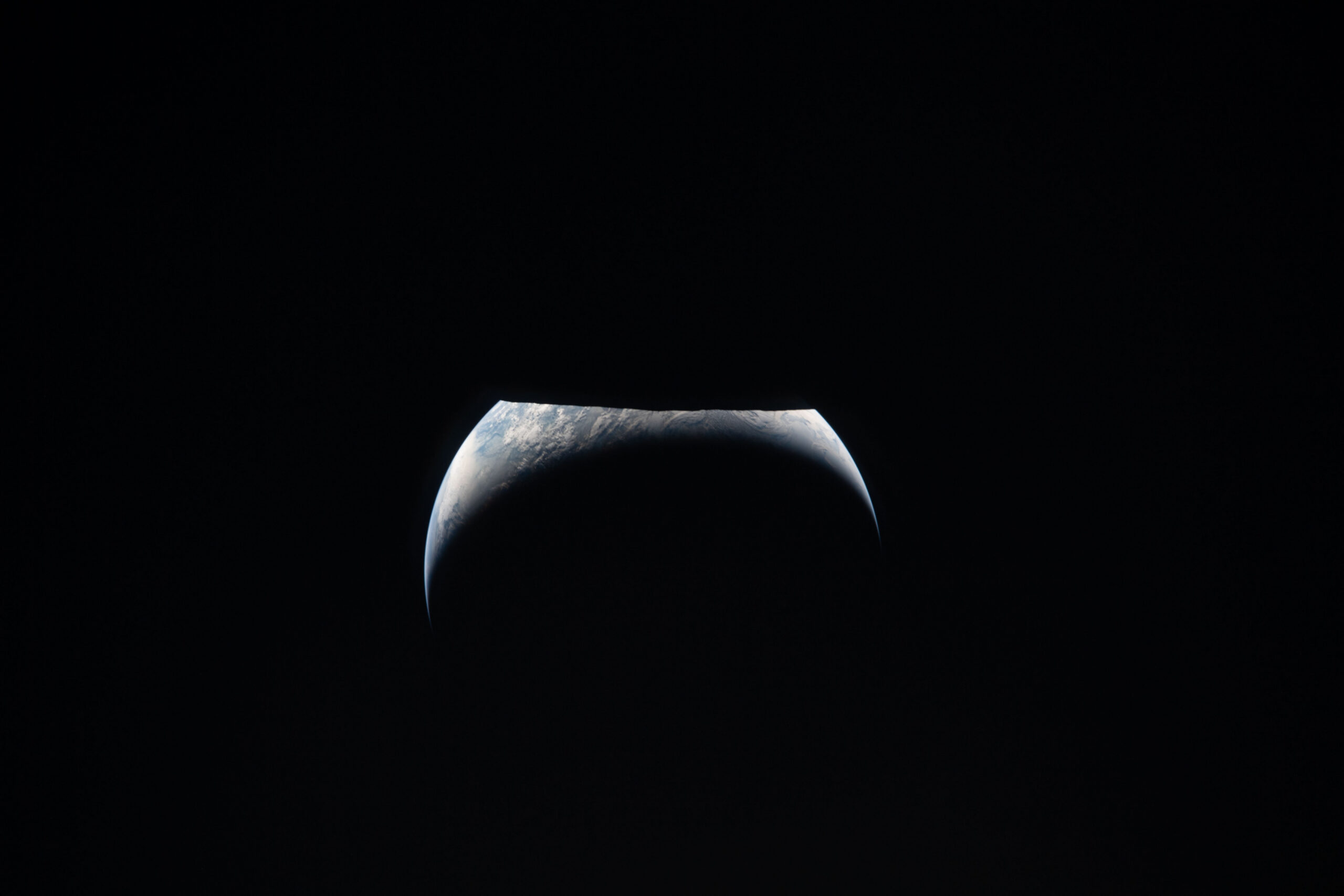
The Artemis 2 crew arrived at the Moon with that legacy in mind. Christina Koch said the photo had hung in her childhood bedroom and was part of what kept her working toward spaceflight. During Flight Day 6, the crew had an opportunity to get their own version of the shot.
RELATED: How Artemis 2’s Easter message echoes Apollo history
Around 6:41 p.m. EDT, Integrity passed behind the Moon and out of radio contact. The crew’s last words before loss of signal were, “To all of you down there on Earth and around Earth, we love you from the Moon.” Roughly 40 minutes later, they came around the other side, greeted by a spectacular view: The same Earth that Lovell, Anders, and Borman saw rising over the same Moon that the silk Apollo 8 patch has now visited twice — once with the men who first saw earthrise, and once with the crew who went looking for it again.