
Key Takeaways:
- The Arecibo telescope collapsed on December 1, 2020, following a series of structural failures.
- The collapse was preceded by two distinct cable failures in August and November 2020, leading the National Science Foundation to announce a controlled decommissioning on November 19, 2020, as safe repairs were deemed unfeasible.
- Prior to the planned decommissioning, remaining cable wires fractured, causing the 900-ton suspended receiving platform to crash into the main dish.
- A 2024 report by the National Academies of Sciences, Engineering, and Medicine indicated that structural stress from Hurricane Maria contributed to the collapse and identified that signs of imminent cable failure were missed or ignored by engineers and inspectors.
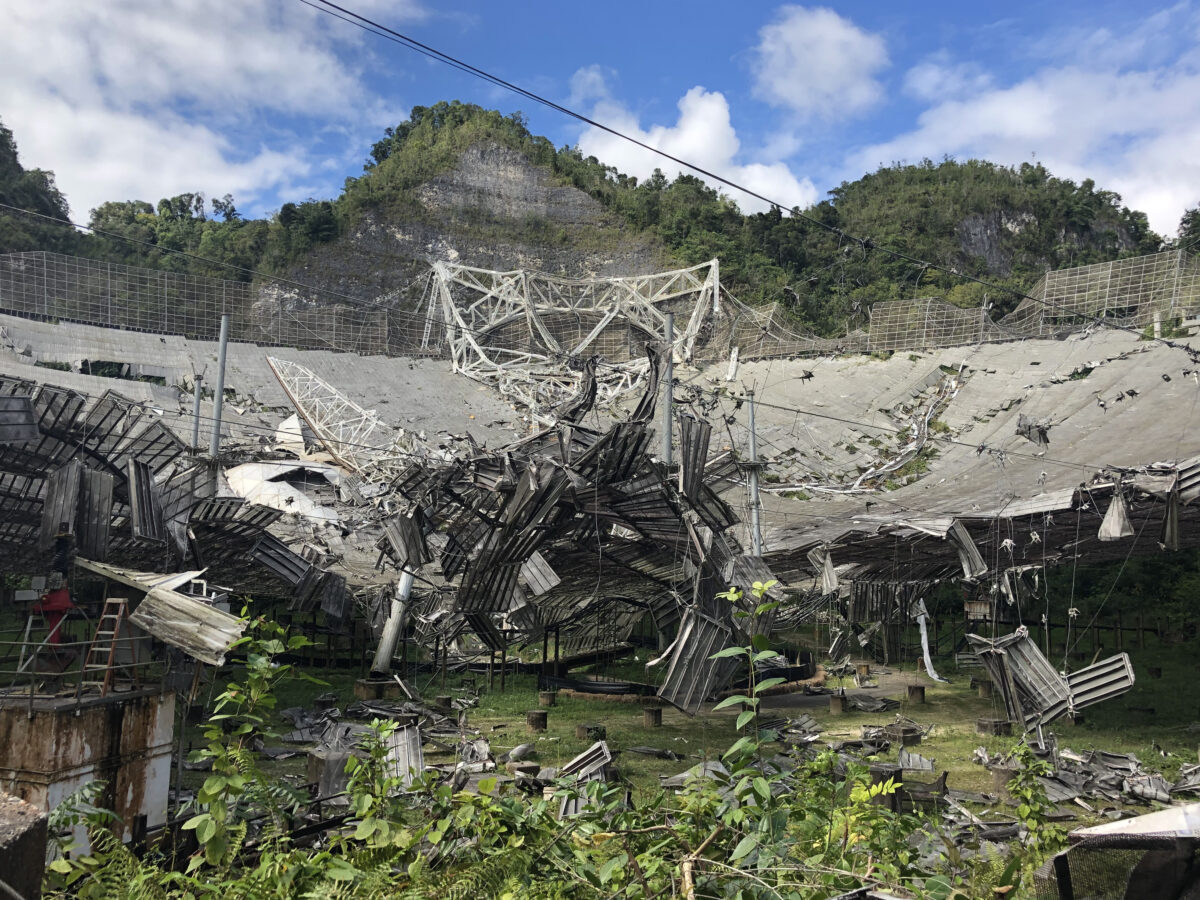
On Dec. 1, 2020, the Arecibo telescope collapsed. The Puerto Rico facility had already suffered two cable failures – one in August and one in November – and engineers had predicted that the increased load would be too much for the remaining cables. The National Science Foundation announced on Nov. 19, 2020, that, as the telescope could not be safely repaired, a “controlled decommissioning” would be carried out. Before that could happen, though, wires in the remaining cables began to break, and the 900-ton suspended receiving platform crashed into the dish below it. It was a devastating end for a groundbreaking telescope that had been one of the most powerful instruments on Earth for nearly six decades.
A 2024 report by the National Academies of Sciences, Engineering, and Medicine indicated that structural stress from Hurricane Maria contributed to the collapse, but also that signs of imminent cable failure were missed or ignored but engineers and inspectors.