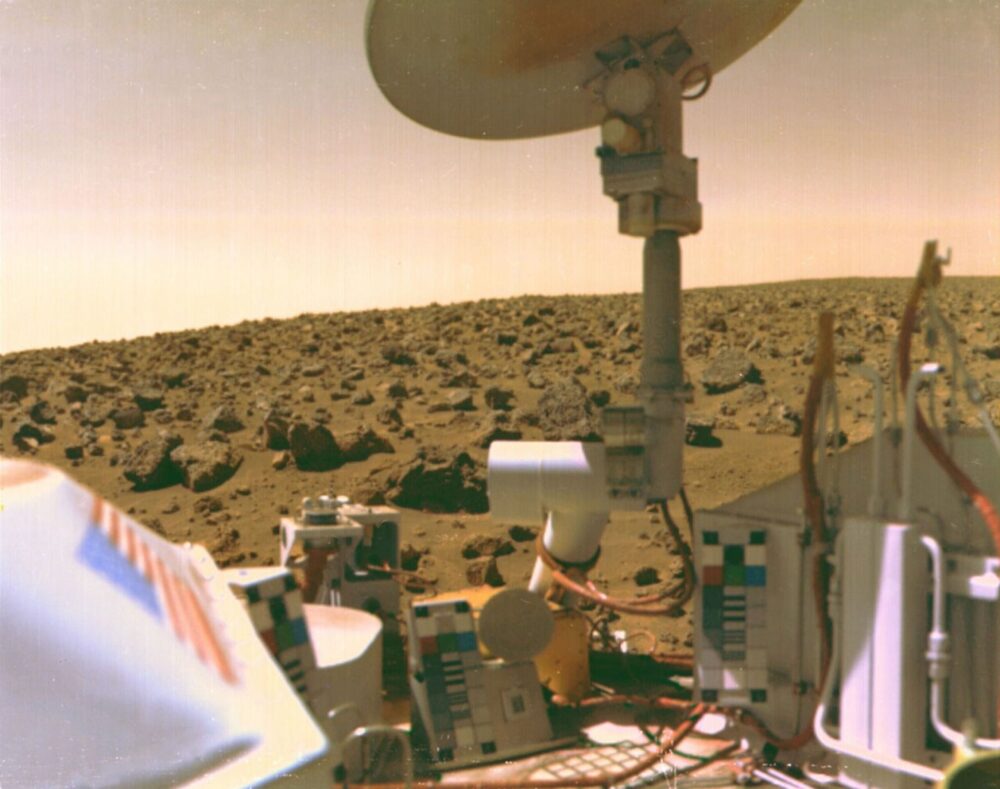
Only a little over a month after Viking 1 landed on Mars, Viking 2 followed suit. Though the two Viking landers touched down in different locations, they used identical spacecraft and had the same mission: to create global maps of Mars, observe weather patterns, investigate the surface, measure temperatures, and search for life.
Viking 2 landed in Utopia Planitia, a large impact basin about 4,000 miles (6,460 kilometers) away from its sister lander. The site was chosen in the hopes that its nearness to the polar ice cap would better its chances for finding life. Though that search was inconclusive, extensive data on surface terrain, elevations, and temperatures rolled in as Vikings 1 and 2 far exceeded their 90-day lifetimes. Combined, they returned 52,663 images. Viking 2 operated until April 11, 1980; Viking 1 for two years and exactly seven months beyond that.
Elisa Neckar is senior production editor of Astronomy magazine, and the editor of the Today in the History of Astronomy feature on Astronomy.com.