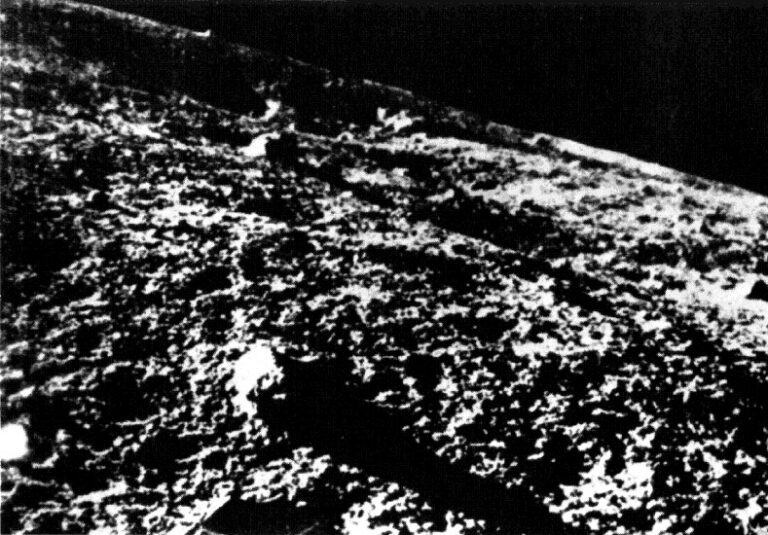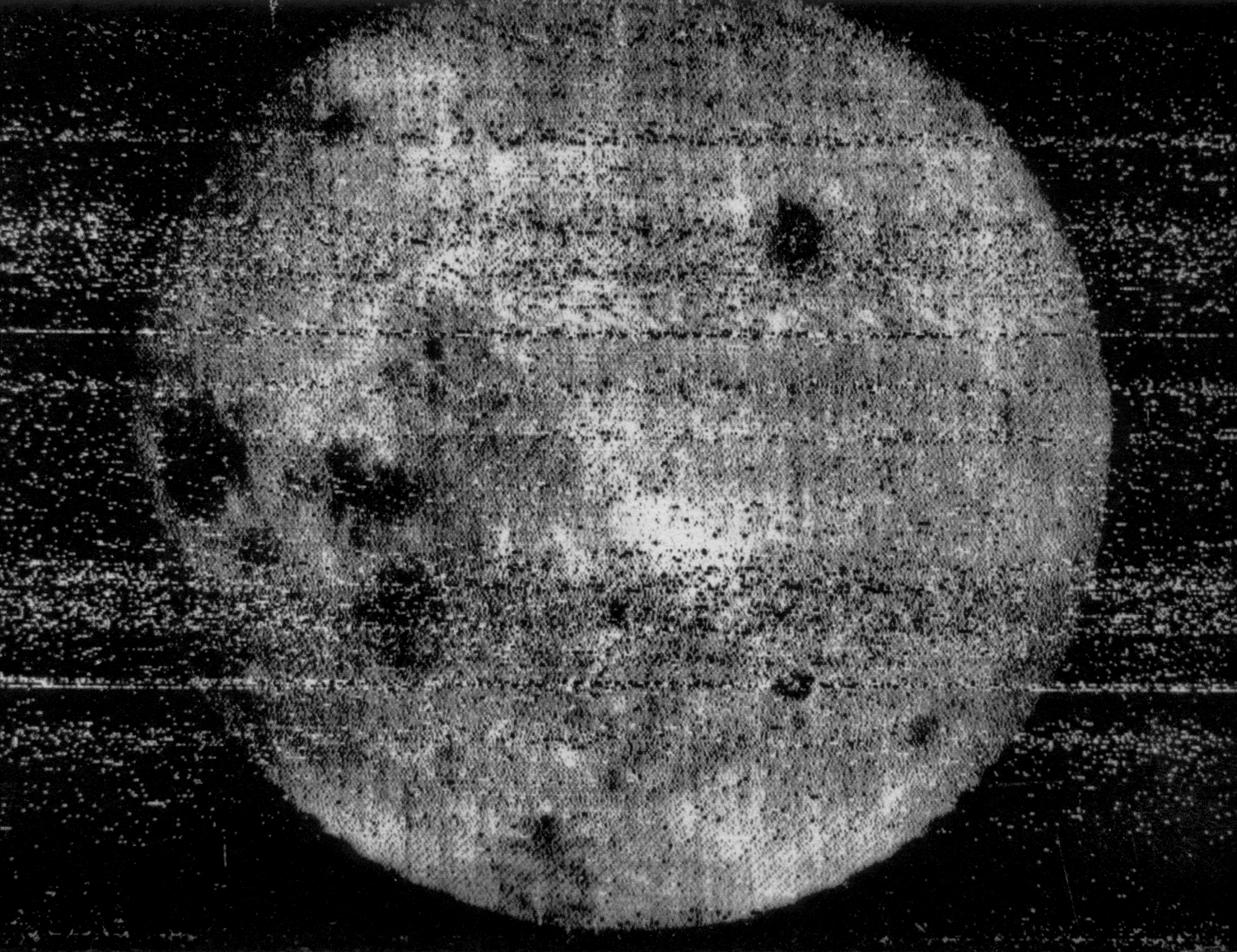
On Oct. 4, 1959, exactly two years after the launch of Sputnik, the Soviet Union scored another win when Luna 3 launched from the Baikonur Cosmodrome in Kazakhstan and set off for the Moon. It was the third spacecraft in the Luna program, Luna 1 having overshot the Moon after a rocket-burn error, and Luna 2 having crashed into the lunar surface. Luna 3, however, successfully reached the Moon, and on Oct. 7, the probe was able to capture the first images of the farside. The photos were taken with a 35mm camera loaded with 40 frames of film treated to protect them against temperature extremes and radiation. The film was developed onboard Luna 3, and then scanned and transmitted back to Earth. The resulting 29 images were low-res, but still revealed a startling dichotomy: Unlike the nearside of the Moon, the farside was almost completely void of maria – the large, dark plains of lava. Instead, it was heavily cratered. Scientists are still examining the possible reasons for this stark difference.