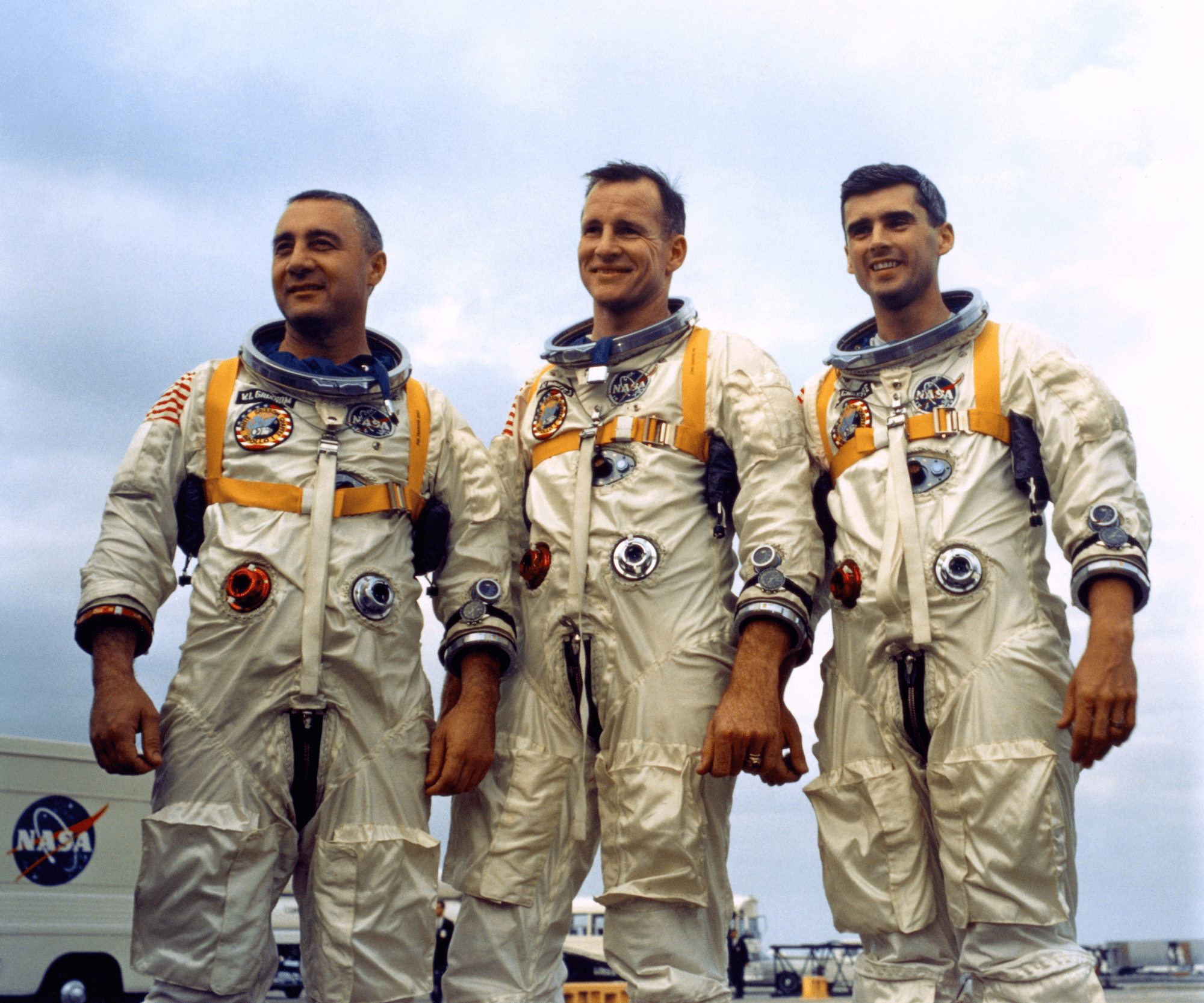
The first piloted Apollo flight – called Apollo 204, though it would later be known as Apollo 1 – was intended for tests in Earth orbit, part of the eventual path to later Apollo missions going to the Moon. The mission was crewed by Gus Grissom, America’s second man in space; Ed White, the country’s first man to conduct an EVA; and first-time astronaut Roger Chaffee. The spacecraft was a “Block 1” design from a different contractor than the one that had built the Gemini vessels, and was criticized for flaws including faulty wiring. In an additional change, NASA had mandated that the atmosphere of the capsule be pure oxygen, rather than an oxygen/nitrogen mix.
On Jan. 27, 1967, the crew members were inside the Command Module of their spacecraft at Launch Complex 34 for a preflight countdown simulation. The test had been plagued by communications problems, prompting Grissom to complain, “How are we going to get to the Moon if we can’t talk between two or three buildings?” At 6:31 p.m., a fire broke out, likely in the wiring under Grissom’s seat. The pure oxygen environment and plethora of combustible items accelerated the fire in seconds and added toxic fumes to the dense smoke. Though the astronauts attempted to escape, opening the hatch required releasing multiple bolts with a special ratchet; it was a process that took a minute and a half, even without the internal pressure of the fire sealing the inward-opening hatch in place. The three men died of asphyxiation, probably within seconds.
After the tragedy, crewed launches were suspended for a year, and a review board led to significant safety changes to hatch design, cabin atmosphere, and the flammability of the materials in the spacecraft. Launch Complex 34 was deactivated and today serves as a memorial to the three fallen astronauts.