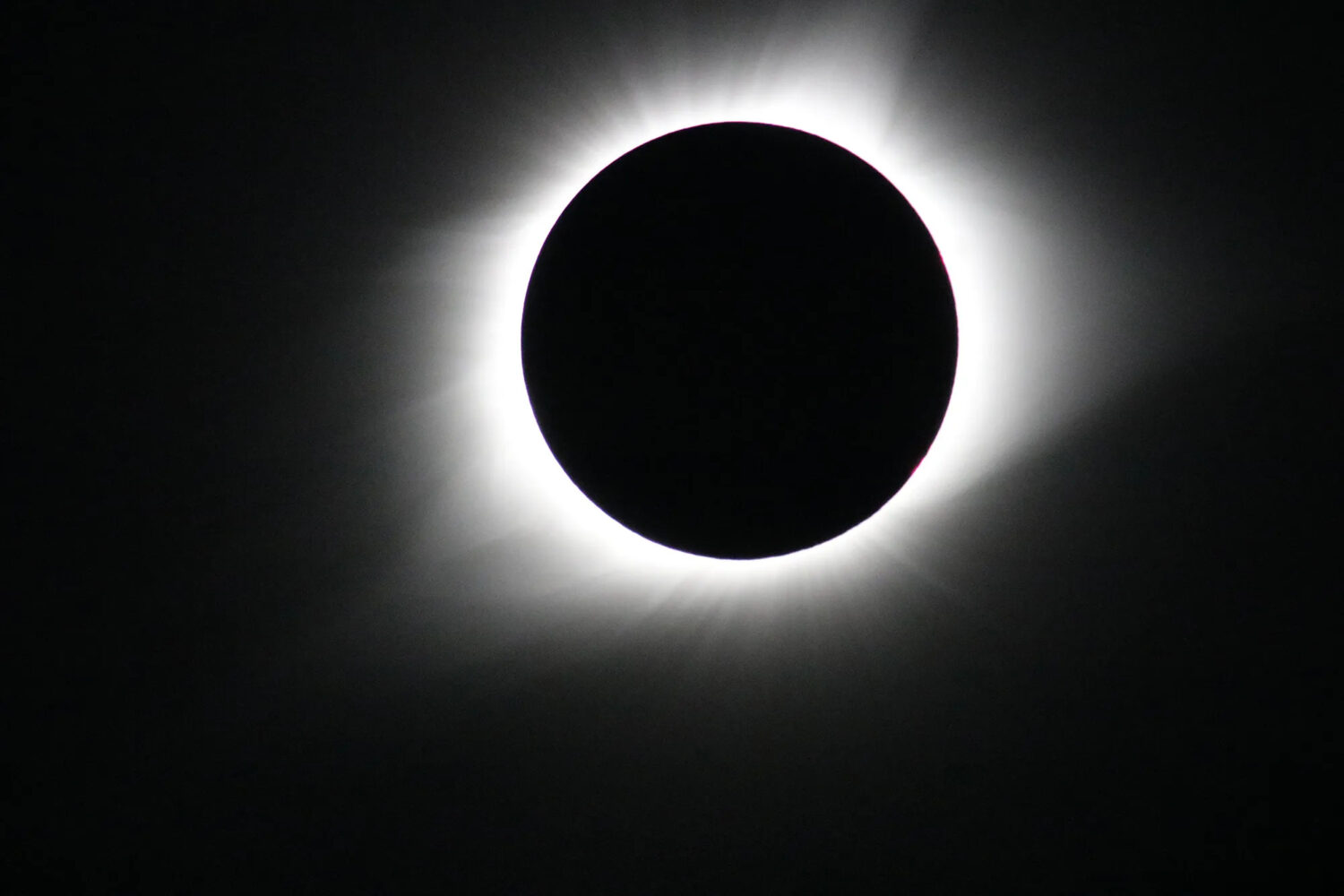
The earliest solar eclipse for which we have a record appears in the ancient Chinese text Shujing, traditionally said to have been compiled by the philosopher Confucius, which reads: “On the first day of the last month of autumn, the Sun and Moon did not meet harmoniously in Fang.” What an understated way to describe an eclipse!
Pinning the exact date of this event is somewhat problematic; originally, scholars stated it occurred either in 2136 or 2128 B.C.E. The mention of “Fang,” though, ultimately holds the key: This term refers to a section of the sky mainly in Scorpius. Furthermore, we know the eclipse happened during the reign of Zhong Kang, an emperor of the Xia Dynasty. Based on these details, the only eclipse that could have been seen from the capital city was on Oct. 22, 2137 B.C.E.
There’s also a long-standing tale — which may be true but very probably isn’t — about this eclipse and two royal astrologers, He and Ho. In at least one version, they were drunk prior to the event and didn’t warn the emperor that the eclipse was coming. Whether or not they even knew it was coming is debatable. Long story short, they reportedly were killed for their mistake.