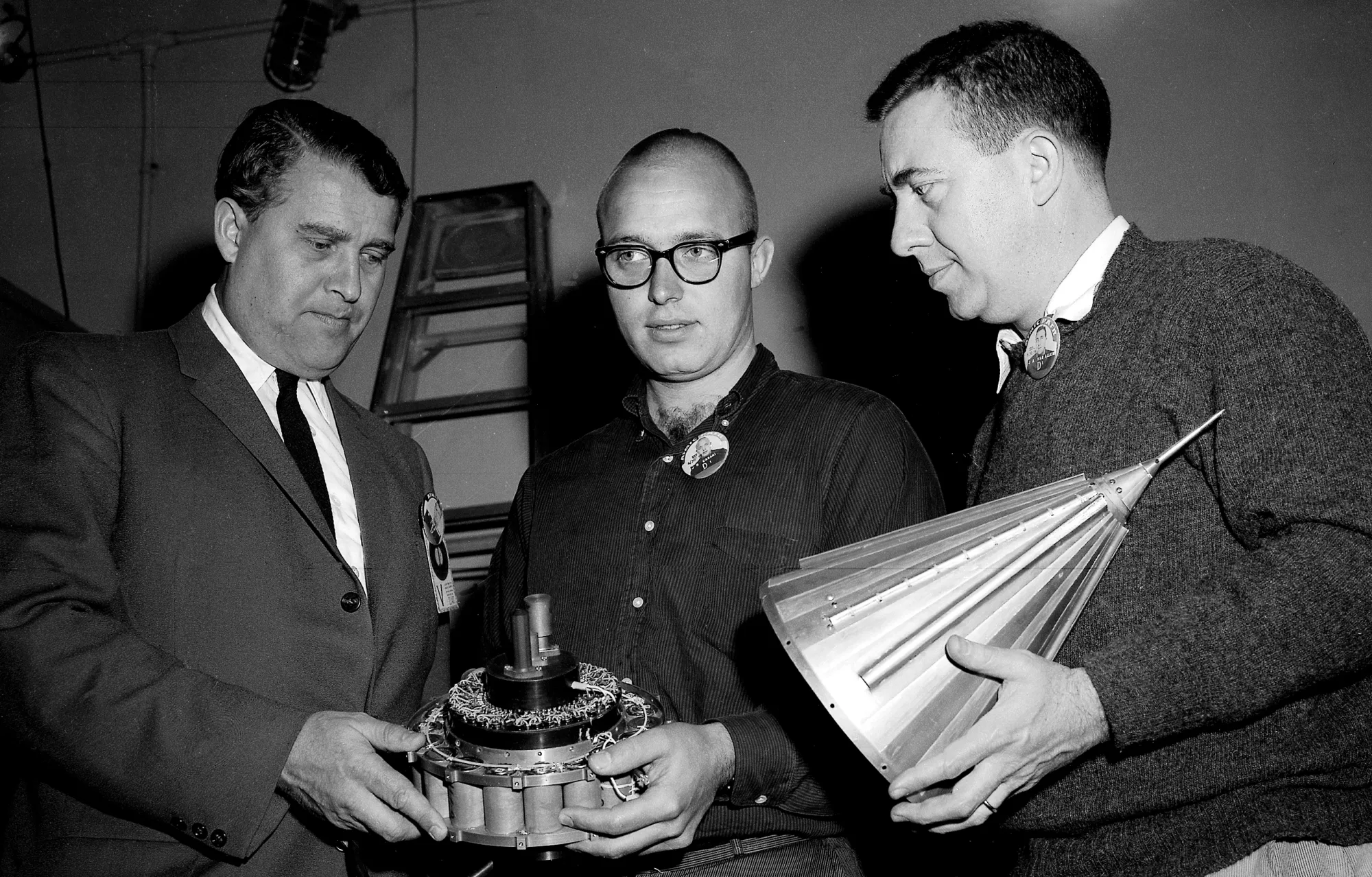
On March 3, 1959, a year and a half after Sputnik, the U.S. notched a win in the Space Race with the launch of the first American spacecraft to leave Earth’s gravity. Pioneer 4’s mission was to fly near the Moon and photograph its surface. The 13-pound spacecraft also carried geiger counters for measuring the levels of radiation in space.
However, Pioneer 4’s lift-off from Cape Canaveral aboard a Juno II rocket was not as smooth as hoped: The rocket’s second stage burned too long, changing its trajectory. This would end up causing Pioneer 4 to travel much farther from the Moon (about 37,000 miles [60,000 kilometers]), and prevented the lunar photography aspect of the mission from being fulfilled. However, the probe successfully returned data for 82 hours – including details of the Earth’s radiation belts – set a record for the farthest distance traveled from Earth at the time, and became the first American craft in heliocentric orbit.