In March of 1781, William Herschel spotted the seventh-known planet of our solar system. He wanted to name it Georgium sidus (George’s star), after King George III. Astronomers outside the U.K. weren’t keen on the planet being named for the British monarch, and recommended sticking with the tradition of naming planets for mythical characters; it would come to be known as Uranus.
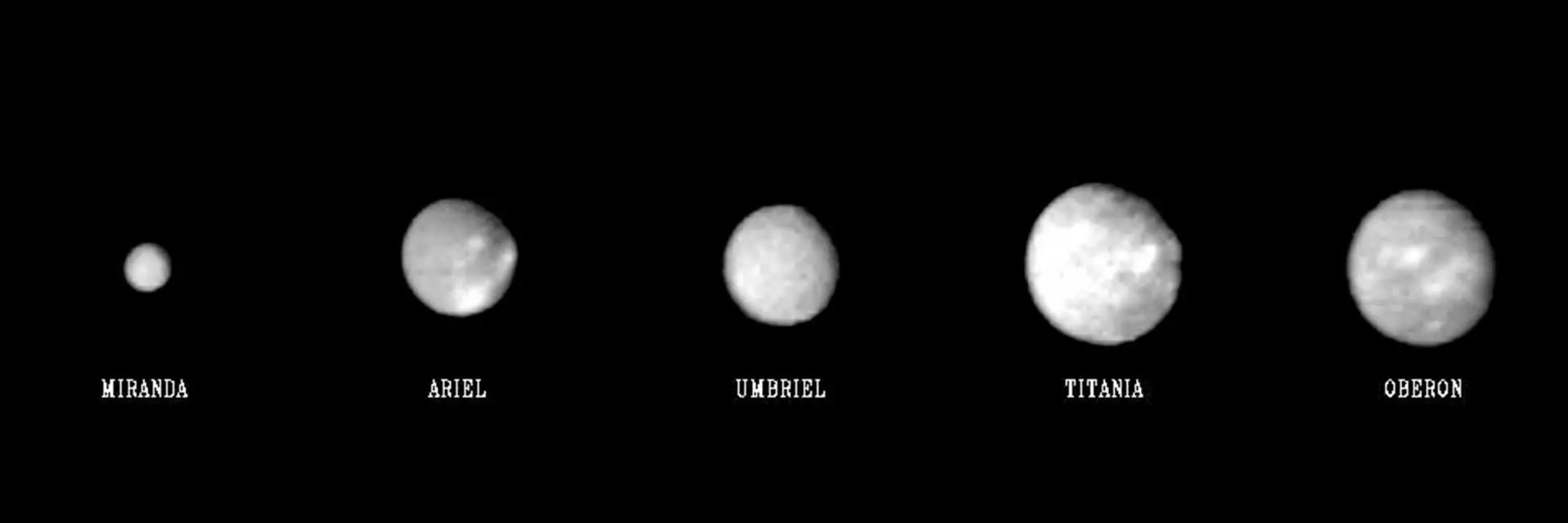
Six years later, now serving as King Goerge’s personal astronomer, Herschel would discover the planet’s two largest moons on Jan. 11, 1787. He had chosen not to use his favorite telescope, a 6-inch aperture and 7-foot-focal length piece, but rather a new front-view scope that used only one mirror, reflecting light from that mirror right to the eyepiece. This construction made small objects brighter, and Herschel considered it a determining factor in his discovery. His son John would later name the moons Titania and Oberon.
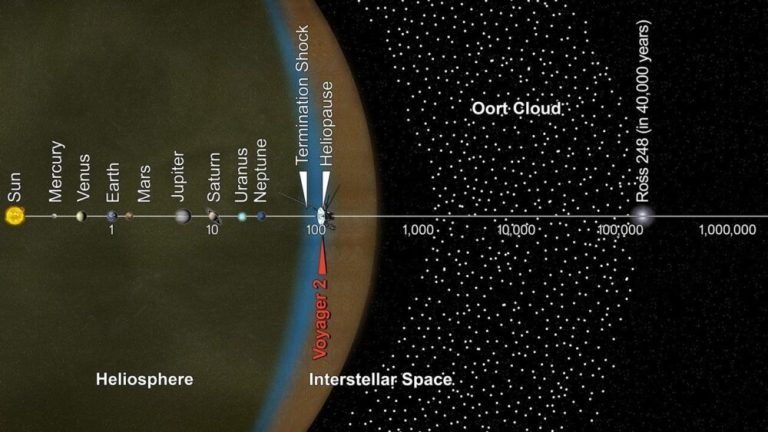
Titania and Oberon, like most of the outer solar system, would remain largely unknown until 1986, when Voyager 2 flew by. The probe revealed Titania to be geologically active and sport a system of faults, while Oberon appears ancient and inactive.